
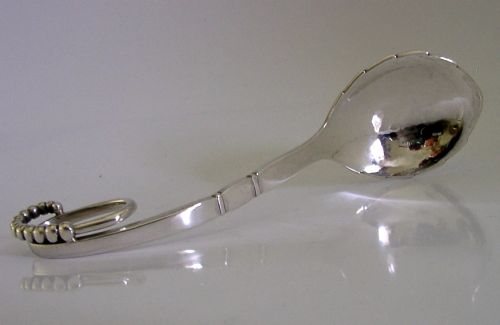

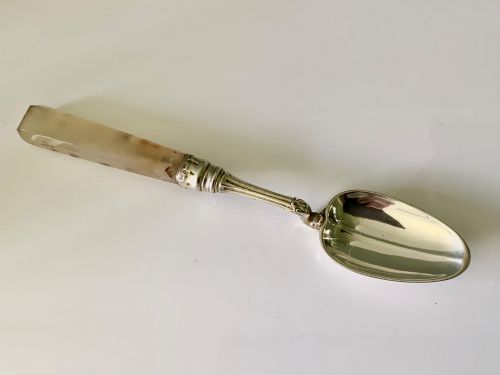
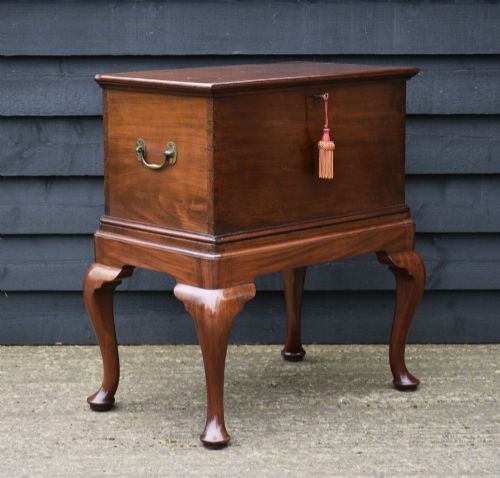
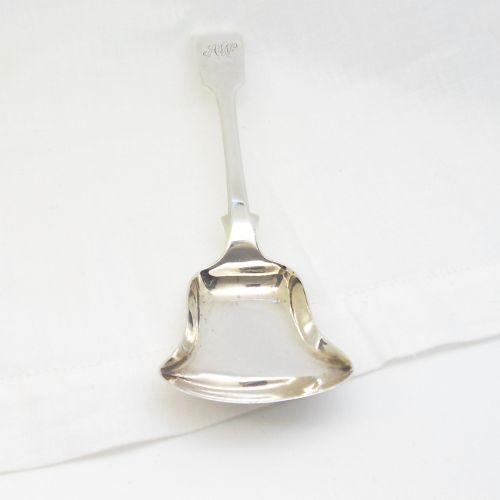
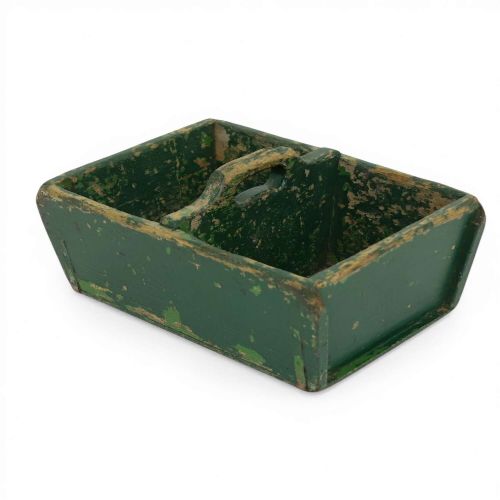
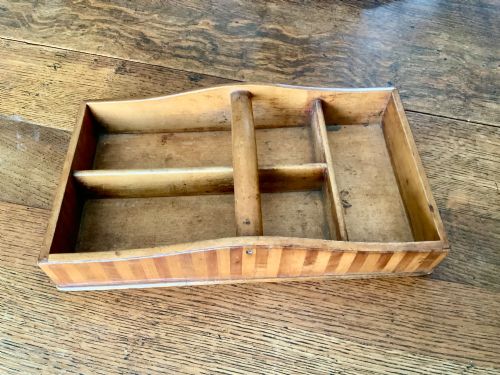


Antique Cutlery Caddy
An antique cutlery caddy keeps flatware organised in style, offering both practical utility and fine period craftsmanship for the home.
Antique Cutlery Caddy
When you search for an antique cutlery caddy, you encounter various timber and metal vessels designed to hold flatware, spoons, and serving instruments.
The pieces on this page span several eras, with Georgian and Victorian examples appearing frequently alongside 18th-century and Regency specimens.
Forms range from divided wooden trays and mahogany boxes to lidded urns and tortoiseshell spoon boxes, reflecting the diverse ways dining equipment was stored.
Materials and construction
Cabinet makers utilised dense hardwoods such as mahogany, walnut, fruitwood, and pine, often shaping them with serpentine fronts or bow-front profiles.
Metal mounts, handles, and shields in sterling silver or brass reinforced the timber structures and provided secure closures for the boxes.
Surface finishes include polished patinas on natural wood grains alongside occasional painted treatments on vernacular items like Welsh trays.
Assessing standard and execution
Superior examples display careful selection of figured timber veneers, precise dovetail joinery, and well-proportioned compartments for flatware organisation.
The presence of original solid silver mounts, intact handles, and working locks distinguishes finer pieces from later utility adaptations.
Georg Jensen·John Walton·George Unite·Amy Sandheim
The Antique Cutlery Caddy Glossary
- Cutlery tray
- An open wooden receptacle featuring internal divisions to sort knives, forks, and spoons during service or storage. These often include a central upright handle for easy transport.
- Serpentine front
- A furniture contour that curves outward in the centre and inward at the sides, common on finer Georgian storage boxes. This shaping requires considerable skill from the woodworker.
- Toleware
- Japanned or painted metalware produced to imitate Asian lacquer techniques, frequently utilised for utilitarian kitchen and household buckets during the Victorian period.
- Vernacular
- Objects made by local artisans using regional materials without formal academic design oversight. Welsh pine and oak trays exemplify this practical, robust tradition.
Antique Cutlery Caddy: Frequently Asked Questions
What was a cutlery caddy used for?
These vessels held knives, forks, and spoons securely either on the dining table, sideboard, or within the butler's pantry.
They allowed servants to transport flatware efficiently between the kitchen and dining rooms without damaging the blades.
How do I date an antique wooden tray?
Dating relies upon timber selection, construction methods such as hand-cut dovetails, and the overall style of the period.
Georgian pieces often showcase figured mahogany, whereas 19th-century vernacular examples frequently utilise pine or fruitwood.
Are silver mounts original to the boxes?
Original silver escutcheons, handles, and corner mounts match the construction period and show consistent wear patterns with the surrounding wood.
Craftsmen integrated these metals to reinforce stress points and enhance the visual appeal of dining room storage.
How should I clean a wooden caddy?
Maintenance requires gentle dusting with a soft cloth and occasional application of traditional beeswax to nourish the aged timber.
Avoid modern liquid polishes that can penetrate unsealed grain or degrade the historical surface patina.