


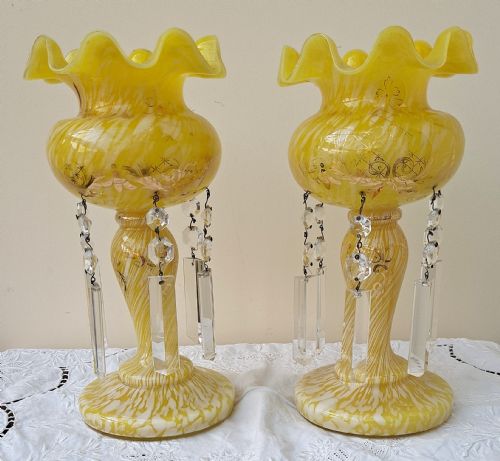


Antique Crystal Lusters
These antique crystal lustres bring brilliant light and prismatic colour to a room, catching the eye with hanging glass drops.
Antique Crystal Lusters
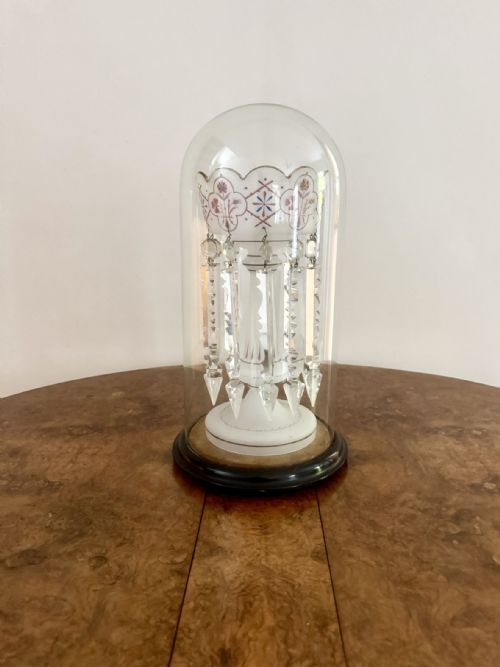
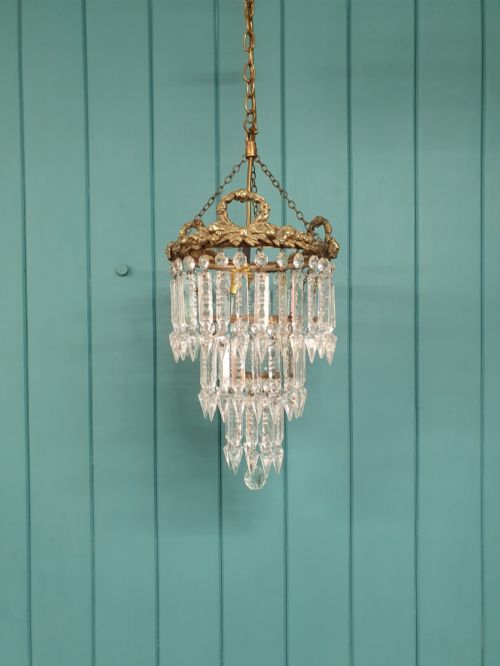
When you search for antique crystal lustres, you encounter decorative lighting and mantel ornaments designed to scatter light across a room. These pieces range from towering chandeliers to pairs of table mantel lustres placed on sideboards or fireplaces.
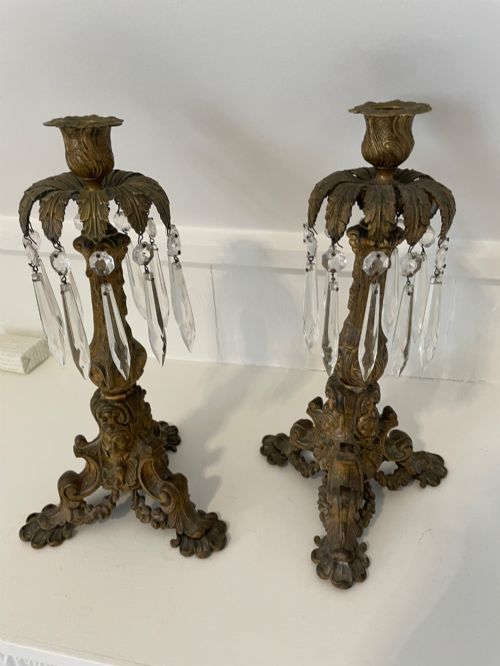
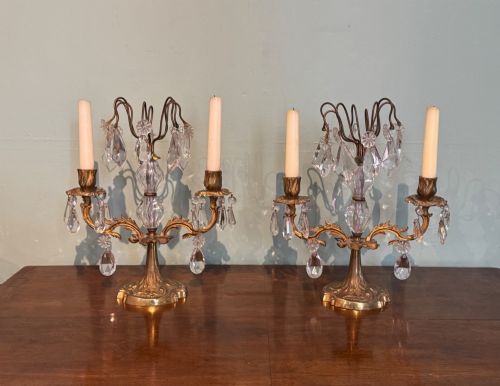
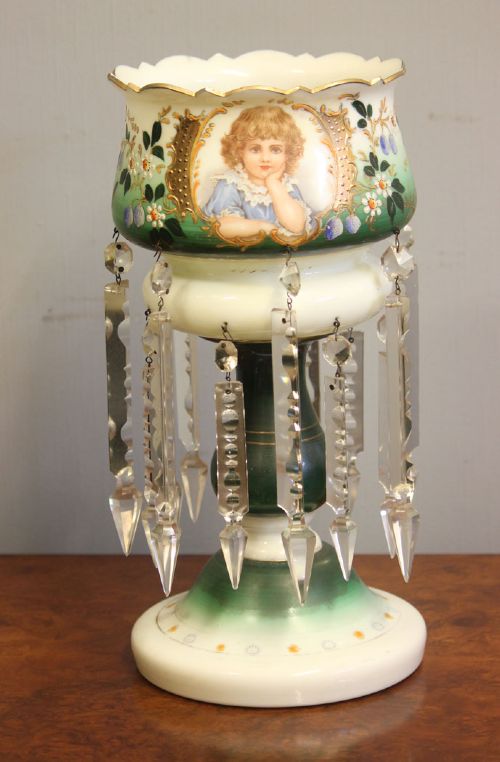
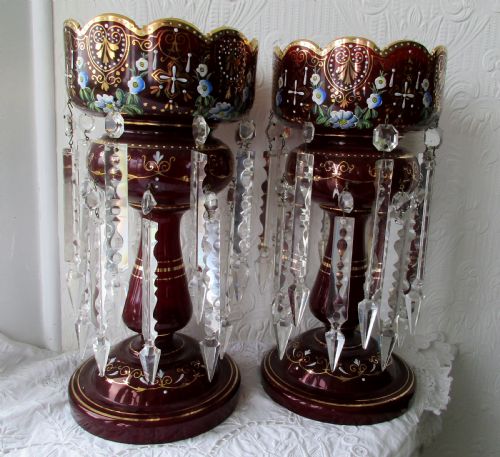
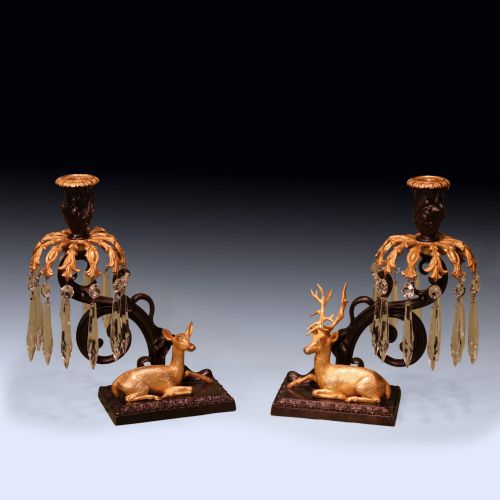
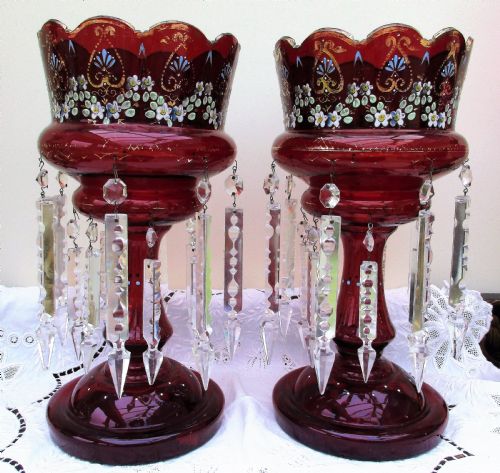
The most frequent examples on this page are Victorian table lustres in saturated colours like ruby and green glass, alongside brass and gilt bronze fittings hung with cut glass drops. Makers from England, France, and Bohemia produced these ornamental forms during the nineteenth and early twentieth centuries.
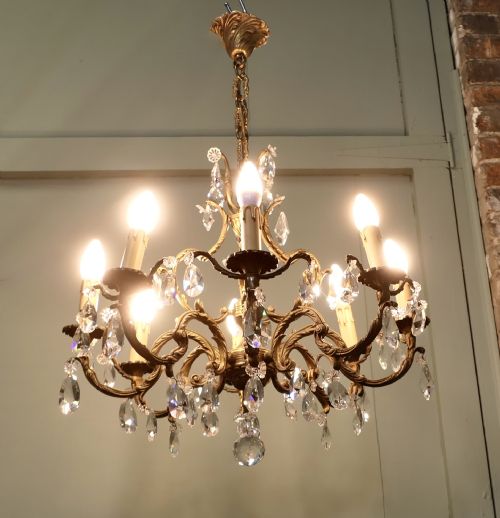
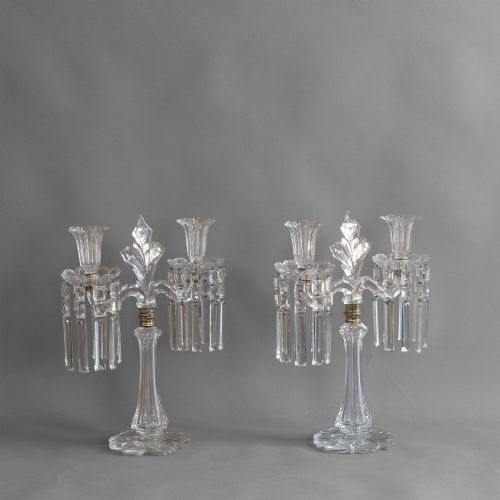
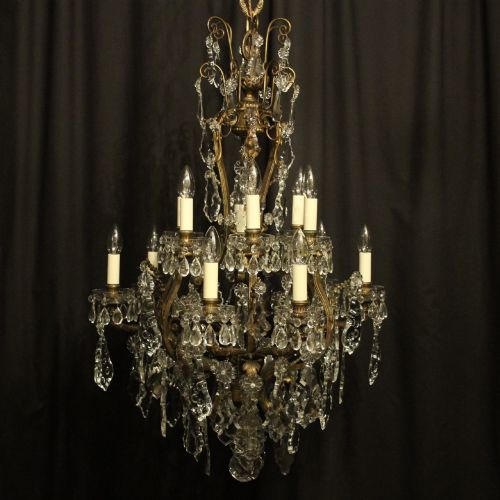
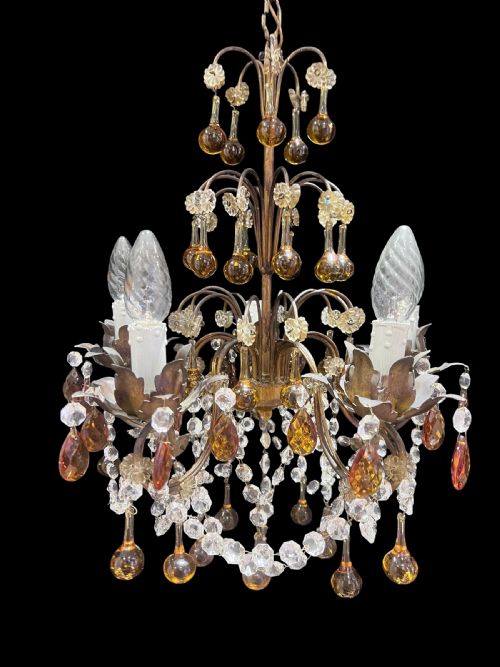
Forms span from single mantel candlesticks fitted with pendants to multi-light chandeliers and candelabra. Regency period clear cut-glass examples sit alongside colourful flash glass pieces from the Victorian era and later Edwardian ceiling lights.
Materials and construction methods
Glassmakers utilised techniques such as flash overlay, where a coloured layer of glass was cut away to reveal clear glass beneath, creating striking contrast on ruby and green vessels. Molten glass was hand-blown into moulds or free-blown before being meticulously cut by hand on a wheel to form sharp facets.
Metalwork frames rely on brass, gilt bronze, or ormolu, often cast in ornate French styles with floral or figural motifs. Prisms and crystal drops are attached to the main body using fine wire loops or metal pins, allowing each pendant to move and catch ambient light.
Antique Crystal Lusters Retail Price Guide 2026
Typical asking prices for crystal lusters among the pieces listed under this phrase on Sellingantiques today, from the lower quarter to the upper quarter. They describe what is for sale here now, not the wider market.
Listings feature items spanning the Regency period, Victorian era, and early twentieth century, utilising ruby glass, cut crystal, and gilded bronze.
Factors that distinguish finer pieces
The precision and depth of the hand-cutting on the glass body and pendants determine the brilliance of the refraction. Sharper, crisper facets on cut crystal drops create brighter light play than rounded, softened edges.
The weight and detail of the metal mounts dictate the calibre of the piece, where heavy cast bronze or ormolu with defined chasing outshines simpler stamped brass fittings. Matching sets with intact crystal drops undamaged by chips hold greater integrity than composite pairs.
The Antique Crystal Lusters Glossary
- Mantel lustre
- A decorative ornamental vase fitted with a ring of hanging crystal prisms, designed to stand on a fireplace mantel rather than hold candles for primary lighting. These pieces often feature painted enamel decoration or flash glass overlays.
- Flash glass
- A double-layered glass made by dipping a gather of clear glass into a pot of coloured molten glass before blowing. Subsequent wheel-cutting removes portions of the outer colour to reveal the clear glass beneath.
- Ormolu
- Gilt bronze produced by applying a mercury and gold amalgam to a bronze base and heating it to drive off the mercury. This technique imparts a rich golden finish found on nineteenth-century French frames.
- Cricklite
- A patented table candelabra system utilising a special glass shade and candle holder, often associated with late Victorian manufacturer Clarkes. These assemblies protected the flame while maximising the sparkle of the surrounding crystal drops.
Antique Crystal Lusters: Frequently Asked Questions
How were antique crystal lustres used?
These pieces functioned primarily as decorative mantel ornaments or supplementary lighting on dining tables and sideboards. The hanging crystal pendants were designed to refract candlelight and gaslight, multiplying the illumination in a room.
Many examples served a dual purpose as both vases and candle holders. Owners removed or added candles depending on the occasion and the time of day.
How can I date an antique lustre?
Dating relies on examining the manufacturing techniques of the glass and the style of the metal mounts. Regency and early nineteenth-century pieces often feature thick, hand-cut lead crystal with deep prisms, while Victorian examples frequently showcase vibrant ruby or green flash glass.
Later Edwardian and early twentieth-century pieces often incorporate sleeker electrical conversions or lighter brass frames. Maker marks, screw thread types, and pin attachments for the drops also provide chronological clues.
Can antique crystal lustres be wired for electricity?
Chandeliers and wall lights are frequently adapted for modern electrical use by running discreet wiring through the central brass or bronze channels. This allows historic fixtures to function safely in contemporary interiors without altering their visual appearance.
Table mantel lustres generally remain unpowered, relying on their original configuration as decorative candle holders or purely visual objects. Professional rewiring is recommended to ensure safety compliance with modern standards.