


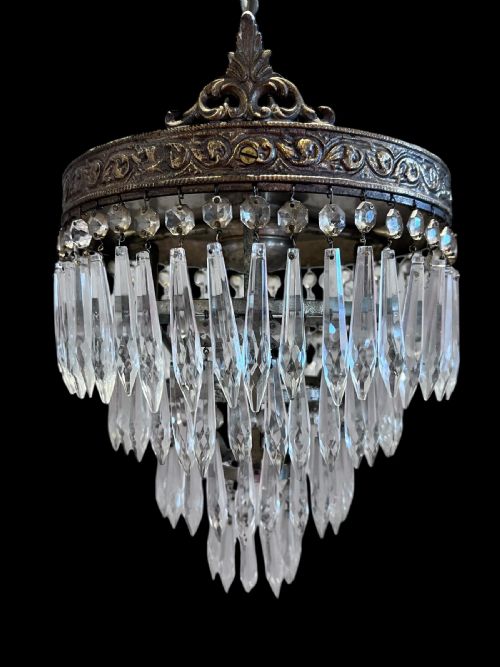

Antique Crystal Glass Droplets
Antique crystal glass droplets bring sparkle and refraction to period light fittings, adding distinct illumination to a room.
Antique Crystal Glass Droplets
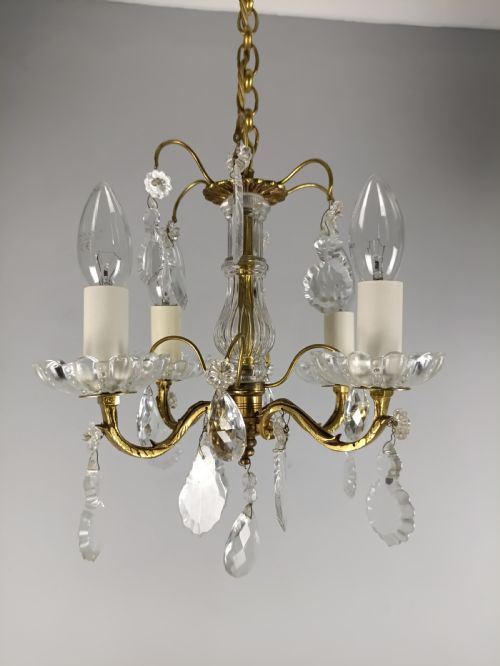
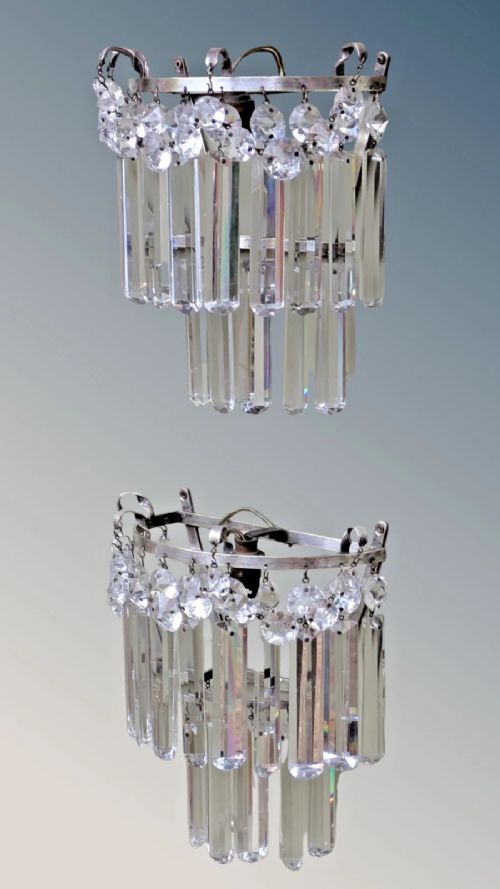
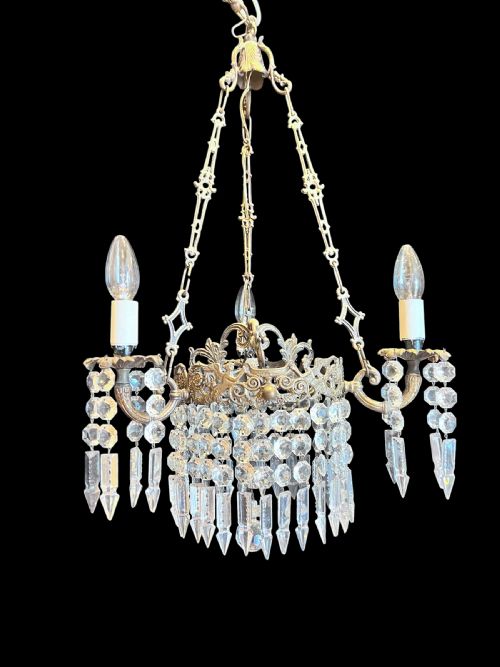
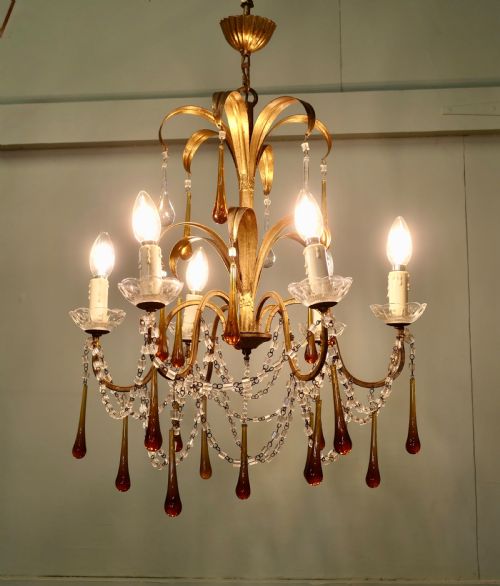
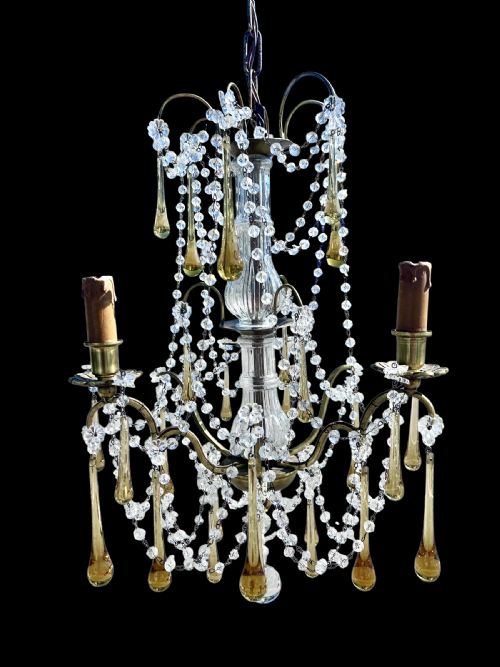
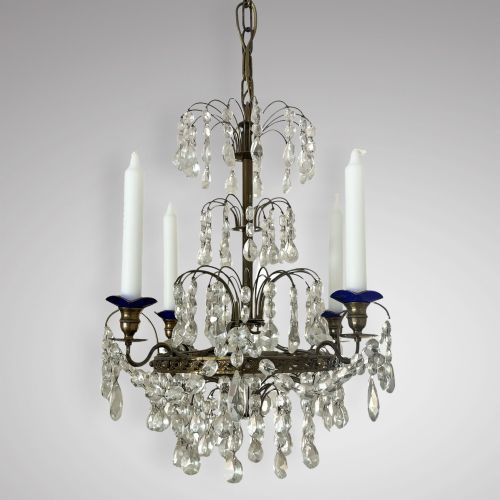
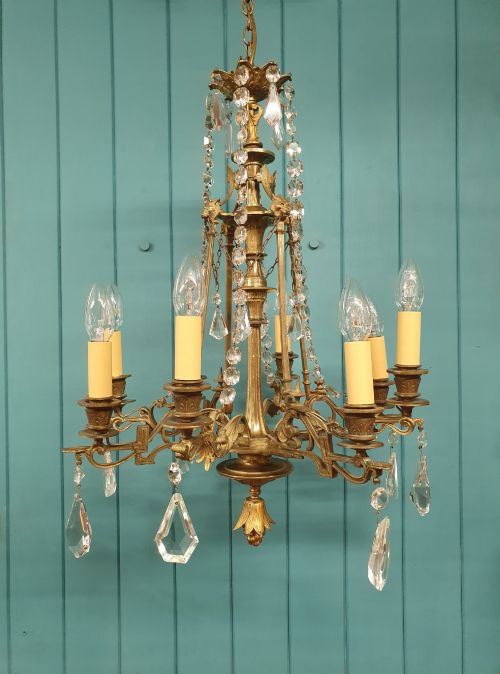
When searching for antique crystal glass droplets, buyers find components and decorative elements primarily associated with light fittings such as chandeliers, wall lights, and table lustres. These items originate from the nineteenth and twentieth centuries, spanning Victorian, Edwardian, and Art Deco periods.
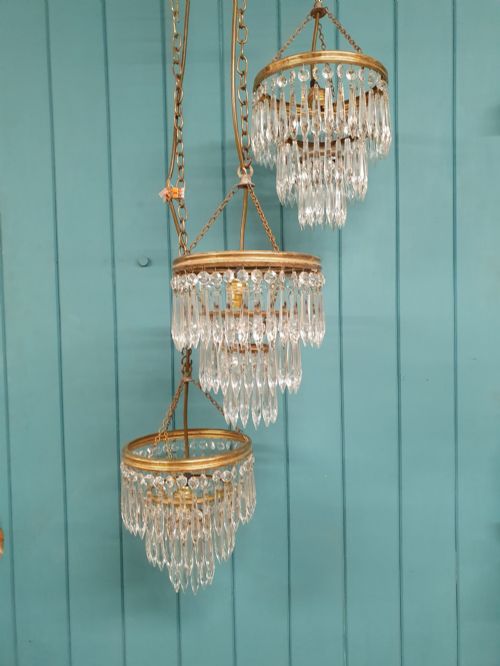
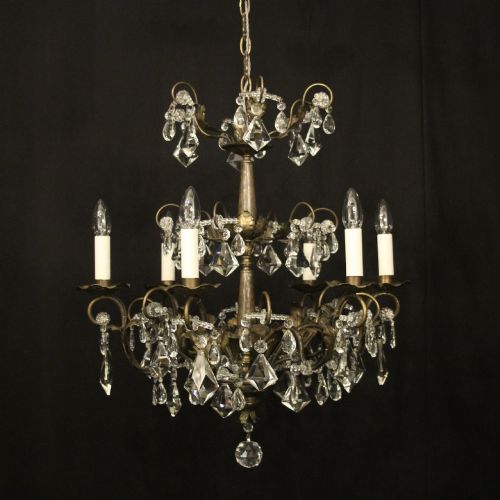
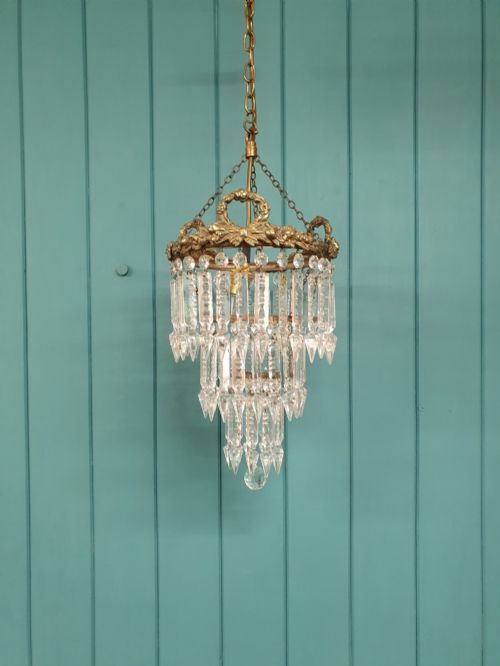
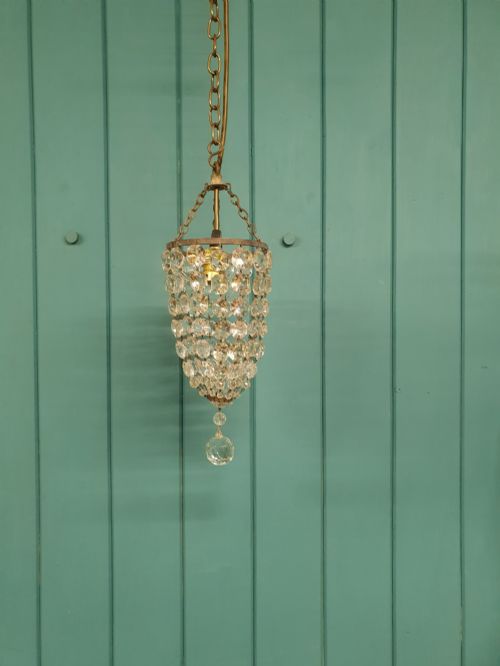
The pieces appearing on this page range from small individual drops on bag chandeliers and spike chandeliers to large multi-tiered fixtures like Italian Marie Theresa and Florentine beaded gilt chandeliers. French and Italian lighting forms feature prominently alongside English ballroom examples.
Buyers are most likely to encounter these elements integrated into complete lighting structures rather than loose parcels, though individual lustres and table lamps also appear. The forms vary from simple pendant drops to elaborate cascades and lower bag sections.
Quality Variations
Quality rests upon the clarity and weight of the glass or crystal used for the droplets, alongside the precision of the hand-cutting. Superior pieces display sharp facets that catch the light cleanly, while lesser examples use simpler, mould-pressed glass with softer edges.
The integrity and material of the supporting frame also define the tier of the piece, moving from standard brass or iron to finely cast bronze, ormolu, and silver-gilded metalwork. Cohesion between the frame design and the arrangement of the droplets separates standard production lighting from high-status commissions.
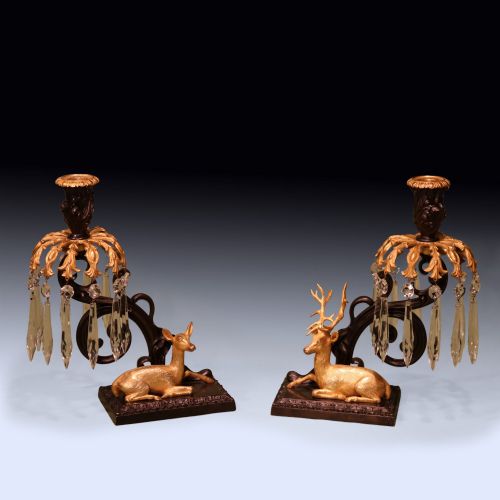
Some nineteenth-century candlesticks incorporate bronze stags and does, proving that even illumination needs a touch of the forest.
The Antique Crystal Glass Droplets Glossary
- Bag chandelier
- A lighting fixture shaped like a tapered bag or basket where numerous crystal droplets cluster closely together. This form became popular during the Edwardian period and continued through the nineteen-thirties.
- Lustre
- A decorative tabletop ornament featuring hanging crystal prisms designed to catch and reflect light. These often take the form of single stems or pairs placed on mantelpieces.
- Plafoniere
- A ceiling-mounted light fitting that sits flush or close to the surface, frequently featuring glass bowls or crystal droplets arranged within a metal frame. French examples often employ this shallow configuration.
- Ormolu
- Finely ground high-carat gold applied to a bronze base metal through a mercury amalgamation process, seen on nineteenth-century mounts and frames. This technique provides a durable, rich golden surface.
- Spike chandelier
- A vertical lighting form characterised by central upward-pointing metal or glass spikes surrounded by tiers of hanging droplets. These fittings are typical of early twentieth-century production.
Antique Crystal Glass Droplets: Frequently Asked Questions
What is a bag chandelier?
A bag chandelier is a specific lighting form featuring a gathered, basket-like lower section densely hung with crystal droplets. The design allows light to filter through a concentrated mass of glass.
These fixtures emerged in various sizes during the Edwardian and Art Deco periods, suiting rooms with standard ceiling heights where a hanging drop fixture would sit too low.
How do I clean antique crystal?
Cleaning antique crystal requires warm water, mild soap, and a soft cloth applied by hand to each droplet. Harsh chemicals and abrasive brushes damage the surface and weaken the wire fixings.
Leaving the droplets attached or removing them depends on the sturdiness of the frame, but careful wiping prevents the loss of historic pins and fixings.
Where were these lights used?
These chandeliers and wall lights hung primarily in formal entertaining spaces, such as drawing rooms, dining rooms, and grand ballrooms. Smaller lustres decorated mantelpieces and side tables in domestic interiors.
Grand examples with numerous light branches suited high-ceilinged properties, while compact pieces illuminated hallways and boudoirs.
How do I date a crystal fitting?
Dating relies on examining the combination of materials, frame construction, wiring channels, and the cut of the glass droplets. Victorian and Edwardian pieces often feature heavier brass castings and hand-cut crystal, whereas nineteen-thirties items reflect Art Deco geometric styling.
Comparing the specific droplet shapes and metal patination against documented period examples helps confirm the era of manufacture.