
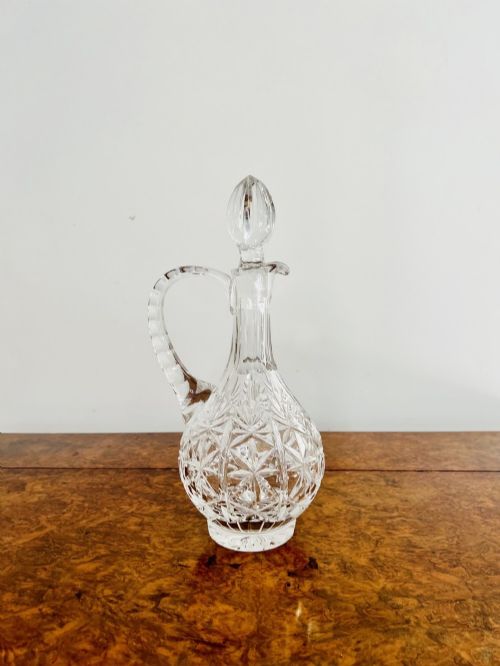


Antique Crystal Ewer
These antique crystal ewer pieces bring sparkling cut glass and metal mounts to your table, offering genuine period charm.
Antique Crystal Ewer
An antique crystal ewer is a decorative vessel for serving wine or water, combining a glass body with a handle and spout. When you search for an antique crystal ewer, you find elegant serving pieces originating from the Victorian and Edwardian eras, alongside French examples.
The pieces on this page include cut glass vessels mounted in silver plate, ormolu, and gilt bronze. You will encounter both English service jugs and French decorative ewers dating from the nineteenth century.
Most examples date from the later nineteenth and early twentieth centuries, spanning Victorian and Edwardian periods as well as French Second Empire and Rococo Revival styles. These items function as striking centrepieces for dining tables and sideboards.
Materials and construction
The bodies are formed from clear lead crystal and glass, frequently shaped through deep cutting to catch the light. Workshops employed skilled glassblowers and cutters to create complex facets and patterns across the surface.
Metal mounts in silver plate, gilt bronze, and ormolu provide structural handles, collars, and hinged lids. Makers combined these metals with glass using secure collars, while some pieces feature delicate white glass latticinio decoration.
Assessing quality and craftsmanship
Quality rests in the crispness of the glass cutting and the weight of the crystal. Finer pieces display deep, precise geometric cuts that create sharp refraction, whereas simpler vessels feature shallower, less intricate patterns.
The refinement of the metal mounts distinguishes top examples, particularly where ormolu or silver plate exhibits detailed chasing and solid construction. Maker attribution, such as work by Baccarat or silversmiths like W & G Sissons, elevates the standing of an individual ewer.
Baccarat·W & G Sissons
The Antique Crystal Ewer Glossary
- Ewer
- A large jug or pitcher with a wide spout and handle, traditionally used for holding water or serving wine at the table. These vessels date back centuries but saw a revival in decorative dining during the Victorian period.
- Lead crystal
- A high-clarity variety of glass containing metallic oxide that increases weight and brilliance. This material allows for deep, sharp facets when cut.
- Ormolu
- Finely ground high-carat gold cast and applied to bronze objects, popular in French decorative arts. It provides a rich, warm metallic finish to mounts and handles.
- Latticinio
- A glassmaking technique involving opaque white or coloured threads embedded within clear glass to form delicate net patterns. This Italian-derived method adds intricate linear detail to the vessel wall.
- Silver plate
- A layer of silver fused to a base metal, frequently utilised for the mounts, spouts, and handles of serving ewers. It offered the appearance of solid silver at a more accessible cost during the nineteenth century.
Antique Crystal Ewer: Frequently Asked Questions
What is an antique crystal ewer used for?
These vessels were originally manufactured for serving wine, claret, or water at formal dining tables. Today, collectors primarily display them as decorative objects on sideboards or mantelpieces.
They also function effectively as flower vases or striking centrepieces when entertaining guests.
How do I date an antique crystal ewer?
Dating relies on examining the style of the glass cutting, the form of the metal mounts, and any maker marks or hallmarks present on the silver plate. Victorian examples often feature ornate floral or Rococo Revival styling.
Edwardian pieces tend to display cleaner geometric cutting, while French items from the nineteenth century frequently incorporate ormolu mounts.
Are these ewers made of crystal or glass?
The listings encompass both standard glass and high-clarity lead crystal, terms often used interchangeably in antique trade descriptions. Crystal contains metallic oxide that adds weight and improves light refraction.
Both materials were worked with deep surface cutting during the nineteenth and early twentieth centuries.
How should I clean an antique crystal ewer?
Wash the vessel gently by hand using warm water and mild detergent, avoiding harsh scrubbers that might scratch the surface or damage metal mounts. Take care with hinged silver plate lids and ormolu sections to keep moisture away from delicate joints.
Allow the piece to air dry thoroughly on a soft cloth before placing it back on display.