



Antique Crucifix Necklace
An antique crucifix necklace brings centuries of devotion and craftsmanship together in wearable form, offering tangible history that appeals to both collectors and modern wearers.
Antique Crucifix Necklace
An antique crucifix necklace is a devotional pendant worn close to the heart, featuring prominently in the selections handled here across multiple eras. These pieces combine religious symbolism with the prevailing design aesthetics of their respective decades.
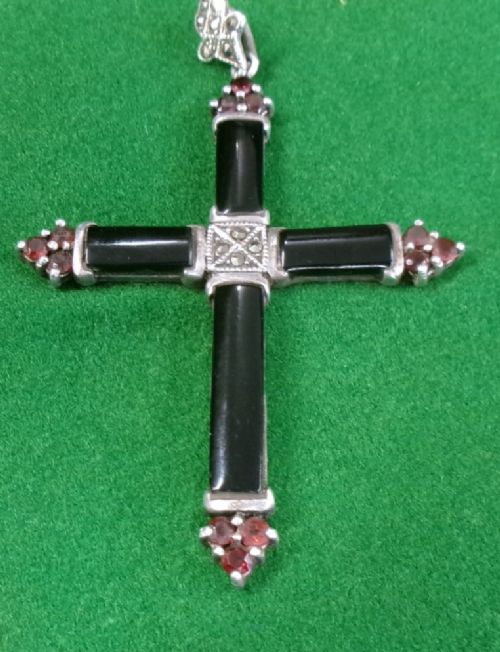
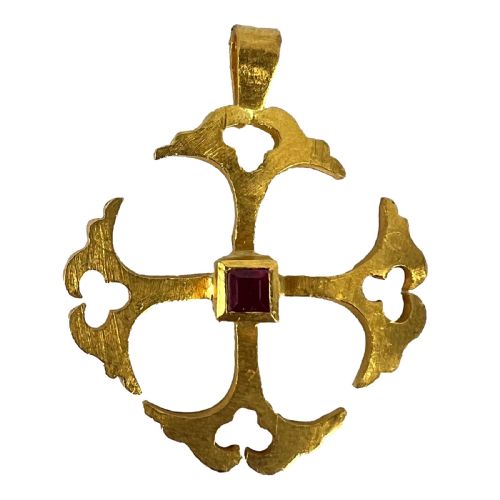
The pieces on display showcase a rich variety of forms, ranging from restrained Georgian designs to elaborate Victorian Gothic iterations. Buyers will encounter both simple metalwork and gemstone-set variations during their search.
Origins span from British assay offices to continental workshops, reflecting diverse regional manufacturing traditions. Edwardian and Victorian examples feature prominently among the current selections.
Materials and construction methods
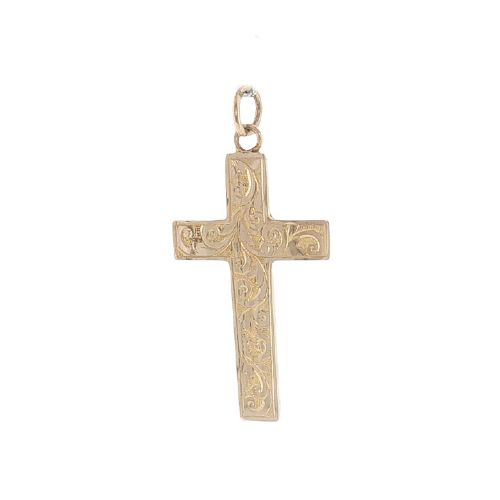
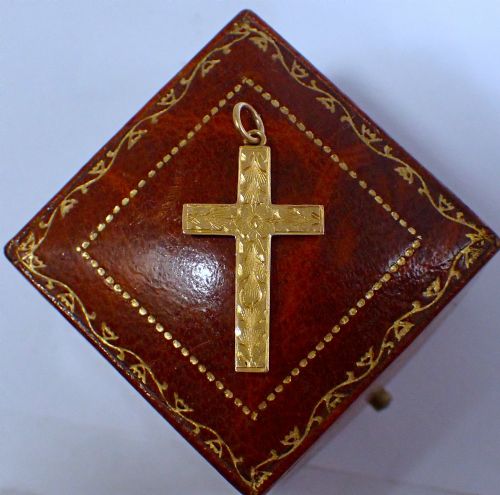
Makers utilised precious metals including 9ct gold, 15ct yellow gold, 18ct gold, and continental silver to form the structural body of each cross. Hand-engraved surface details frequently decorate the metal components.
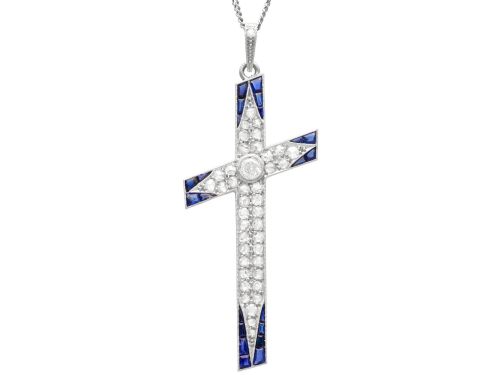
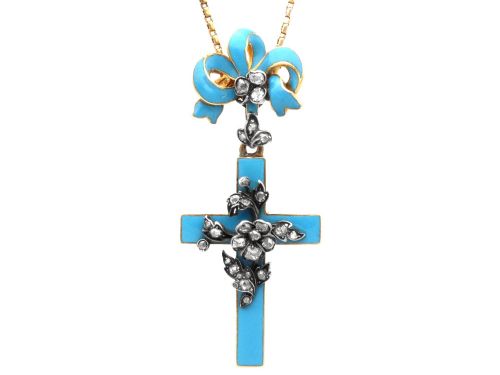
Gemstones such as seed pearls, coral, turquoise, sapphires, diamonds, foiled amethysts, and blue enamel are meticulously set into the designs. These materials reflect the decorative priorities of periods like the Arts & Crafts movement and Gothic Revival.
The listings span from the Georgian era through Victorian, Edwardian, and mid-century periods, utilising gold, silver, pearls, and sapphires.
Distinctions in craftsmanship and design
The hierarchy of quality rests on the precision of hand-engraving and the caliber of stone setting employed by the maker. Superior examples exhibit secure, flush gemstone settings and crisp, deep surface carving that retains sharp definition.
Material composition significantly influences the standing of a piece, with higher karat golds and carefully matched natural gemstones commanding greater appreciation. The integration of artistic movements, such as Gothic Revival or Arts & Crafts principles, also elevates the sophistication of the design.
Henry Cook
The Antique Crucifix Necklace Glossary
- Crucifix
- A cross bearing the figure of Jesus Christ, serving as a central Christian symbol of sacrifice and redemption. These devotional objects appear in various sizes and precious materials.
- Seed Pearl
- Very small natural pearls often drilled and strung or set en masse to create delicate floral or geometric patterns. They lend a soft, iridescent texture to Victorian and Edwardian jewellery.
- Gothic Revival
- An architectural and artistic movement of the nineteenth century that revived medieval forms and pointed arches. This style heavily influences the austere and ornate crosses found in this category.
- Foiled Amethyst
- An amethyst gemstone backed with a reflective metallic foil to enhance its colour and brilliance under candlelight. This technique is frequently observed in earlier Georgian pieces.
- Hallmark
- An official stamp or marks struck on precious metals to indicate the purity, maker, and assay office of origin. These tiny impressions provide verifiable evidence of a piece's age and provenance.
Antique Crucifix Necklace: Frequently Asked Questions
What materials are used in antique crucifix necklaces?
These pieces utilise various precious metals including 9ct, 15ct, and 18ct yellow gold alongside continental silver. Gemstone embellishments feature seed pearls, turquoise, coral, sapphires, diamonds, and foiled amethysts.
Enamel work also appears on select examples to add vibrant colour to the metal framework. Each combination reflects the specific material availability of its manufacturing period.
How can I tell the period of a cross?
Stylistic cues provide the clearest indication of date, moving from the foiled stones of the Georgian era to the intricate ornamentation of Victorian Gothic designs. Hallmarks stamped onto the precious metal offer definitive year codes and assay office marks.
Craftsmanship techniques also evolve, shifting from early hand-engraved silver and gold to the refined lightness typical of Edwardian work.
How were these necklaces worn originally?
Devotional crosses were traditionally worn suspended from a matching chain close to the chest as an expression of personal faith. They served both as daily religious talismans and as significant personal adornments.
Many examples retain their original suspension loops, designed to accommodate delicate gold or silver neckchains of the period.
What is the difference between a cross and a crucifix?
A simple cross consists solely of intersecting bars without additional figural representation. A crucifix specifically incorporates the corpus, which is the figure of Christ upon the cross.
Both forms appear frequently throughout the Victorian and Edwardian periods as expressions of religious devotion.
How should I care for an antique gold cross?
Gentle cleaning with a soft microfibre cloth helps maintain the polished finish of gold and silver surfaces without causing abrasion. Avoid harsh chemical dips, particularly when dealing with porous materials like seed pearls, coral, or turquoise.
Store the pendant separately in a lined box to protect delicate engravings and gemstone settings from impact.