

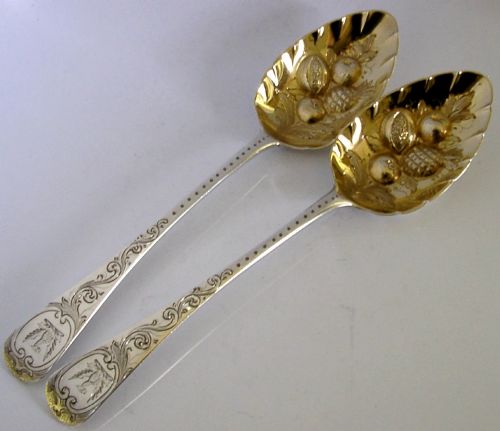


Antique Crested Flatware
Antique crested flatware carries the engraved heraldic symbols and family arms of past owners, offering functional silver from centuries gone by.
Antique Crested Flatware
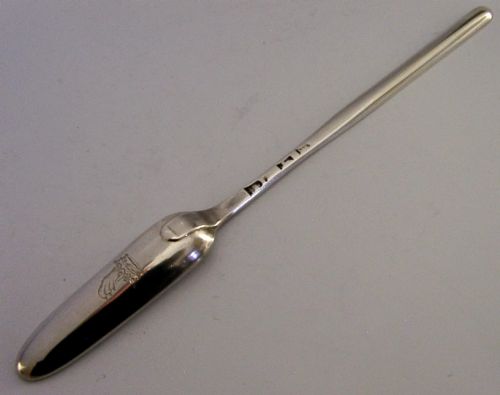
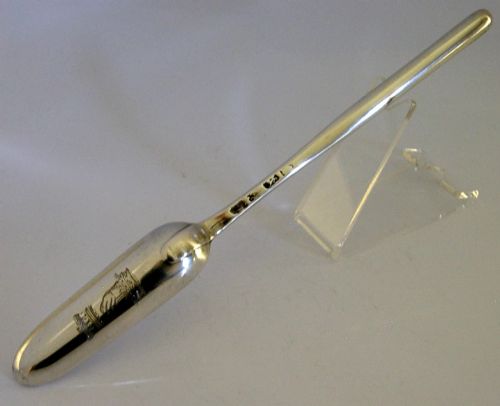
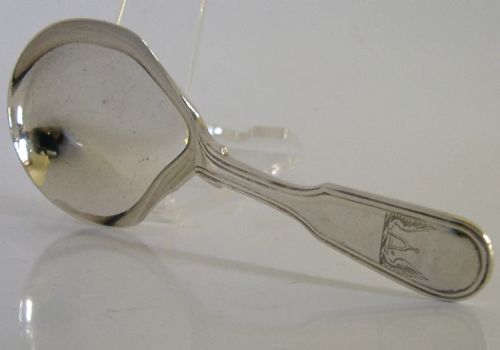
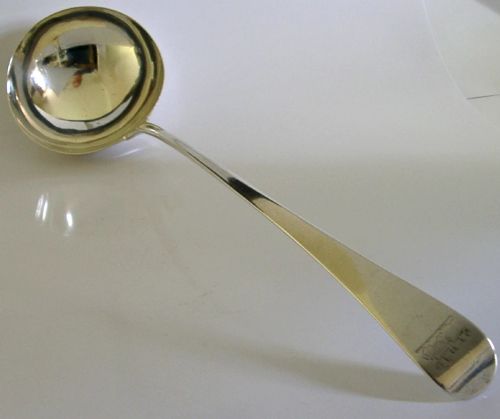
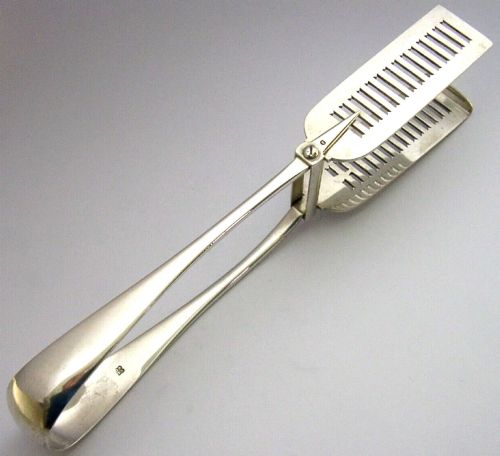
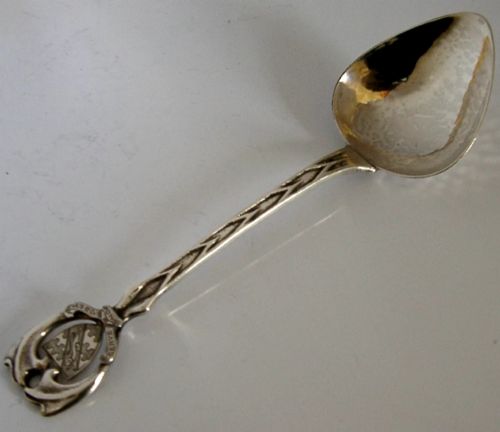
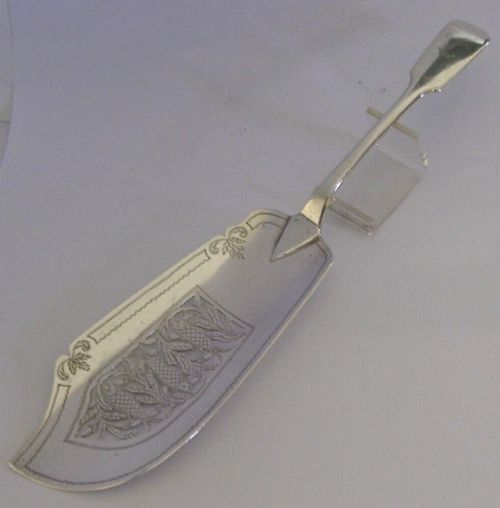
When someone searches for antique crested flatware, they encounter functional tableware items marked with heraldic crests, family arms, or stag motifs. These pieces range from serving utensils and ladles to caddy spoons, dessert forks, and tablespoons.
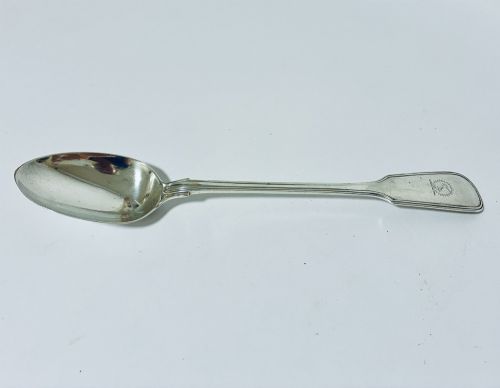
The selection on this page spans several historical periods, including the Queen Anne era, George II, Georgian times, and the Victorian period. Common forms include fiddle pattern spoons, dognose table forks, and heavy serving tongs.
Origin points encompass English, Scottish, and Irish workshops, showing how families commissioned silver to display their lineage. Most items found here are fashioned from sterling silver, occasionally complemented by gilt finishes or wooden elements.
What varies in quality
The distinction between standard pieces and finer examples rests on the crispness of the hand-engraved heraldic crest and the weight of the sterling silver. Heavier items, such as large soup ladles and substantial serving tongs, demonstrate greater metal mass and durability.
The reputation of the maker and the presence of clear hallmarks significantly influence the standing of a piece. Work by noted silversmiths or regional makers carrying distinct town marks commands greater attention among collectors.
Antique Crested Flatware Retail Price Guide 2026
Typical asking prices for crested flatware among the pieces listed under this phrase on Sellingantiques today, from the lower quarter to the upper quarter. They describe what is for sale here now, not the wider market.
Listings feature sterling silver objects from the 18th century, Georgian era, and Victorian period, including forks, spoons, and ladles.
Hester Bateman·E Coker·Michael Smith·Wilkes Booth·J Ladyman
The Antique Crested Flatware Glossary
- Crest
- A specific heraldic device or symbol belonging to a family, hand-engraved onto the surface of the silver.
- Sterling silver
- The primary metal alloy utilised for these utensils, containing standard silver purity proportions.
- Dognose
- An early flatware style featuring an upturned terminal shape, popular around the turn of the eighteenth century.
- Hallmark
- Official stamps impressed into the silver indicating the maker, assay office, and year of production.
- Fiddle pattern
- A nineteenth-century flatware handle design characterised by a distinct shoulder and broad stem shape.
Antique Crested Flatware: Frequently Asked Questions
What is antique crested flatware?
Antique crested flatware consists of historical silver utensils engraved with family arms or heraldic crests.
These items range from tablespoons and dessert forks to large soup ladles and serving tongs.
How do I identify the date?
Dating relies on the hallmarks stamped directly into the silver by various assay offices.
These marks often include letter codes corresponding to specific years alongside maker initials.
Were these made for everyday dining?
Many pieces served wealthy households during formal meals and ceremonial gatherings.
Families commissioned them to display their lineage and social standing at the dining table.
How should I clean antique silver?
Gentle cleaning with a soft cloth helps maintain the polished surface without damaging the engraving.
Harsh chemical dips should be avoided to preserve the original patina and fine details of the crest.