

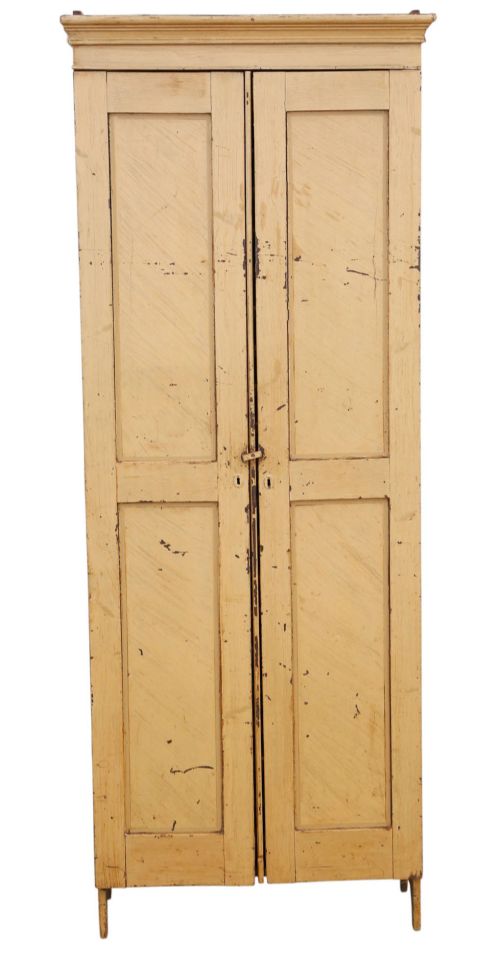
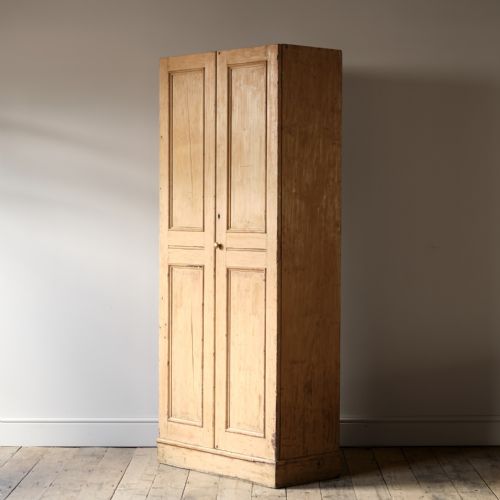


Antique Cream Larder
These antique cream larder pieces, taking the form of large painted cupboards and housekeepers' cupboards, bring genuine country utility and soft painted charm to a home.
Antique Cream Larder
An antique cream larder search uncovers substantial storage furniture designed for domestic provisions, most frequently encountered here as nineteenth-century housekeepers' cupboards and painted food cupboards. These pieces originate from domestic settings across England and Scotland, spanning the eighteenth and nineteenth centuries.
The dominant forms on this page include tall narrow kitchen cupboards, chapel cupboards, and linen cupboards reflecting Victorian country and Georgian aesthetics. Buyers encounter pieces built for serious storage, often bearing the marks of regional British vernacular cabinet-making.
Makers utilised sturdy proportions to house provisions, linen, and dry goods before modern fitted kitchens existed. Their scale ranges from small food cupboards to commanding housekeepers' cupboards designed to dominate a utility space.
How they were made
Construction relies heavily on solid pine, shaped into robust carcases and panelled doors using traditional joinery methods suited to utilitarian country furniture. Iron and brass hardware, including hinges and latches, secure the heavy doors.
Surfaces are defined by paint, with many examples retaining original painted finishes in cream and allied muted tones that have weathered through decades of domestic use.
Antique Cream Larder Retail Price Guide 2026
Typical asking prices for cream larder among the pieces listed under this phrase on Sellingantiques today, from the lower quarter to the upper quarter. They describe what is for sale here now, not the wider market.
Listings span the eighteenth and nineteenth centuries, featuring pine construction finished in paint alongside brass and iron hardware.
What varies in quality
Quality rests in the survival of original paint surfaces and the integrity of the structural timber rather than elaborate ornamentation. Pieces retaining untouched historic cream paint command greater interest than later repainted surfaces.
Proportions and regional vernacular details separate ordinary utilitarian storage from finer examples of Scottish or English country cabinet-making. The balance between practical scale and untouched character dictates the standing of each piece.
The Antique Cream Larder Glossary
- Housekeepers Cupboard
- A large storage piece traditionally used by a housekeeper to store linen, dry goods, and tableware. These items usually feature a combination of cupboards and drawers.
- Pine
- A softwood commonly used in British country furniture for its accessibility and workability. It accepts paint readily, which explains its prevalence in painted larders.
- Original Paint
- Surface coating applied during the period of manufacture that has survived without later overpainting. This finish exhibits natural wear and patination valued by collectors.
- Vernacular
- Architecture or furniture built by local craftsmen using traditional regional methods and local materials, without high-style academic design. These pieces reflect the specific traditions of English and Scottish rural workshops.
Antique Cream Larder: Frequently Asked Questions
What is an antique cream larder?
These pieces are large utilitarian storage cupboards, often catalogued as housekeepers' cupboards, food cupboards, or linen cupboards, originating from nineteenth-century and earlier domestic settings.
They were designed for storing provisions and household textiles in substantial rural homes before the advent of fitted kitchens.
How were these cupboards used?
Households relied on them to store dried foods, baking supplies, and fresh provisions away from pests, alongside heavy household linen and tableware.
The deep shelving and enclosed doors provided a cool, dark environment necessary for food preservation before refrigeration.
How do I live with an antique larder?
These large cupboards serve well as freestanding pantries, linen stores, or statement storage pieces in modern kitchens, utilities, and dining rooms.
Their generous internal proportions offer practical everyday storage while introducing authentic country character and texture to a room.
How can I tell periods apart?
Eighteenth-century examples often display simpler, heavier joinery and regional vernacular traits, while Victorian pieces incorporate more refined mouldings and standard hardware.
Examining the construction methods, timber thickness, and fastener types helps distinguish earlier Georgian work from mid-nineteenth-century items.