

Antique Crafting Cabinet
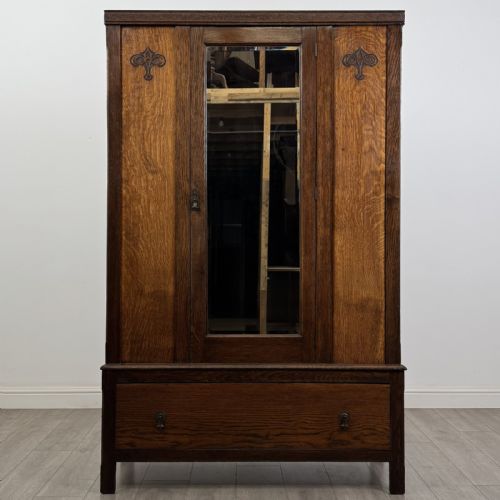
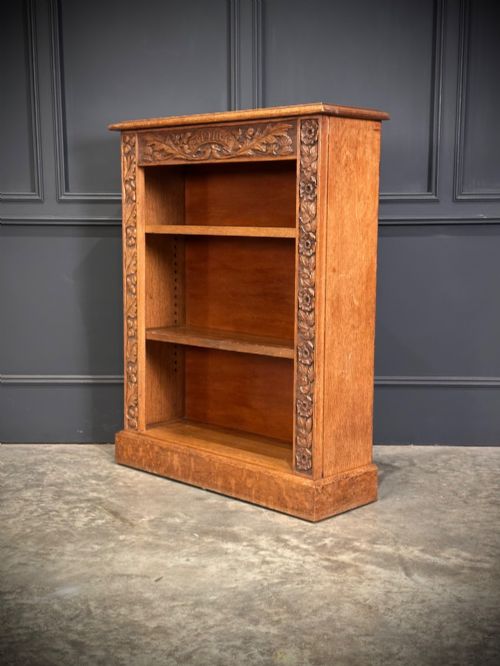
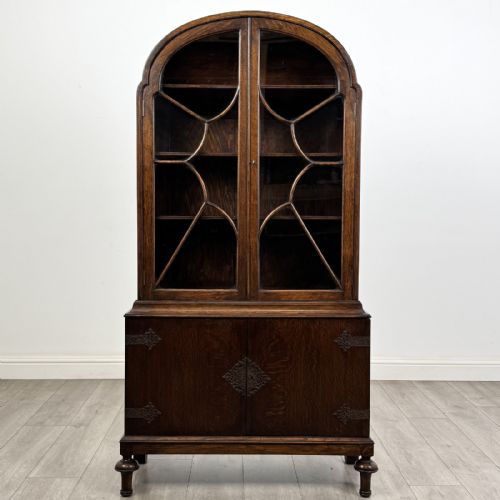
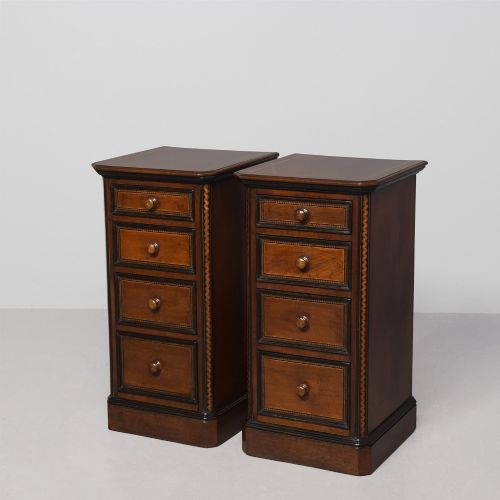
These antique crafting cabinet pieces bring genuine utility and period character to a room, offering clever storage in solid oak and walnut.
Antique Crafting Cabinet
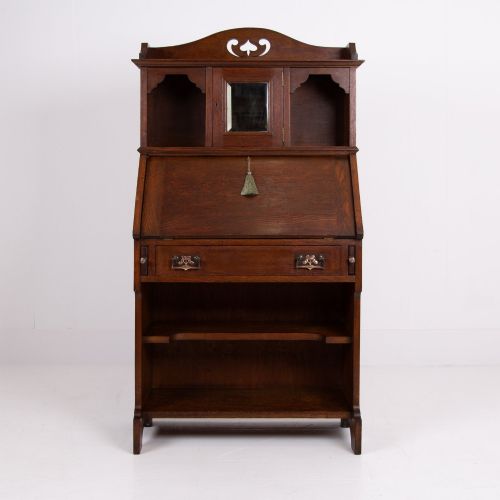
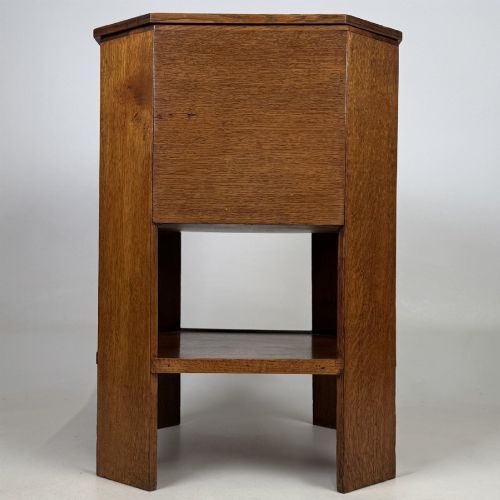
An antique crafting cabinet encompasses functional storage pieces designed for domestic utility, workspace organisation, and display, primarily originating from the Victorian, Edwardian, and early twentieth-century periods. When searching for an antique crafting cabinet, buyers most frequently encounter solid oak items influenced by the Arts and Crafts, Aesthetic Movement, and Edwardian styles. These range from fitted bureaux and wall cupboards to music cabinets and display units, reflecting the domestic pursuits of their original owners.
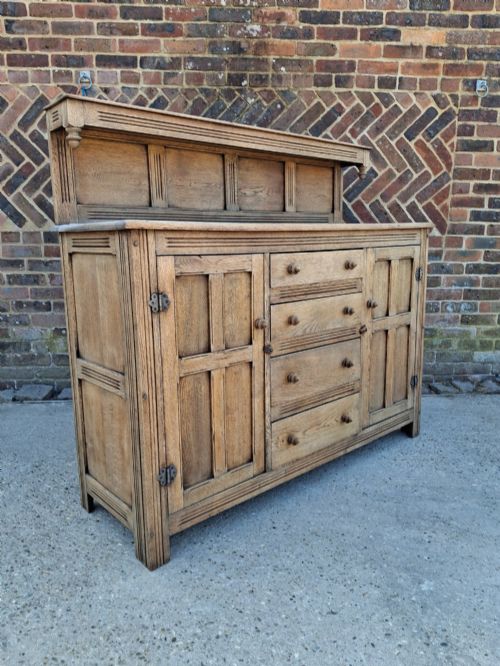
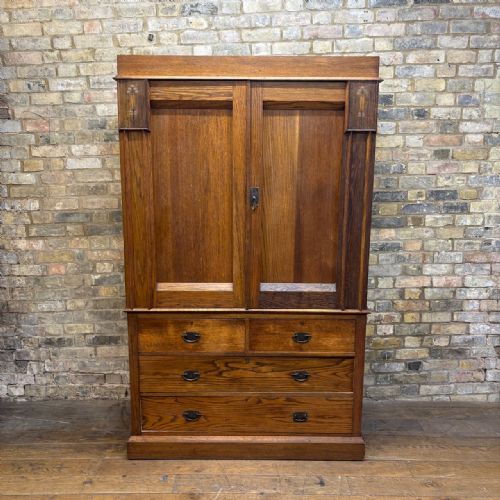
The construction of these pieces leans heavily towards robust hardwoods, with golden and honey oak dominating the selection alongside walnut, mahogany, and pine. Makers often integrated specific internal fittings such as drawers, shelves, and dedicated compartments to hold materials, books, or papers. Sideboards, wardrobes, and smaller tabletop or wall-hanging versions also appear within this group, showing a strong emphasis on practical utility combined with vernacular or revivalist ornamentation.
How they were made
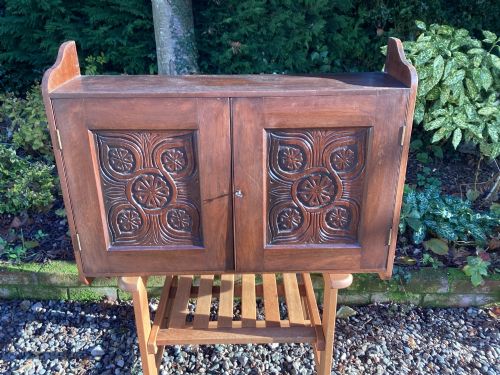
Makers relied on solid oak and walnut as the primary structural woods, often selecting quarter-sawn timber to expose distinctive medullary rays in Arts and Crafts pieces. Joinery was executed by hand with traditional mortise and tenon joints to ensure long-term durability for heavily used storage furniture. Wood inlay, carved details, and linenfold panelling provided surface interest without compromising the structural integrity of the carcase.
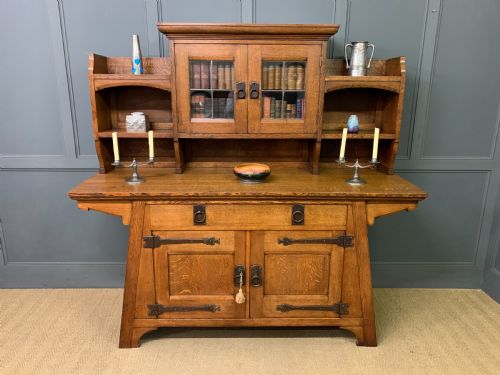
Metal fittings played a crucial structural and decorative role, featuring brass handles, hinges, and occasional ironwork secured directly to the timber doors and drawers. Glass panels appeared frequently in display cabinets, bookcase doors, and wall cabinets to showcase contents while protecting them from dust. Ebonised highlights and specialised leaded glazing were also utilised by makers working within the Aesthetic and Art Nouveau movements to accent the principal timber.
Antique Crafting Cabinet Retail Price Guide 2026
Typical asking prices for crafting cabinet among the pieces listed under this phrase on Sellingantiques today, from the lower quarter to the upper quarter. They describe what is for sale here now, not the wider market.
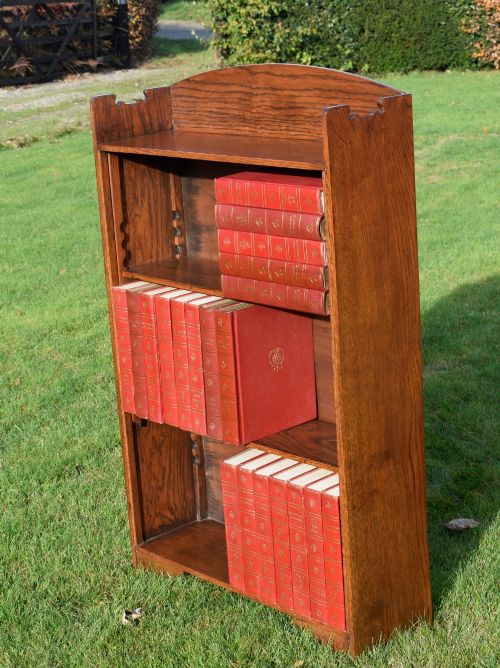
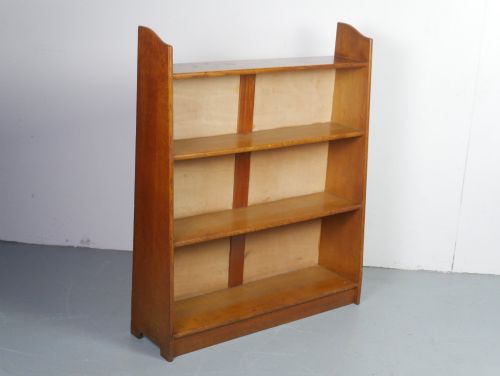
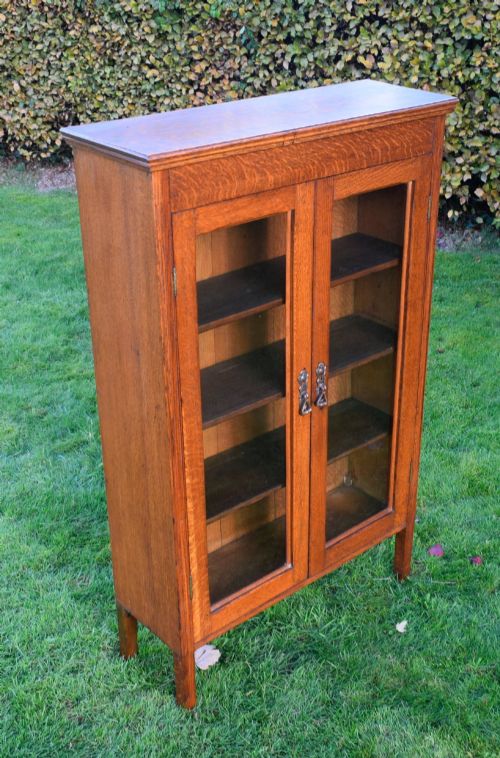
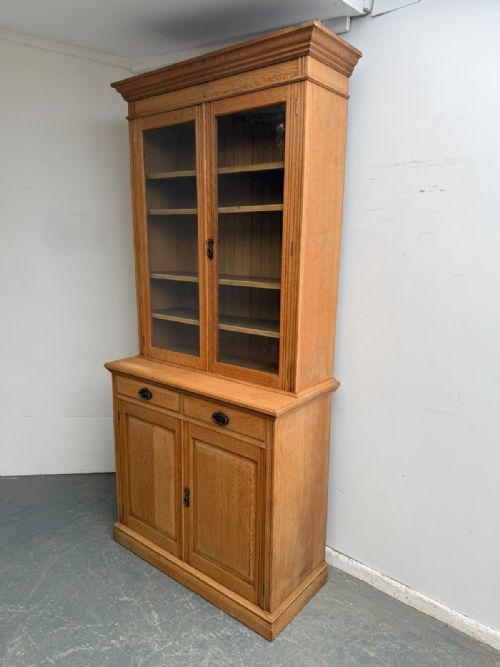
Listings for an antique crafting cabinet frequently showcase golden oak timber combined with Arts and Crafts design motifs.
What varies in quality
The distinction between standard utility items and finer examples rests on the ambition of the design and the pedigree of the maker or workshop. Pieces associated with known firms or designers display superior proportions, considered carving, and thoughtful integration of hardware such as decorative brass handles and copper strapwork. Lesser pieces rely on standard mass-produced joinery with minimal decorative ambition beyond basic linenfold or geometric moulding.
Material selection and internal fit-out further differentiate the range. Superior cabinets feature carefully matched timber grains, dovetailed drawer construction throughout, and intact original interiors including specialised pigeonholes, racks, or mirrors. Altered interiors, mismatched replacement hardware, or secondary softwood panels used where hardwood is expected indicate a lower tier of craftsmanship.
Heals Of London·John Moyr Smith·Leonard Wyburd·Shapland and Petter·GM Elwood·JS Henry
The Antique Crafting Cabinet Glossary
- Arts and Crafts
- A design movement advocating for traditional craftsmanship, simple forms, and local materials, heavily represented among these cabinets.
- Bureau
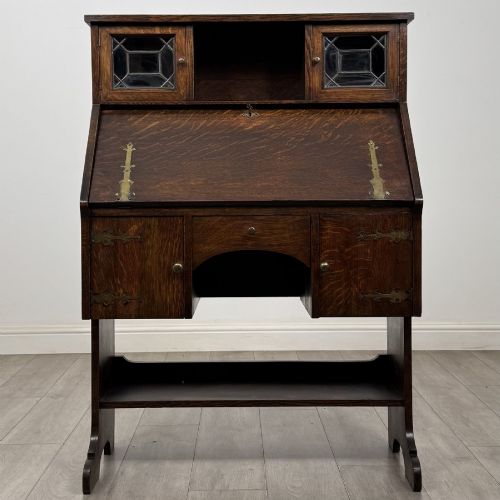
- A writing desk featuring a sloping fall-front that opens to reveal internal compartments and small drawers.
- Purdonium
- A specialised domestic cabinet designed specifically to store coal for a fireplace, often matching the style of surrounding furniture.
- Raised Gallery
- A low decorative upstand or shelving tier fitted to the top surface of a chest, sideboard, or cabinet.
- Linenfold
- A style of wood carving that imitates folded linen, commonly seen on panels of Edwardian and revivalist cupboards.
- Stretcher Base
- Horizontal wooden bracing connecting the lower legs of a table or cabinet to provide structural stability.
Antique Crafting Cabinet: Frequently Asked Questions
What is an antique crafting cabinet?
An antique crafting cabinet is a functional storage piece from the late nineteenth or early twentieth century, designed to hold materials, books, or writing implements.
These items typically feature solid oak construction, fitted interiors, and stylistic influences from the Arts and Crafts and Edwardian periods.
How do I identify an Arts and Crafts cabinet?
Arts and Crafts cabinets are identified by their honest construction, visible joinery, and use of solid golden oak or walnut.
They often incorporate hand-beaten brass hardware, simple geometric carvings, and a focus on utility over excessive ornamentation.
Where were these cabinets placed in a home?
These cabinets served various domestic roles depending on their form, placed in studies, living rooms, or hallways for storage and display.
Wall-mounted versions saved floor space, while larger sideboards and bureaux anchored principal rooms as workspace furniture.
How do I care for antique oak furniture?
Care for antique oak involves keeping the timber away from direct heat sources and sudden humidity changes to prevent splitting.
Applying a traditional beeswax polish occasionally helps nourish the wood and maintain its natural lustre without building up heavy chemical residues.