


Antique Court Press
An antique court press is a substantial storage piece built to hold household linens and provisions.
Antique Court Press
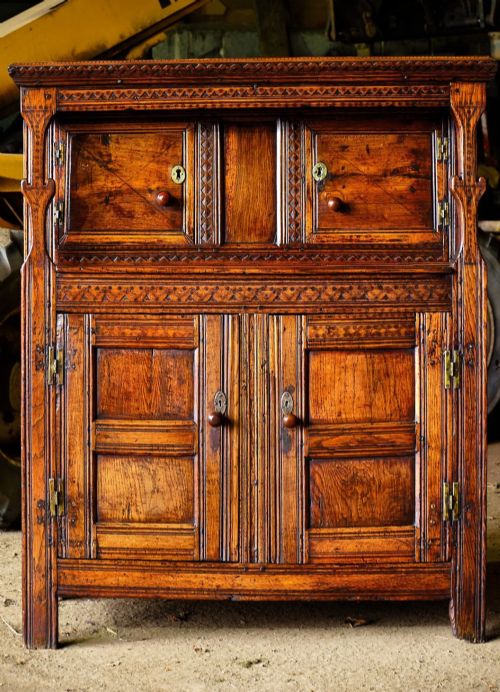
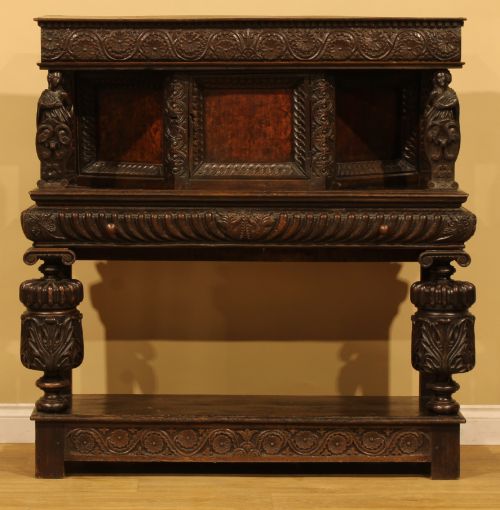
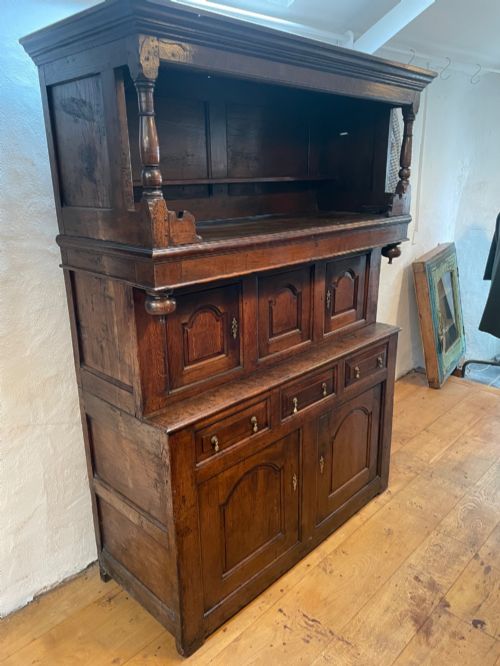
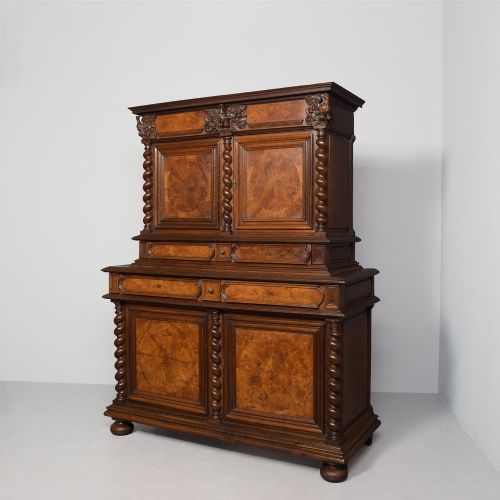
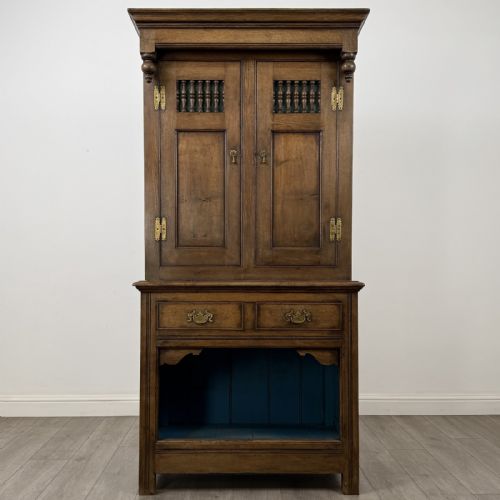
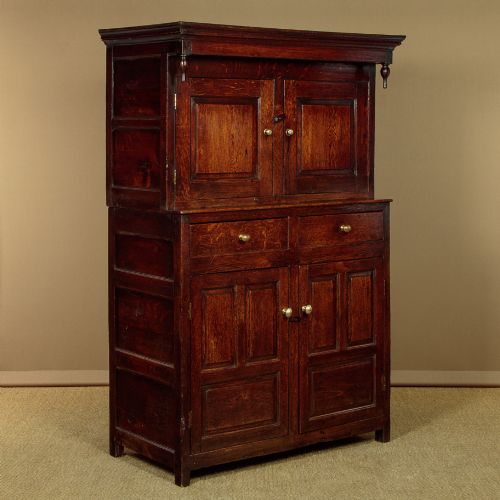
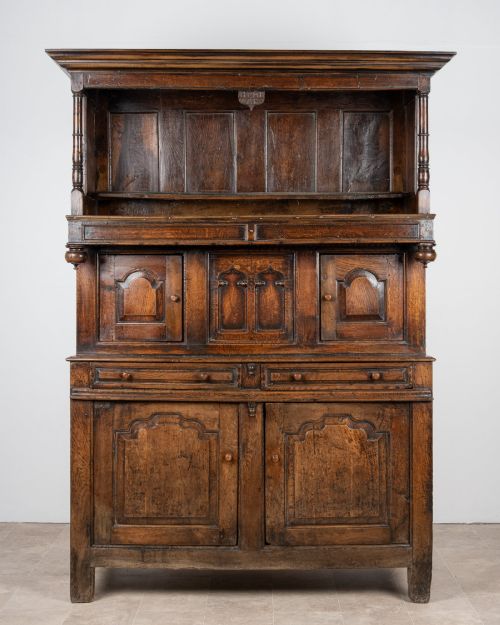
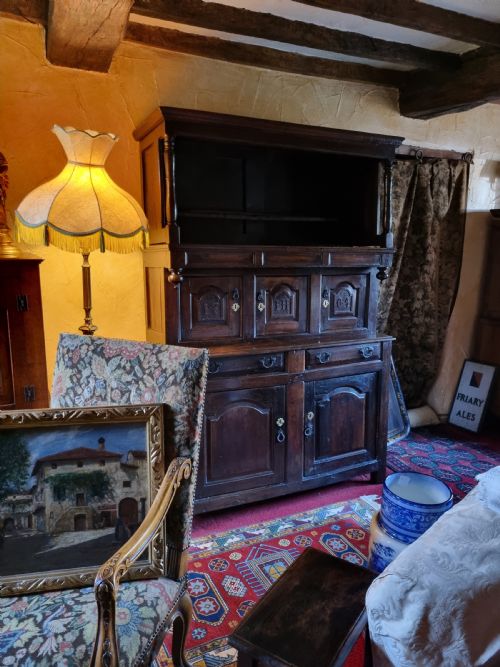
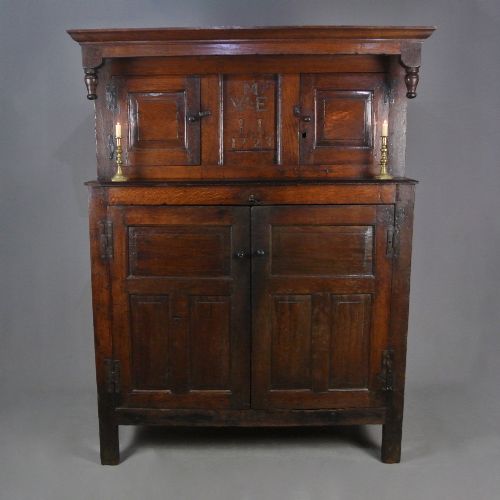
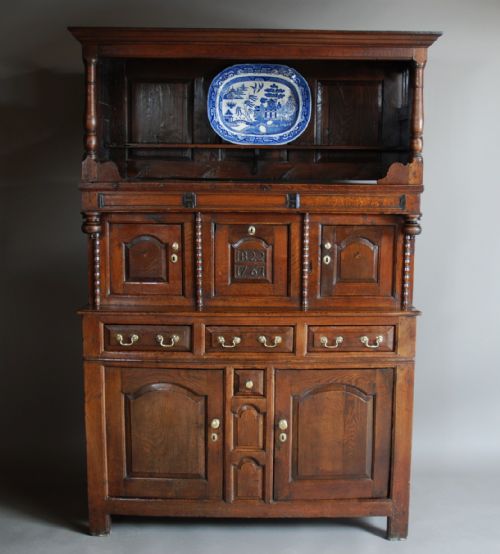
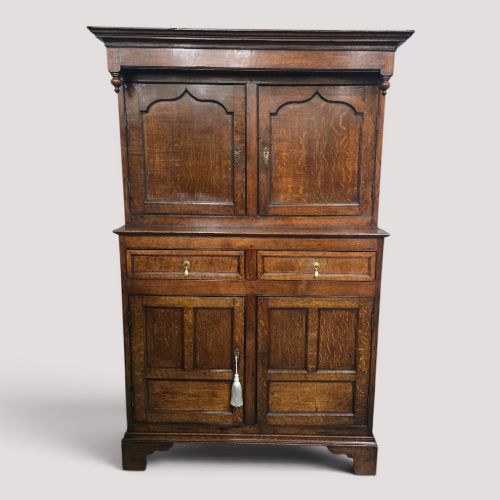
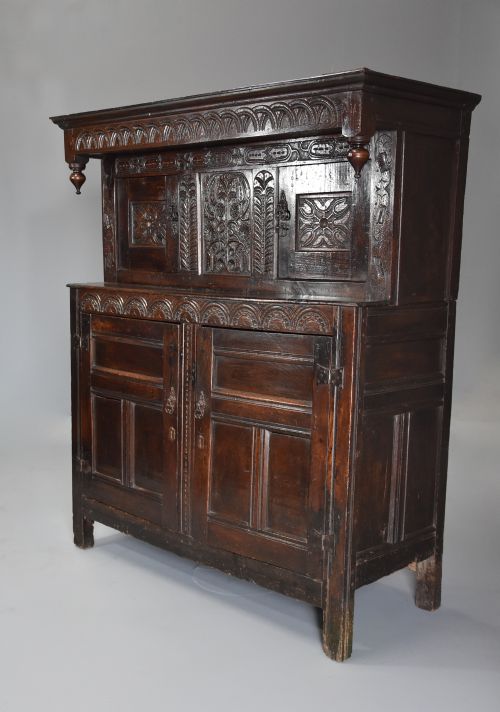
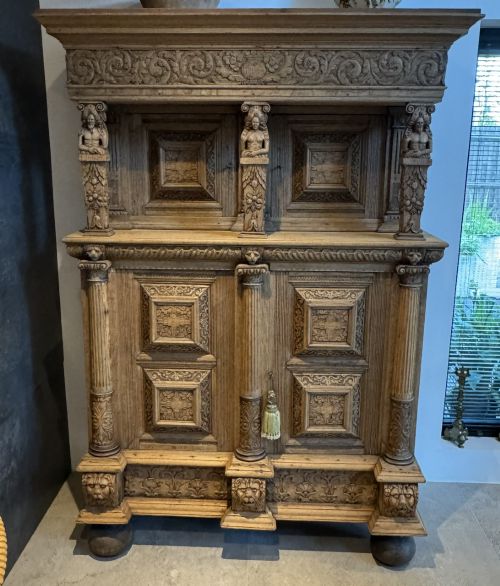
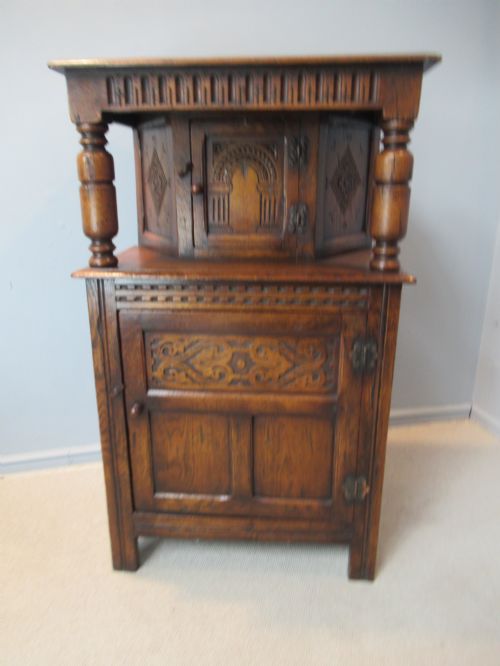
An antique court press incorporates tiered compartments, often split into distinct upper and lower stages enclosed by doors or panels. These examples originate primarily from English and Welsh country workshops, spanning periods from the sixteenth century through the Georgian era and into later revival pieces.
The regional variations include Welsh deuddarn and tridarn forms alongside West Country and Lancashire press cupboards. Oak forms the primary structural timber across these provincial pieces, occasionally accented with walnut and fruitwood details.
Buyers meet sturdy vernacular pieces designed for domestic storage rather than formal courtly display. The proportions range from miniature cabinets to tall standing cupboards fitted with carved pillar panels or recessed upper stages.
How they were made
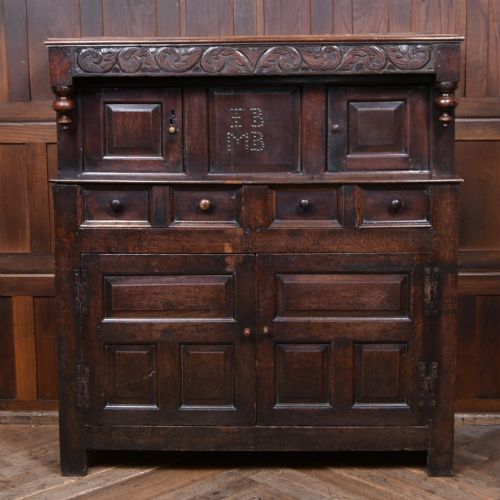
Carpenters constructed these heavy storage pieces using solid oak boards joined with traditional frame and panel techniques. Carvers decorated the surfaces with geometric punchwork, chip carving, and applied mouldings.
Makers utilised iron and brass hardware, including butterfly hinges, latches, and escutcheons to secure the heavy doors. Secondary woods such as elm, walnut, and fruitwood appear in specific panels and inlaid decoration.
Finish layers developed through centuries of wax application and natural oxidation, creating deep patinas on the primary timber surfaces. Paint and inlaid sections of ebony and holly provide contrast on specific regional items.
Antique Court Press Retail Price Guide 2026
Typical asking prices for court press among the pieces listed under this phrase on Sellingantiques today, from the lower quarter to the upper quarter. They describe what is for sale here now, not the wider market.
Listings for an antique court press feature regional forms built primarily from solid oak, with occasional examples in elm and walnut.
What varies in quality
The integrity of the timber and the depth of the carved ornamentation define the baseline standard of each piece. Crispness in the chisel work on pillar panels and friezes separates superior vernacular examples from plain utilitarian boxes.
Original surface patination and the survival of untouched primary timber elements dictate the standing of a press. Alterations to the base tier or replaced sections of panelling diminish the historical coherence of the piece.
The Antique Court Press Glossary
- Deuddarn
- A traditional Welsh two-tier cupboard featuring enclosed upper and lower storage sections. This form developed during the seventeenth and eighteenth centuries in rural workshops.
- Tridarn
- A Welsh three-tier press cupboard incorporating an open or enclosed middle section beneath a smaller upper canopy. These taller structures provided additional storage for provisions and household goods.
- Livery cupboard
- A standing storage piece originally used for keeping food and candles ventilated in domestic chambers. The term often describes designs with turned spindles or pierced panels.
- Press cupboard
- A heavy timber storage cabinet containing internal shelves or hanging space behind panelled doors. These pieces formed the central storage furniture in substantial early homes.
- Patina
- The surface sheen and colour acquired by wood through age, handling, and wax polishing over centuries. Original patination indicates minimal chemical stripping or aggressive sanding.
Antique Court Press: Frequently Asked Questions
What is an antique court press?
An antique court press is a multi-tiered wooden storage cabinet designed for domestic linens and provisions.
These pieces feature stacked compartments enclosed by panelled doors and decorated with period carving.
Where were these cupboards made?
Makers constructed these storage pieces in regional workshops across England and Wales.
Welsh vernacular examples like the deuddarn and tridarn sit alongside English regional press cupboards from the seventeenth and eighteenth centuries.
How do I care for antique oak?
Keep the timber away from direct heat sources and sudden humidity shifts to prevent splitting.
Feed the wood periodically with traditional beeswax to maintain the surface patina.
How are different periods identified?
Construction methods, joinery types, and decorative carving styles help distinguish between periods.
Seventeenth-century pieces typically show heavier geometric mouldings and pegged frames, while Georgian examples display refined proportions.