

Antique Cottage Artwork
Antique cottage artwork captures rural life and domestic scenes in oil paint and watercolour across the nineteenth and early twentieth centuries.
Antique Cottage Artwork
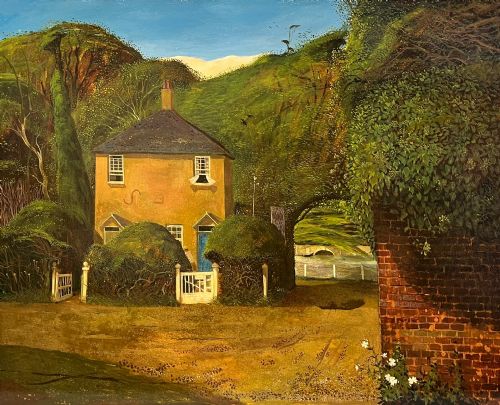
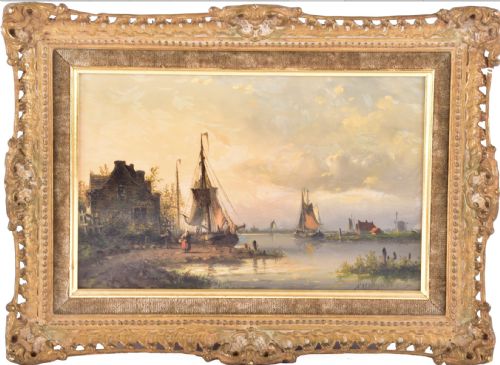
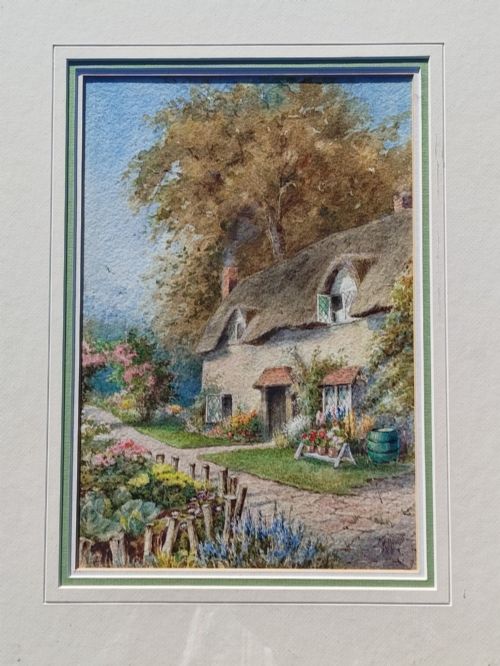
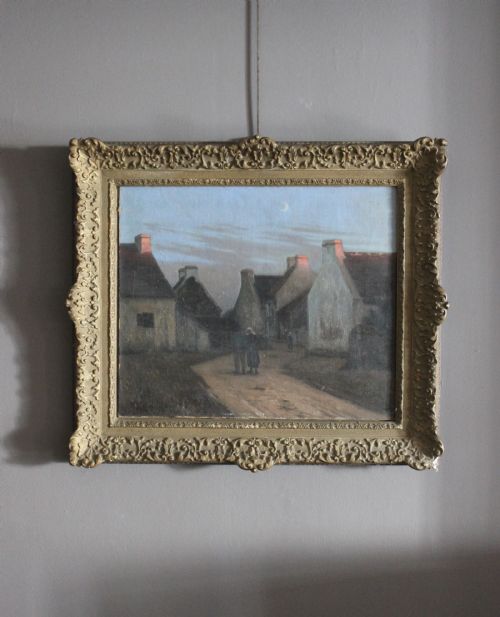
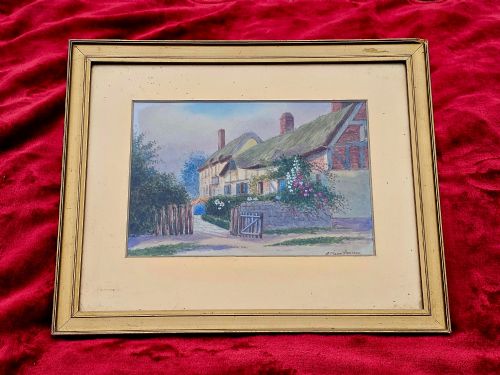
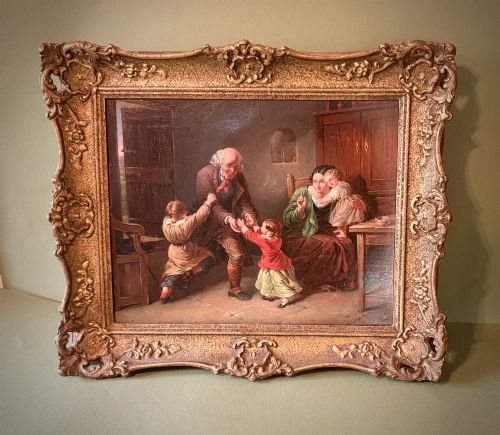
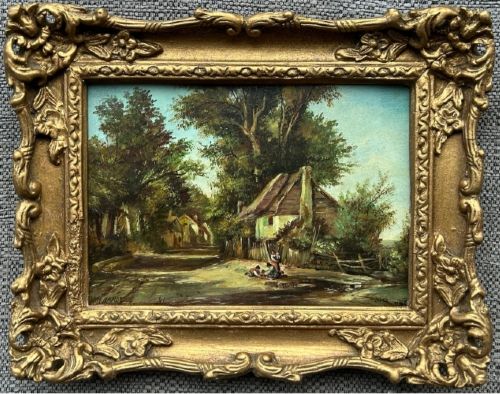
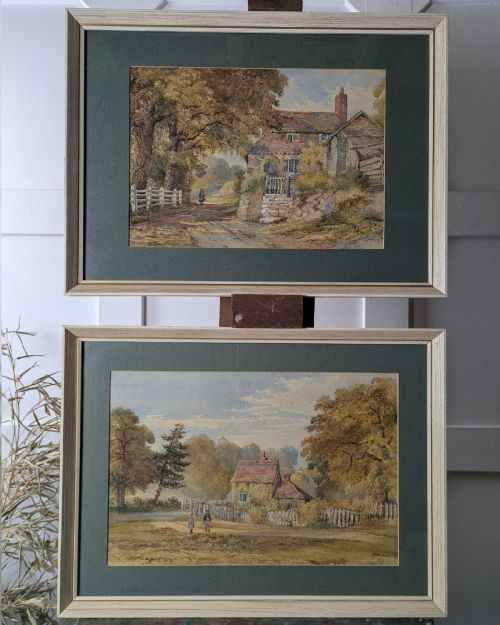
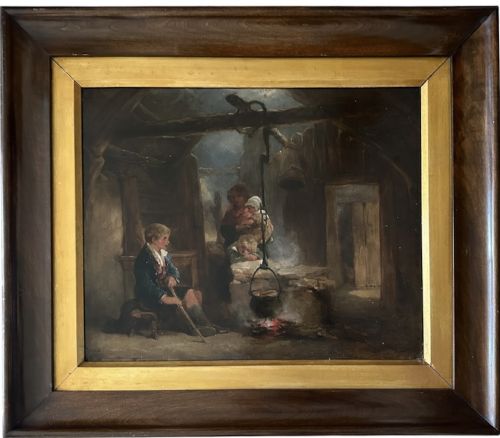
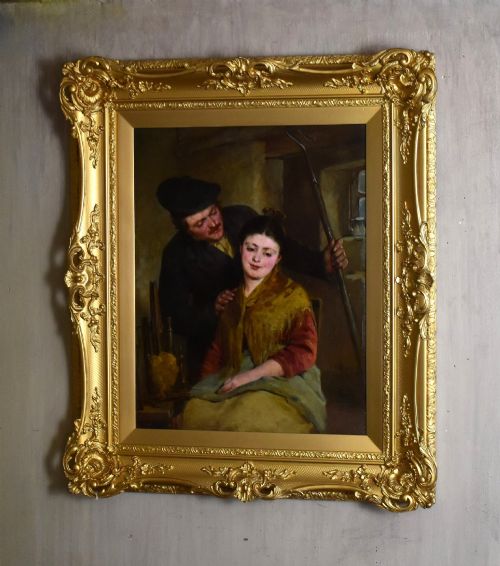
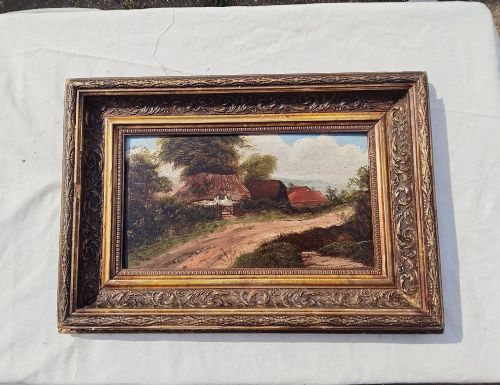
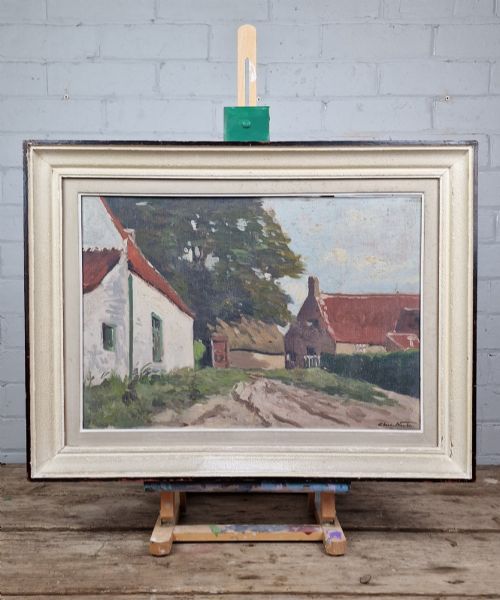
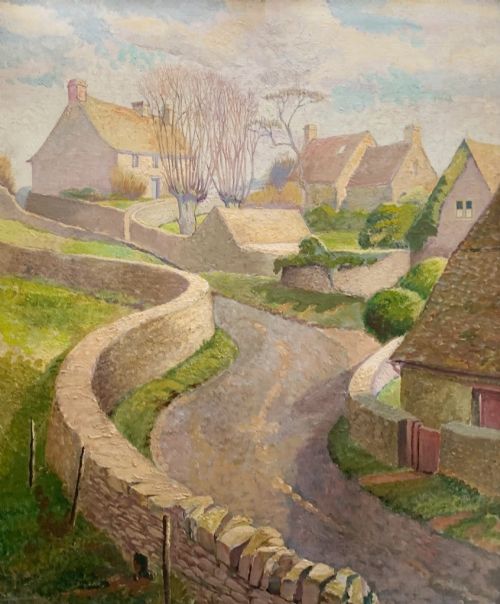
Antique cottage artwork comprises oil paintings, watercolours, and framed prints depicting rural dwellings, farmyards, and domestic interiors. Buyers searching for antique cottage artwork encounter pieces ranging from Victorian genre scenes of family life to early twentieth-century impressionist watercolours of country landscapes.
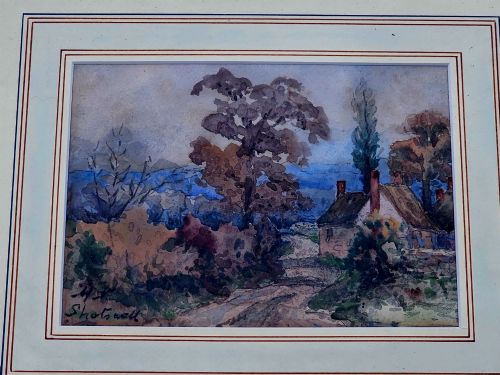
The selections on this page span the nineteenth century up to the 1940s, originating mainly from British and European hands. Subjects frequently combine natural scenery with rustic architecture, such as thatched cottages, river landscapes, and quiet farmyards.
Common formats include oil on canvas, panel, board, and card, alongside detailed watercolours set beneath glass in period frames. These works reflect a widespread historical fascination with rural simplicity and domestic routines.
Materials and methods
Painters used oil paint and watercolour applied to canvas, wood panels, wooden board, card, and heavy paper supports. Oil colours provided rich tones for interior scenes and landscapes, while watercolours offered fluid transparency for village views and rural studies.
Supports often dictated the scale and finish, with wooden panels and boards giving firm ground for detailed oil work. Gesso and gilded frames frequently completed the presentation, protecting the paper or canvas and defining the visual boundary of the piece.
Antique Cottage Artwork Retail Price Guide 2026
Typical asking prices for cottage artwork among the pieces listed under this phrase on Sellingantiques today, from the lower quarter to the upper quarter. They describe what is for sale here now, not the wider market.
Listings feature works spanning the 19th century, Victorian era, Edwardian period, and up to the 1940s.
Assessing quality and execution
Execution depends upon the artist's handling of light, brushwork precision, and compositional balance within the landscape or interior. Finer works demonstrate careful attention to human figures, architectural perspective, and atmospheric weather conditions.
Material preservation also influences overall standing, including the stability of the paint layer on panel or canvas and the clarity of watercolours behind glass. Original frames matching the period of the artwork add historical integrity to the piece.
Nicolaas Martinus Wijdoogen·George Whitton Johnstone·William Howard Hardy·A. Marie Parsons·John McDougal·Robert A. Nottingham·Robert John Hammond·Charles Houben·Howard Helmick·Hendrik Valkenberg·Jacob Akkersdijk·Percy Lancaster·George Morland·Charles Edward Wilson·Harry Brooker·John Horace Hooper·Alexander Rosell·Reginald Grange Brundrit·Fred Lawson·James Kyd·Arthur Tucker·J S Ainley·William Hoggatt·James Hardy Junior·Frederick James Knowles
The Antique Cottage Artwork Glossary
- Genre painting
- Artwork depicting scenes from ordinary life, often involving figures in domestic interiors or rural settings. These pieces frequently tell a narrative story about daily routines.
- Oil on panel
- A painting executed on a wooden board or panel rather than stretched canvas. This surface provides a rigid support favoured by many nineteenth-century painters.
- Watercolour
- A paint consisting of pigment suspended in a water-based solution, typically applied to paper. It produces translucent washes of colour well suited to landscape studies.
- Gesso
- A plaster-like mixture applied to wood or canvas to prepare a smooth surface for painting, or used to mould decorative details on picture frames.
- Impressionism
- A style of painting characterised by relatively small, thin yet visible brush strokes and an emphasis on accurate depiction of light. Post-impressionism developed these techniques further.
Antique Cottage Artwork: Frequently Asked Questions
What periods do these paintings cover?
The available pieces originate primarily from the nineteenth century and the early decades of the twentieth century. Specific dates stretch from the Victorian era through the Edwardian period up to the 1940s.
Most works align with nineteenth-century romanticism, Victorian genre painting, and early twentieth-century British and European impressionism.
How do I identify a watercolour from an oil painting?
Watercolours are painted on paper, usually displayed behind glass, showing translucent washes and the texture of the paper beneath. Oil paintings utilise thick pigments on canvas, wood panels, or board.
Oil surfaces often possess a distinct sheen and visible brush texture, whereas watercolours present a flatter, matt appearance.
Where were these rural scenes painted?
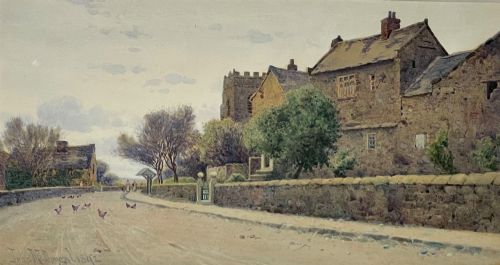
The artworks document rural locations across Britain and continental Europe, including English villages, Scottish crofts, Welsh views, and Dutch farmyards. Certain pieces record specific named places such as Bidston Village or Staithes.
Other works capture alpine settings like Lauterbrunnen in Switzerland or general pastoral landscapes imagined by the artist.
How should I care for antique paper and canvas artwork?
Keep watercolours and works on paper away from direct sunlight to prevent the fading of delicate pigments. Maintain stable room temperatures to protect canvas and wooden panels from warping or cracking.
Ensure glazed frames remain clean and dry, and avoid hanging pieces in damp environments such as unheated kitchens or bathrooms.