





Antique Corridor Seat
An antique corridor seat is a sturdy reception bench or chair designed for narrow spaces, offering enduring period character.
Antique Corridor Seat
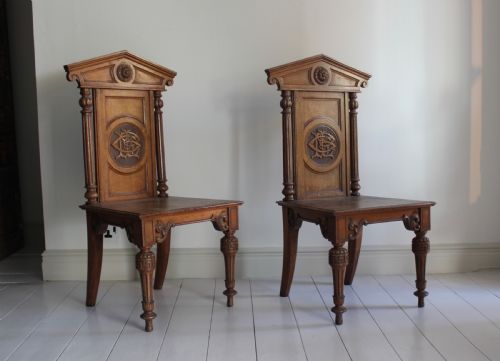
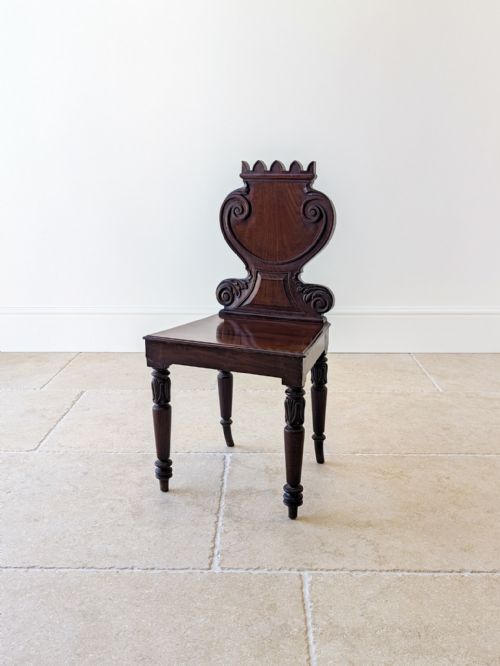
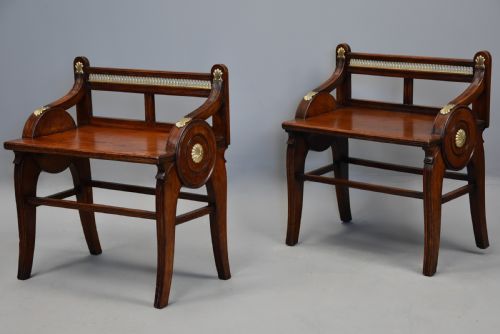
An antique corridor seat takes the form of a hall bench, hall chair, or reception seat designed for passageways and entrance areas. These pieces span periods from the Georgian and Regency eras through the Victorian epoch, reflecting shifting stylistic preferences over time.
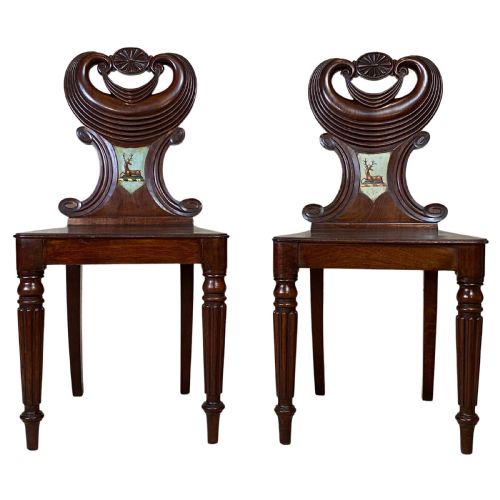
Most examples found here are constructed as timber chairs or benches originating from English or Scottish workshops. They frequently appear in matched pairs and serve functional roles in vestibules and hallways.
The selection encompasses stylistic variations including Victorian Gothic Revival alongside plain architectural designs. Each object displays the characteristic upright proportions suited to transit spaces rather than prolonged lounging.
How they were made
Makers utilised dense hardwoods such as mahogany, oak, and walnut to construct these substantial seating forms. Solid wood components ensure structural integrity for pieces subjected to heavy daily hallway traffic.
Craftsmen applied detailed carving, brass accents, and timber inlay to embellish the wooden frames. Shield backs and cabriole legs demonstrate the joinery techniques employed across Georgian and Victorian workshops.
Listings feature mahogany, oak, walnut, and brass across Georgian, Regency, and Victorian periods.
What varies in quality
The sophistication of the carved detail and the selection of timber grain define the tier of craftsmanship. Superior examples display crisp relief work on shield backs and uniform figuring across solid mahogany or oak boards.
Attribution to documented makers or specific regional schools elevates the standing of a piece. Well-proportioned joinery and balanced proportions distinguish high-grade reception seating from utilitarian workshop production.
James Shoolbred & Co.·Gillows
The Antique Corridor Seat Glossary
- Hall chair
- A rigid wooden seat traditionally placed in an entrance hall or corridor. These items typically feature solid wood construction without upholstered padding.
- Shield back
- A chair back shaped in the outline of a heraldic shield, popular during the Georgian and Victorian periods. This design often incorporates carved motifs or painted armorial details.
- Cabriole leg
- A furniture leg that curves outward in a convex arc and then bends inward in a concave arc, ending in a pad or foot. This form derives from classical motifs adapted by cabinetmakers.
- Inlay
- A decorative technique where contrasting materials are inserted into recessed portions of a wooden base. Common elements include lighter woods fitted into dark mahogany surfaces.
- Armorial
- Relating to heraldry, featuring family crests, coats of arms, or symbolic insignia. These decorative carvings denote the original commissioning lineage of the seating.
Antique Corridor Seat: Frequently Asked Questions
What is an antique corridor seat used for?
These pieces function as sturdy seating placed in narrow hallways, reception areas, and entrance vestibules. They provide a rigid perch for putting on footwear or greeting visitors.
Historically, such furniture sat against passage walls to occupy minimal floor space while displaying the status of the household.
How do I identify a Regency hall chair?
Regency examples display classical revival motifs influenced by Greek and Roman design. They often feature dark mahogany construction with bold geometric lines and restrained carving.
Look for architectural proportions and unpadded wooden seats characteristic of early nineteenth-century production.
Are these seats comfortable for daily sitting?
Corridor seating was built for upright posture and brief periods of waiting rather than lounging. The wooden boards and rigid backs encourage correct posture rather than soft relaxation.
Buyers often add loose squabs or cushions to soften the seat for everyday use in modern spaces.
How do I distinguish oak from mahogany pieces?
Oak exhibits visible medullary rays and an open, textured grain structure with pale golden or brown tones. Mahogany presents a tighter, smoother grain that darkens to a deep reddish-brown hue over time.
Both timbers provide the structural density required for heavy hallway furniture.