






Antique Corner What Not
An antique corner what not offers tiered display space that makes awkward room corners useful while showing off treasured ornaments.
Antique Corner What Not
An antique corner what not is a multi-tiered display piece designed specifically to fit into the corner of a room. These pieces provide vertical storage and display space without occupying the floor area of standard cabinets.
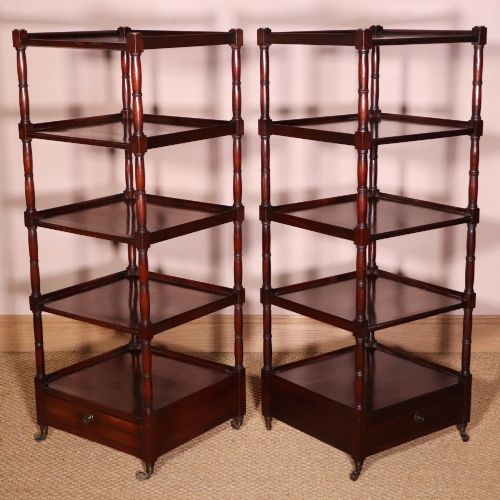
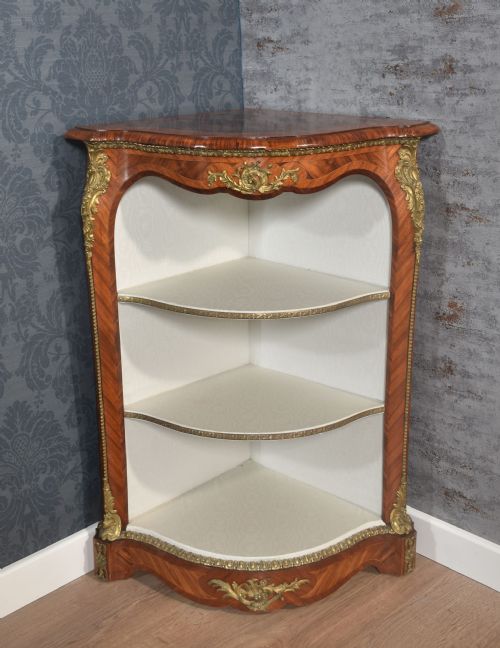
The most common versions met here date from the nineteenth century, particularly the Victorian period, though earlier Georgian and Regency examples also appear. They range from open four-tier shelving units to enclosed corner cupboards and hanging wall shelves.
Makers utilised these versatile stands for books, ceramics, and small decorative objects in drawing rooms and parlours. The corner format makes efficient use of domestic space while presenting collections across ascending tiers.
Materials and construction methods
Cabinetmakers constructed these pieces primarily in rich timbers such as mahogany, walnut, burr walnut, and rosewood. Lighter woods like oak, elm, and softwood also form the basis for provincial or later examples, alongside ebonised finishes.
Decorative elements frequently include intricate marquetry inlay, ormolu mounts in French styles, and brass detailing. Tiered open shelves rely on turned or carved upright supports, while enclosed versions incorporate glazed doors and panelled cupboards.
Antique Corner What Not Retail Price Guide 2026
Typical asking prices for corner what not among the pieces listed under this phrase on Sellingantiques today, from the lower quarter to the upper quarter. They describe what is for sale here now, not the wider market.
Some nineteenth-century makers even experimented with bamboo for tall corner display stands, bringing an exotic lightness to traditional parlour storage.
What separates the finest pieces
Quality in these pieces rests upon the selection of timber veneers and the precision of the inlay work. Burr walnut and figured rosewood with deep natural grain contrast sharply with plain, unfigured secondary woods.
The architectural execution of the tiers and the crispness of the turned supports dictate the overall refinement. Sturdiness in multi-tiered open structures relies on tight joinery rather than heavy bracing, maintaining a balanced silhouette.
The Antique Corner What Not Glossary
- Whatnot
- A piece of furniture consisting of a set of open shelves for displaying small objects or books. They became popular during the eighteenth and nineteenth centuries.
- Etagere
- A piece of furniture with a set of open shelves for displaying ornaments. The term often overlaps with whatnot in nineteenth-century listings.
- Burr walnut
- A wood prized by cabinetmakers for its swirling, intricate grain patterns. It is sliced from the growth excrescence on a walnut tree.
- Ormolu
- Gilt bronze mounted onto furniture as a decorative detail. It adds a bright metallic contrast to dark woods in French-influenced pieces.
- Dumb waiter
- A piece of tiered shelving or a revolving stand used for holding tableware. Some early nineteenth-century examples share the vertical tier construction of corner units.
Antique Corner What Not: Frequently Asked Questions
Where should I place a corner what not?
These pieces fit naturally into unused room junctions where standard rectangular furniture will not sit comfortably. They anchor empty angles in drawing rooms or dining spaces.
Position them away from direct heat sources to protect sensitive veneers like burr walnut and rosewood from drying out or splitting.
How do I clean the wooden tiers?
Dust the shelves regularly with a soft, dry cloth to prevent grit accumulation on polished surfaces. Avoid household sprays that contain silicone.
Apply a traditional beeswax sparingly once or twice a year to nourish the timber and maintain a soft, natural sheen.
Can these shelves hold heavy books?
Most multi-tiered open versions are built to display light ornaments, ceramics, and modest volumes rather than heavy reference sets. The corner supports bear vertical weight well, but excessive heavy loading can strain the joints.
Place heavier items on the lowest tier to keep the centre of gravity low and maintain overall stability.
How can I tell a Victorian piece from a Georgian one?
Georgian and Regency examples tend to feature solid mahogany with restrained architectural lines and simple turned supports. They often date from the late eighteenth or early nineteenth century.
Victorian pieces frequently introduce burr walnut veneers, elaborate marquetry inlay, and four or more tiers. The addition of ebonised wood and ormolu mounts also points towards the later nineteenth century.