



Antique Corner Wall Shelf
An antique corner wall shelf turns neglected angles into display space, offering the refined timber and craftsmanship collectors prize.
Antique Corner Wall Shelf
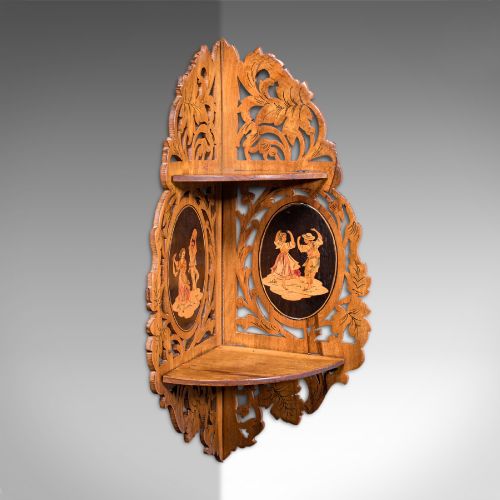
An antique corner wall shelf utilises awkward room junctions to display small objects while saving floor space. The listings and archives show examples spanning the eighteenth century through to the late nineteenth century, taking the form of open tiers, enclosed cupboards, and hanging cabinets.
Origins vary from English workshops to French provincial makers, with occasional examples originating further afield in West Africa or Japan. Whether open for display or fitted with doors, each piece reflects the interior demands of its period.
How they were made
Joinery relies heavily on dense timbers such as mahogany, oak, and padouk, selected for their stability when hung on walls. Cabinetmakers shaped these woods into bow fronts and internal shelving designed to fit exact ninety-degree angles.
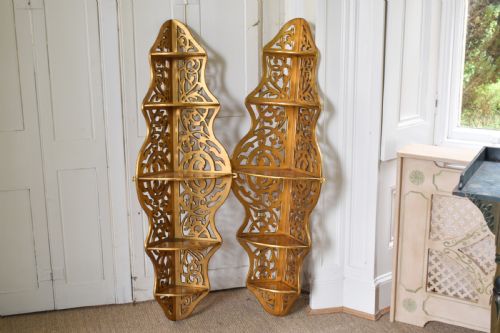
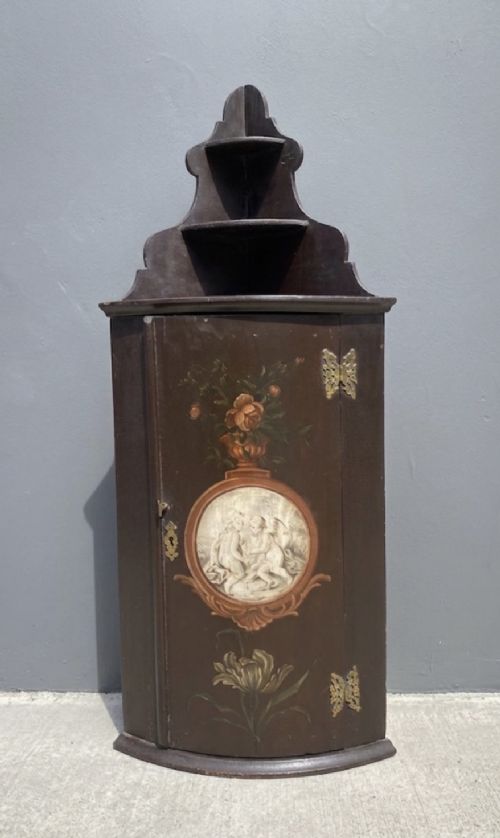
Surface treatments range from clear polish on mahogany grain to painted finishes and giltwood with gesso. Specialised techniques include Sorrento inlay work and delicate Shibayama ornamentation applied to various woods.
Antique Corner Wall Shelf Retail Price Guide 2026
Typical asking prices for corner wall shelf among the pieces listed under this phrase on Sellingantiques today, from the lower quarter to the upper quarter. They describe what is for sale here now, not the wider market.
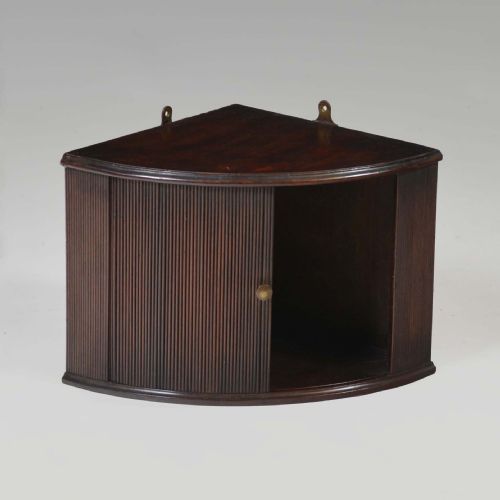
Several pieces include tiny enclosed spaces behind tambour doors, perfect for hiding secret items away from curious guests.
What varies in quality
Proportion and timber selection dictate the standing of a piece, with figured mahogany and finely matched olive wood representing the upper tier. Simpler painted deal or plain oak examples serve more utilitarian historical roles.
The sophistication of the joinery, from tambour fronts to shaped bracket supports, separates standard production from finer cabinetmaking. Surviving pairs and multi-tiered sets command greater attention than isolated single shelves.
The Antique Corner Wall Shelf Glossary
- Bow front
- A convex curved front that projects outward from the corner. This shape softens the hard angles of a room.
- Tambour
- A flexible shutter made of narrow vertical strips of wood glued to canvas. It slides in tracks to conceal the interior.
- Giltwood
- Wood that has been coated with a thin layer of gold leaf. It is frequently paired with gesso for carved decorative details.
- Padouk
- A heavy, durable exotic hardwood with a reddish hue. It appears in overseas trade pieces from the nineteenth century.
- Whatnot
- A piece of furniture consisting of multiple open shelves for displaying ornaments. These were popular during the Victorian era.
Antique Corner Wall Shelf: Frequently Asked Questions
How were antique corner shelves mounted?
Most hanging examples utilise internal fixing points or brass hanging brackets screwed directly into the back stiles. These secure the heavy timber frames safely into wall studs.
Because eighteenth and nineteenth-century walls varied in construction, proper masonry fixings or direct timber anchoring remain essential for modern installation.
What is the difference between a shelf and a cupboard?
Open corner shelves provide unhindered display space for porcelain, books, or small collections. Their primary purpose is visual presentation rather than secure storage.
Corner cupboards and cabinets feature doors, sometimes with tambour fronts or glazed panels, to keep contents protected from dust and light.
How do I date an oak corner piece?
Earlier pieces from the eighteenth century often display hand-cut dovetails, pegged joints, and solid oak backboards with distinct adze marks. Timber shrinkage and hand-turned elements further indicate age.
Later Victorian examples introduce machine-sawn components, standardised screws, and more decorative veneers like Sorrento inlay or applied gesso.
Can these shelves hold heavy books?
While sturdy timber construction allows for substantial weight, wall integrity dictates the load capacity. The strength of the historical fixings requires careful evaluation.
Lighter display items suit open bracket sets best, whereas large oak cupboards secured properly to structural walls accommodate heavier volumes.