



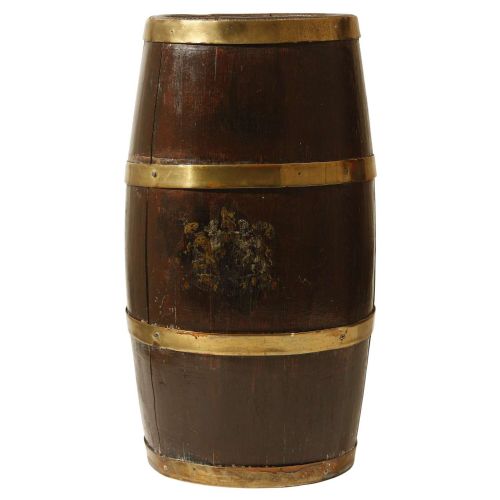


Antique Coopering Stand
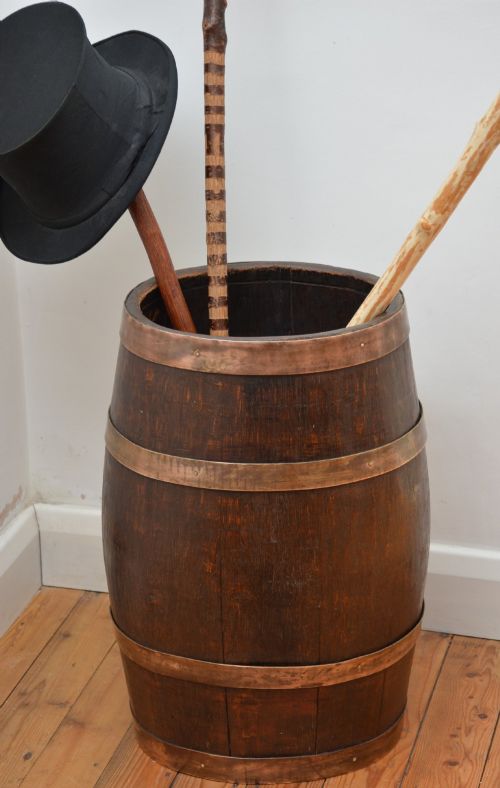
An antique coopering stand brings robust traditional woodworking and barrel construction into the hallway or reception room.
Antique Coopering Stand
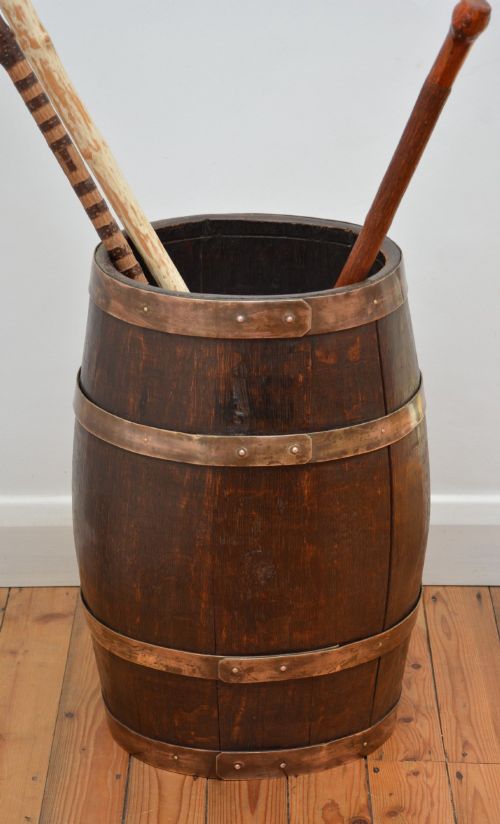
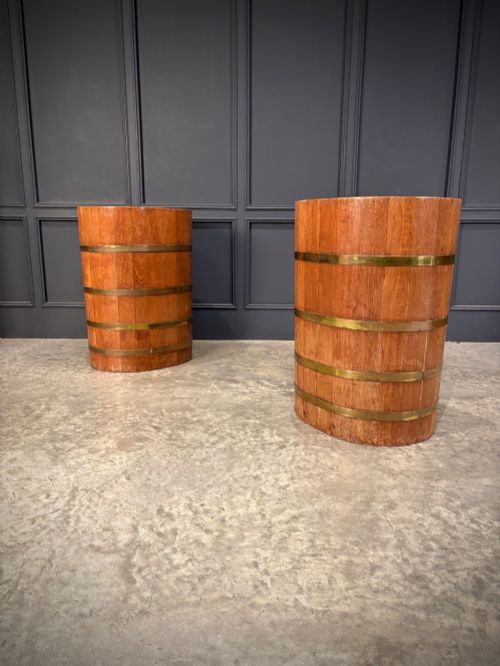
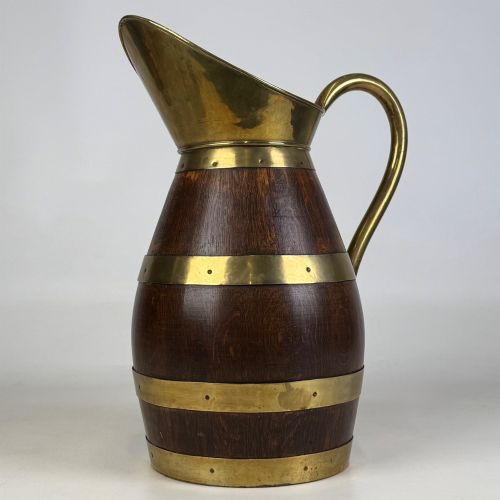
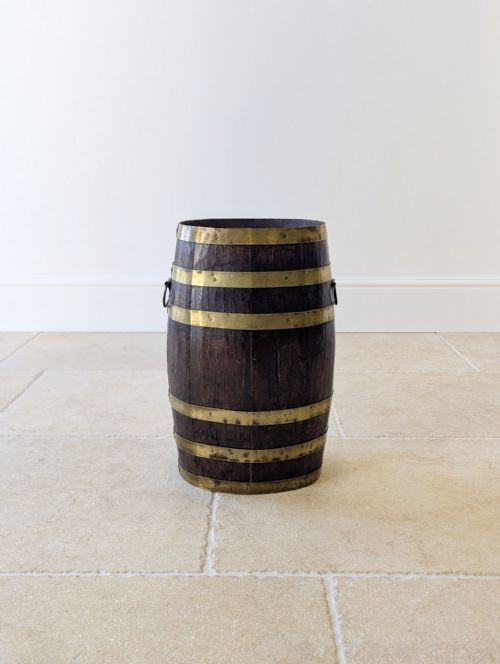
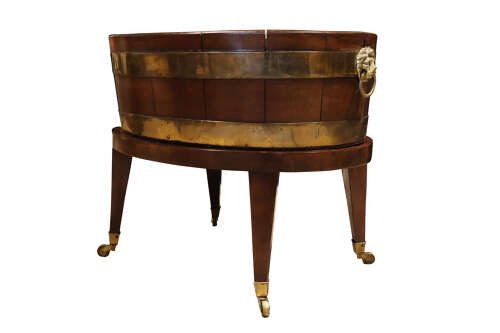
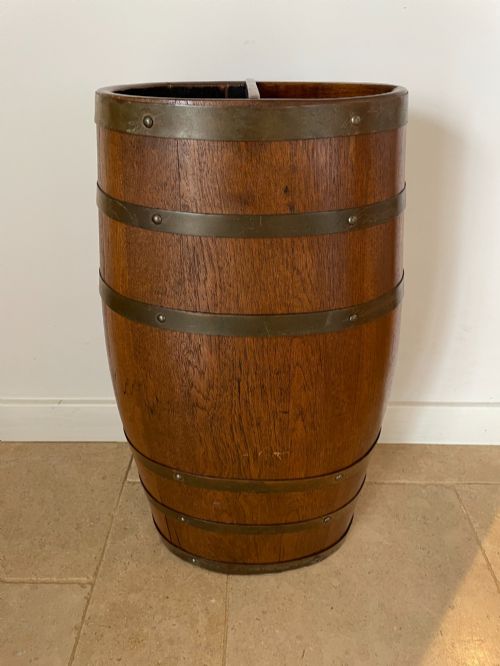
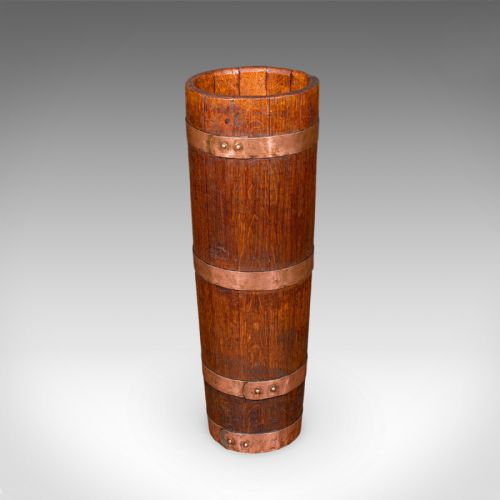
When you search for an antique coopering stand, you are looking at sturdy vessels and stands formed from staves and bound with metal hoops, originating across the Victorian, Edwardian, and Georgian periods. These pieces take the form of umbrella stands, stick stands, wine coolers, jardinières, and barrel casks, utilising traditional stave-building techniques adapted for domestic storage and display. The pieces met most often on this page are oak and mahogany barrels and oval umbrella stands secured with brass or iron bands, often dating from the mid-nineteenth century onwards.
The domestic role of these items spans practical hallway storage for wet umbrellas and walking sticks alongside more formal uses as wine coolers and decorative plant holders. Country house examples often feature umbrella loops and brass coats of arms, showing how utilitarian stave construction entered refined interior spaces. Alongside these tall holders sit smaller tabletop or floor-standing Dutch peat buckets, tea stoves, and tobacco stands, demonstrating the full versatility of coopered vessels in period homes.
Materials and construction
Makers built these vessels from solid timbers such as oak and mahogany, selecting woods that resisted moisture and shrinkage when shaped into curved staves. Individual wooden staves were bevelled tightly together to form circular or oval barrels, then secured under tension by heavy metal bands made of brass, copper, or iron.
Hardware such as brass braces, umbrella loops, and swing handles were screwed or fitted directly onto the wooden bodies to provide structural support and functional utility. Selected items also display ebonised wood details or decorative plaques, combining industrial coopering methods with cabinet-making standards on stands and mounts.
Antique Coopering Stand Retail Price Guide 2026
Typical asking prices for coopering stand among the pieces listed under this phrase on Sellingantiques today, from the lower quarter to the upper quarter. They describe what is for sale here now, not the wider market.
Listings feature oak, mahogany, and ebonised wood combined with brass, copper, and iron bindings across Victorian, Edwardian, and Georgian periods.
What separates the grades
The distinction between a standard utility barrel and a finer piece lies in the precision of the stave joints and the quality of the mounting hardware. Heavy cast brass bands, integrated umbrella loops, and dedicated matching stands elevate simple storage into accomplished country house furniture.
Timber selection and grain figure also dictate the character of the piece, with well-figured oak and rich mahogany showing greater depth than plain utility pine or utilitarian oak staves. The integrity of the original metal bindings and the snug fit of the coopered staves determine the overall structural authenticity.
R.A. Lister
The Antique Coopering Stand Glossary
- Stave
- A narrow shaped strip of wood with bevelled edges that forms the sides of a barrel or cask. Staves are tightly fitted together and held under radial tension by metal hoops.
- Coopered wood
- Timber assembled using traditional barrel-making techniques without nails passing through the main vessel walls. This method allows the wood to expand and contract naturally with moisture changes.
- Jardinière
- An ornamental pot or stand designed to hold plants and flowers indoors. These are frequently built using coopered stave construction with brass liners.
- Cellarette
- A lockable container used for storing wine bottles in the dining room during the Georgian and Victorian periods. Many fine examples utilise oval coopered mahogany construction on dedicated stands.
- Treen
- Small handmade wooden household objects collected for their material and historic interest. This category includes coopered tobacco boxes and pipe stands.
Antique Coopering Stand: Frequently Asked Questions
What is a coopering stand used for?
These versatile pieces serve primarily as umbrella and stick stands in hallways, holding wet winter gear within robust wooden barrels. They also function as wine coolers, plant holders, and decorative vessels across various domestic rooms.
Period examples adapt workshop stave-building techniques to domestic furniture, combining practical waterproof storage with traditional interior decoration.
How do I tell Victorian from Georgian stands?
Georgian examples often manifest as elegant mahogany wine coolers or jardinières on delicate carved stands with fine brass bindings. Victorian pieces lean towards heavier oak country house umbrella stands, frequently featuring iron or brass hoops and umbrella loops.
Examining the timber choice, leg design, and overall proportion helps separate the refined eighteenth-century dining room pieces from nineteenth-century hall furniture.
Are brass and iron bands original?
Most quality stands retain their original brass or iron bindings fitted tightly around the wooden staves during manufacture. These metal hoops provide the structural tension required to keep the curved wooden pieces aligned.
Patination on the brass and signs of age on the iron fixings usually indicate period authenticity rather than later replacement.
Where were these pieces made?
The listings show English and Dutch origins, encompassing traditional English country house furniture alongside continental Dutch styles. Coopering traditions varied slightly between regions, with Dutch buckets often featuring distinctive brass mounts and handles.
Local workshops and makers such as R.A. Lister produced these stave-built items for both domestic utility and decorative display.