

Antique Compact Bookcase
An antique compact bookcase solves the perennial problem of housing a working library in a modest footprint without overwhelming a room.
Antique Compact Bookcase
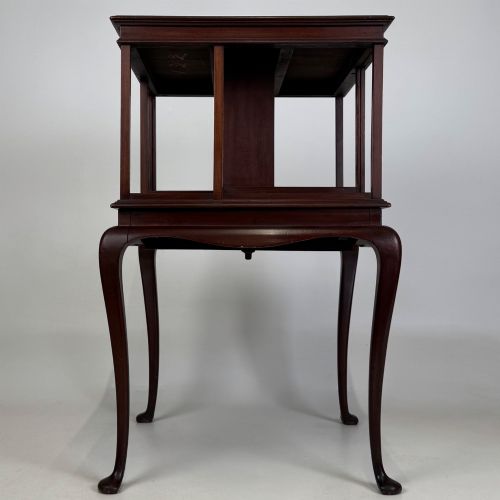
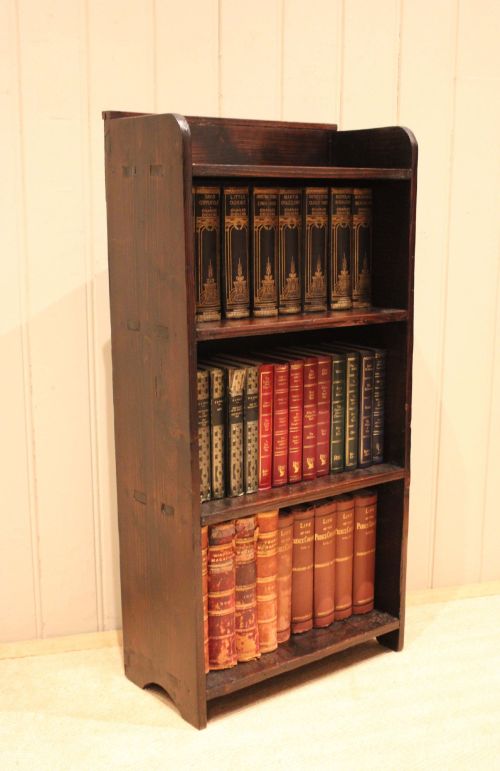
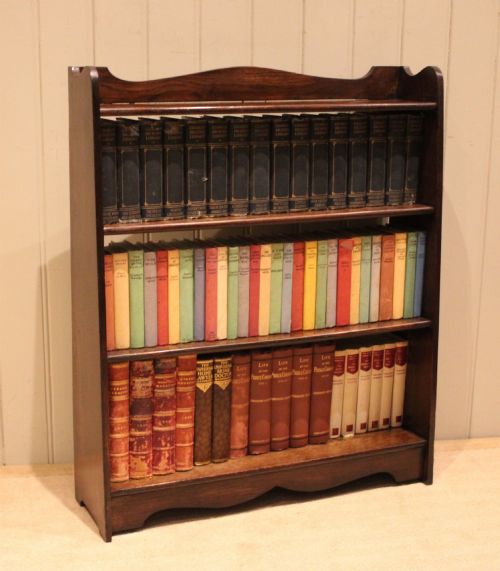
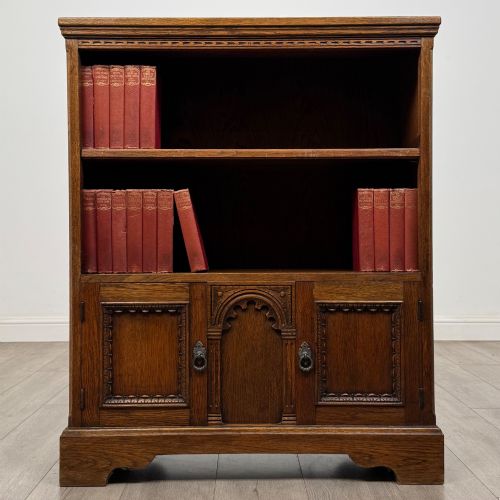
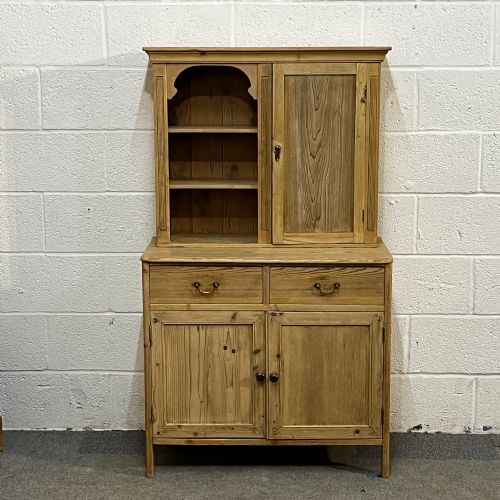
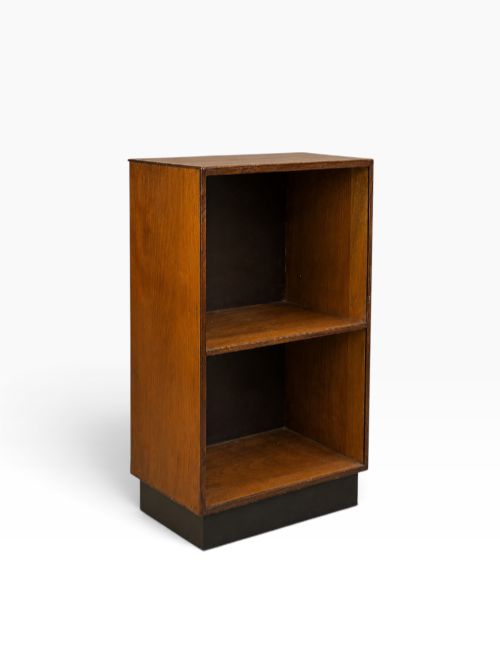
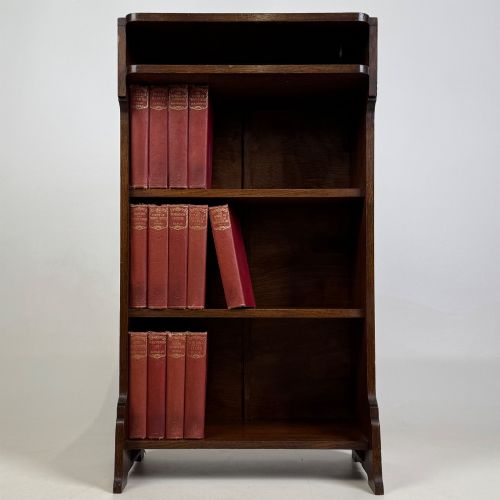
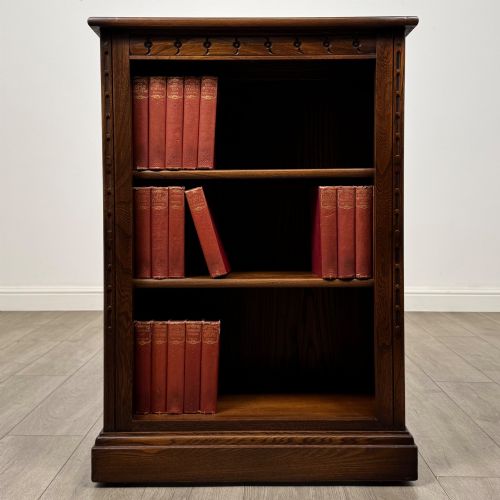
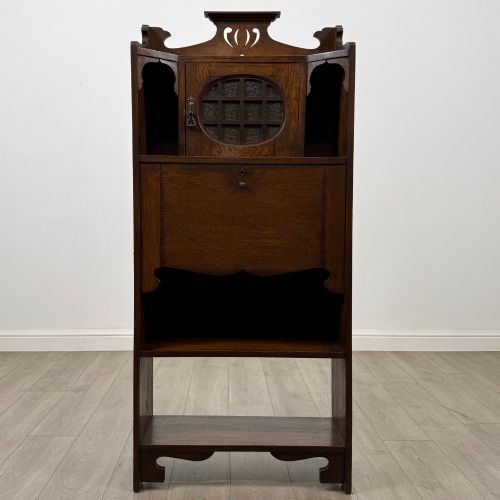
An antique compact bookcase brings together small proportions and functional book storage, appearing in forms that range from open standing shelves to revolving table models and bureau combinations. These pieces serve domestic spaces where floor area is at a premium, offering upright storage or surface utility combined with shelving.
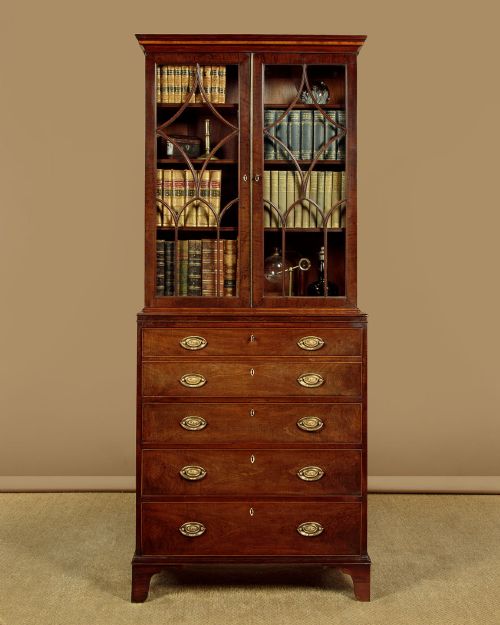
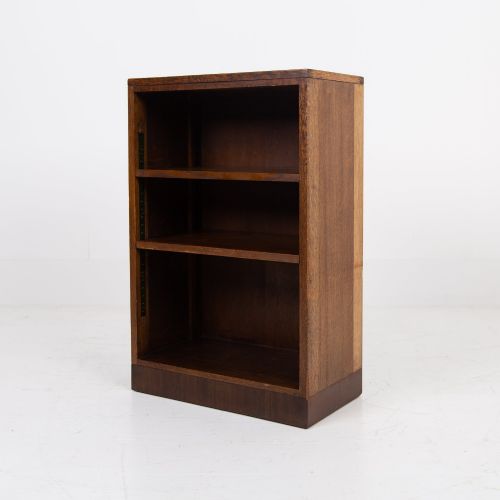
The evidence shows that oak and mahogany dominate the selection, often taking the form of small open bookcases, revolving designs, and secretaire bureaus. Pieces span the Regency, Victorian, and Edwardian eras, alongside 1920s and 1930s examples designed for smaller modern interiors.
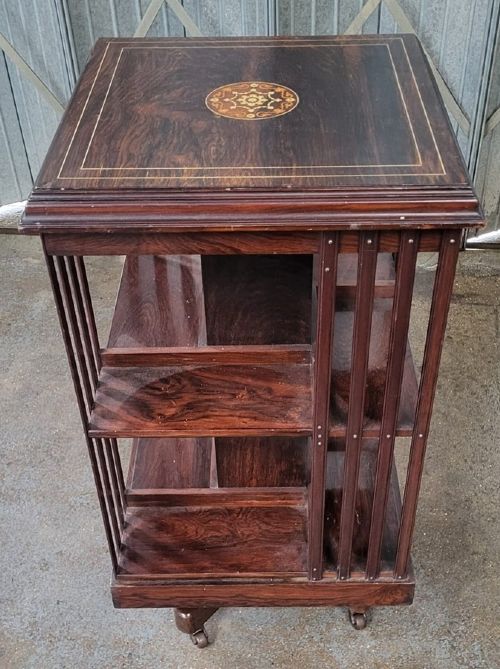
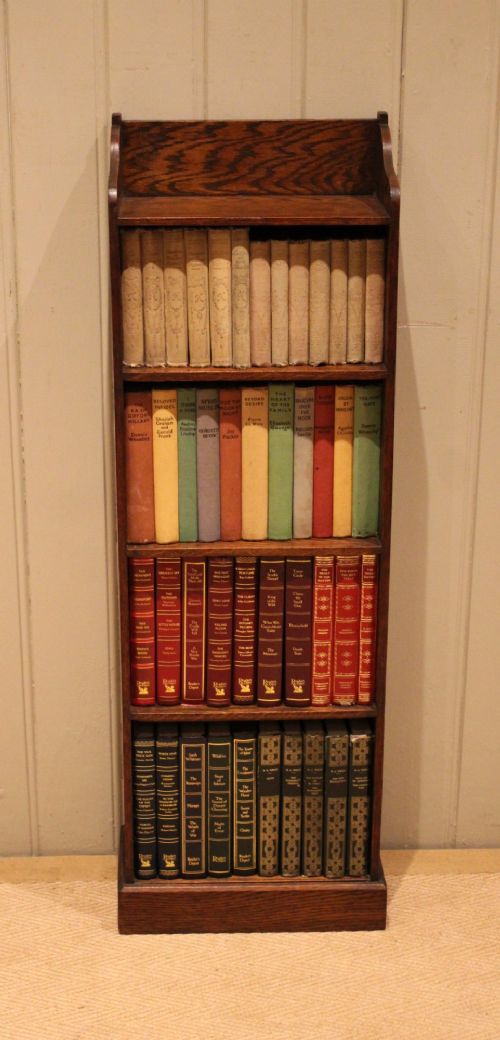
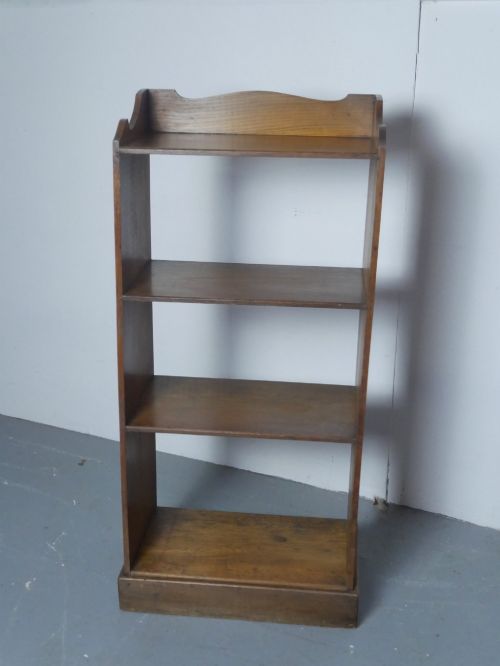
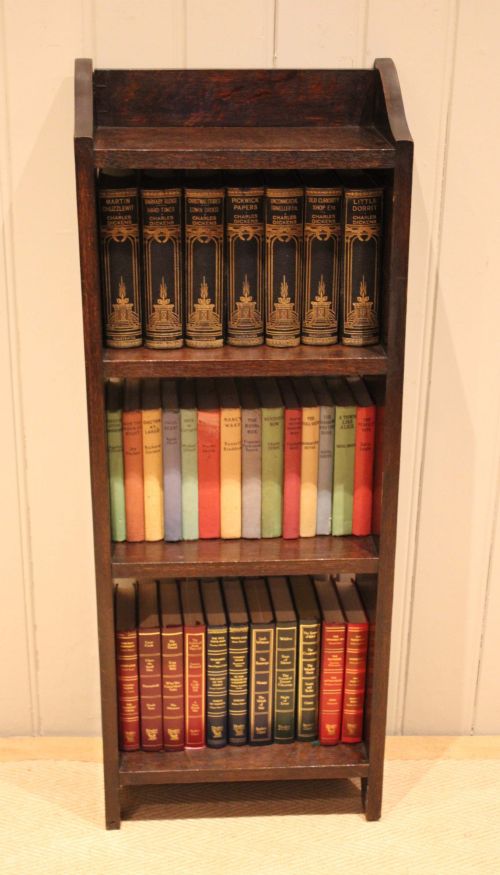
Buyers will encounter dwarf bookcases, slender oak open shelves, and rotating desk units designed to hold modest collections of volumes. These varied forms reflect how different periods adapted the need for book storage to restricted spaces.
Materials and construction methods
Cabinetmakers utilised solid timbers such as oak, mahogany, and walnut, often pairing them with secondary woods like pine and incorporating boxwood inlay for decorative contrast. Revolving models relied on internal metal and brass mechanisms to support smooth rotation while maintaining a stable base.
Construction techniques balanced structural strength with reduced scale, employing fine dovetailing in bureau drawers and sturdy tongue-and-groove joints for open shelving. Finishes were typically polished to highlight the natural grain of the mahogany or the distinct medullary rays of quarter-sawn oak.
Several revolving cases include hidden internal cross-braces designed to keep heavy volumes upright while someone spins the entire shelf in haste.
Distinctions in standard and execution
Quality rests upon the selection of timber, visible in the rich figuring of mahogany veneers or the deliberate choice of golden oak. Superior examples display refined proportions and crisp inlay work rather than heavy, plain assembly.
The integration of mechanical elements, such as the effortless spin of a revolving bookcase or the precise fit of a drop-down secretaire writing slope, distinguishes finer workshops from standard production.
F.H. Marshall & Co Glasgow·Harris Lebus
The Antique Compact Bookcase Glossary
- Secretaire bookcase
- A hybrid form featuring a fitted writing drawer with a drop-down front positioned beneath upper bookshelves.
- Revolving bookcase
- A freestanding table-top or floor-standing unit designed to spin on a central pivot for easy access to volumes from any angle.
- Dwarf bookcase
- A low-standing piece of furniture designed to sit below window height while holding a row of books.
- Boxwood inlay
- A decorative technique where thin strips of pale wood are set into contrasting timber surfaces to create geometric borders.
Antique Compact Bookcase: Frequently Asked Questions
Where should I place a revolving bookcase?
A revolving bookcase functions well beside a reading chair or in the corner of a study where 360-degree access to volumes is practical.
Because these pieces have a small footprint, they also sit comfortably between windows or next to a desk without obstructing movement.
How do I date an oak bookcase?
Dating relies on observing construction methods, timber selection, and stylistic cues such as Arts and Crafts strapwork or Edwardian inlay.
Earlier 19th-century pieces often display hand-planed surfaces and deeper patination, while 1920s examples tend toward simpler, unadorned oak forms.
What is a bureau bookcase?
A bureau bookcase combines a sloping writing desk with a set of upper shelves enclosed by doors or left open.
The lower section provides a fold-down writing surface above drawers, making these pieces dual-purpose items for study and storage.
Are small mahogany bookcases sturdy?
Mahogany provides exceptional structural rigidity, allowing makers to build slim, elegant frames that easily support heavy rows of books.
Dense grain and careful joinery ensure these compact pieces remain stable despite their reduced dimensions.