

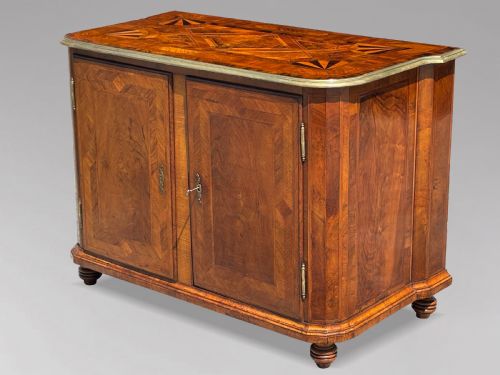


Antique Commode Buffet
An antique commode buffet brings generous storage and striking continental presence to a room, offering surface space and concealed depth.
Antique Commode Buffet
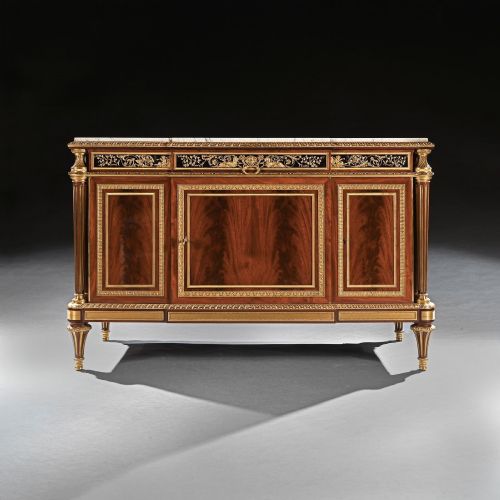
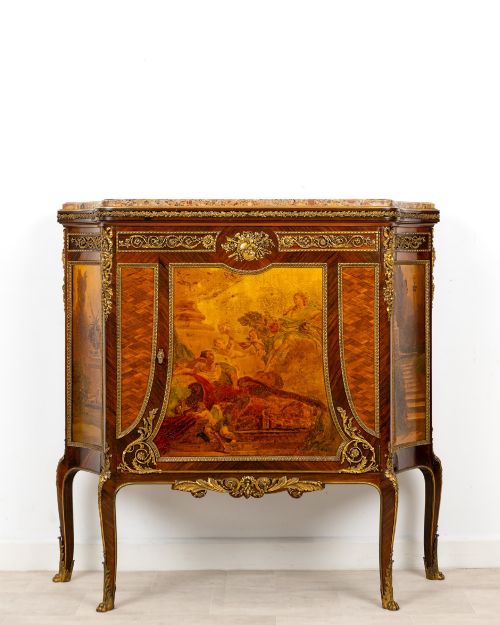
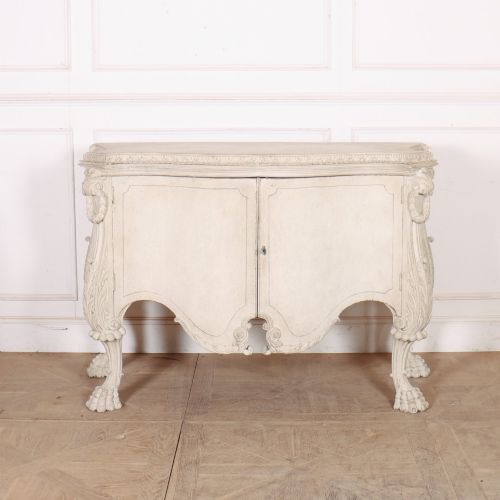
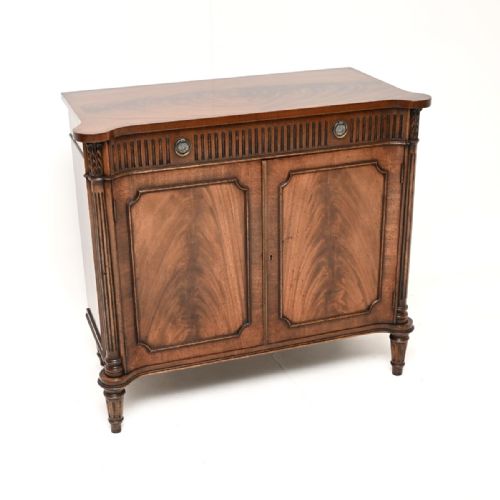
When you search for an antique commode buffet, you meet a diverse selection of storage furniture spanning several centuries and European traditions. Pieces range from Georgian mahogany sideboards and Italian walnut cupboards to French marble-topped cabinets and Scandinavian painted buffets.
The most common examples on this page are French revival sideboards and marble-topped cabinets from the nineteenth and early twentieth centuries. These forms combine cupboard doors or drawers with decorative timber veneers, often featuring shaped marble tops and gilt-bronze mounts.
Origins stretch across England, France, Italy, and Sweden, showing regional preferences for timber selection and surface decoration. You will encounter forms labelled variously as side cabinets, sideboards, chests of drawers, and cupboards.
Materials and construction
Cabinet makers utilised dense hardwoods including mahogany, walnut, kingwood, and satinwood, often laid as marquetry or parquetry veneers over robust structural timbers. Flame mahogany and burr walnut provide striking natural grain patterns across large door surfaces and drawer fronts.
Surface ornamentation frequently incorporates polished marble slabs fitted to the top surfaces, alongside cast brass and ormolu mounts. Scandinavian and Italian pieces frequently employ decorative paint treatments, including scraped original pigments and parcel gilt details.
Antique Commode Buffet Retail Price Guide 2026
Typical asking prices for commode buffet among the pieces listed under this phrase on Sellingantiques today, from the lower quarter to the upper quarter. They describe what is for sale here now, not the wider market.
Some Swedish cupboards wear their original painted coats beneath layers of time, having survived centuries of cold northern winters.
Assessing quality and craftsmanship
Quality reveals itself in the precision of the timber inlay and the weight of the bronze or brass mounts. Finer examples display seamless marquetry patterns and substantial marble tops that fit precisely within the wooden framework.
Construction methods distinguish everyday utility items from masterwork pieces, particularly in the dovetailing of drawers and the stability of the carcase. The depth of the carved details and the integration of hardware indicate the original workshop standard.
François Linke
The Antique Commode Buffet Glossary
- Ormolu
- Gilded bronze mounts applied to furniture for decoration. This technique was widely utilised by French cabinet makers during the eighteenth and nineteenth centuries.
- Marquetry
- Decorative veneer patterns formed by fitting together small pieces of wood and other materials. It creates pictorial or geometric designs across cabinet doors and drawer fronts.
- Bombe
- A swelling, outward-curved contour found on the front and sides of furniture. This profile requires advanced woodworking skill to shape timber accurately.
- Parquetry
- Geometric wood inlay patterns resembling mosaics. Pieces are arranged to form repeating motifs across flat surfaces.
- Demi-lune
- Half-moon shape denoting a semi-circular piece of furniture. These cabinets sit flush against walls in hallways and reception rooms.
Antique Commode Buffet: Frequently Asked Questions
What is an antique commode buffet used for?
These pieces provide substantial storage for dining rooms, hallways, and drawing rooms, holding linen, tableware, or household items behind closed doors.
The top surface offers space for lamps, display items, or serving food during gatherings.
How do I date an antique commode buffet?
Dating relies on examining the timber species, construction joints, hardware styles, and decorative motifs against known historical periods.
Georgian and eighteenth-century pieces display different proportions and joinery compared to nineteenth-century revival styles or 1920s examples.
Are marble tops original to these cabinets?
Many French and continental sideboards were designed specifically to accommodate heavy marble slabs, which protected the wood surface below.
Matching the stone's edges and thickness to the carcase helps determine whether the top has remained with the piece over time.
How do I care for wood and marble surfaces?
Wood surfaces benefit from occasional waxing with traditional products to nourish the grain and maintain a natural sheen.
Marble tops require prompt cleaning of spills to prevent staining, using mild soap and water rather than acidic cleaners.