



Antique Coloured Stipple Print
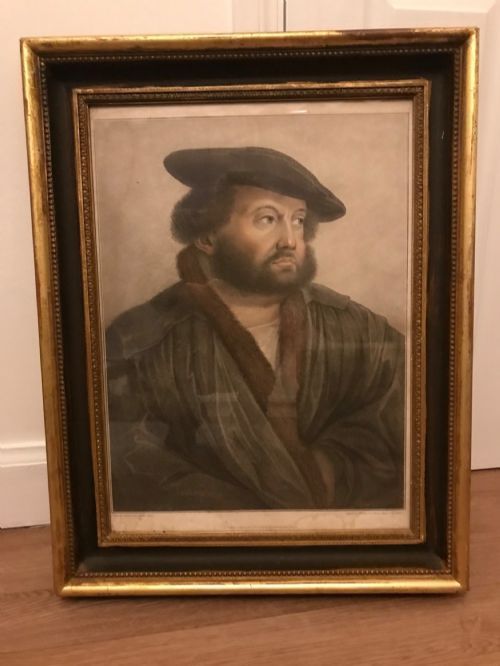
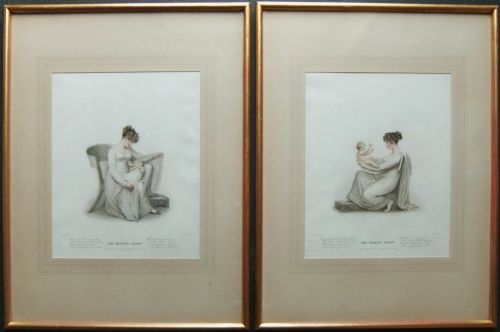
An antique coloured stipple print brings domestic intimacy and classical grace to a wall through stippled dots that build soft form and delicate tone.
Antique Coloured Stipple Print
An antique coloured stipple print is a paper work created using a dot-etched copper plate and finished with hand-applied pigment, commonly encountered in Georgian and Regency formats. These framed wall art pieces span dates from the eighteenth century into the nineteenth century, often appearing in pairs or sets.
The subjects on this page lean towards portraiture and sentimental domestic scenes, alongside narrative series such as the Cries of London. Makers and artists like Francesco Bartolozzi, Adam Buck, and E. Jackson Stodart populate the listings, frequently framed in wood, giltwood, or Hogarth moulding.
How they were made
Copper plates are worked using etching needles and roulette wheels to create fine patterns of dots rather than continuous lines, holding ink for the transfer onto paper. Colour is then applied by hand to the printed sheet, bringing life to flesh tones and garments.
Finished works are mounted behind glass within timber frames, using materials like gold leaf, gilt wood, and plaster to construct the protective surround.
Antique Coloured Stipple Print Retail Price Guide 2026
Typical asking prices for coloured stipple print among the pieces listed under this phrase on Sellingantiques today, from the lower quarter to the upper quarter. They describe what is for sale here now, not the wider market.
Some domestic pairings invite viewers to wonder if the darling is truly asleep or simply resting its eyes.
What varies in quality
The finesse of the stipple dotting dictates the crispness of the final image, separating delicate plates from heavier, coarser impressions. The precision and subtlety of the hand-colouring determine whether the tones complement the engraved lines or overpower them.
The integrity of the framing materials, from original Hogarth moulding to period giltwood, plays a significant part in the overall coherence and survival of the piece.
Francesco Bartolozzi·Adam Buck·E. Jackson Stodart
The Antique Coloured Stipple Print Glossary
- Stipple engraving
- A printmaking technique using dots and flecks to build up tone and form rather than traditional lines. This method allows for subtle gradients and soft flesh rendering.
- Hand-coloured
- The practice of applying watercolours or pigments to a monochrome print by hand after the impression is pulled. This adds vibrancy and individual character to each sheet.
- Hogarth frame
- A narrow, dark timber frame with a distinct inner gilded slip, popular in the eighteenth and nineteenth centuries. It provides a classic profile for works on paper.
- Roulette
- A small wheel set on a handle, dotted with tiny teeth, used by printmakers to roll regular patterns of dots directly onto the copper plate.
Antique Coloured Stipple Print: Frequently Asked Questions
What is an antique coloured stipple print?
It is a work on paper produced from a stippled copper plate and finished with hand-applied pigment, dating primarily from the Georgian and Regency eras.
These works frequently depict portraits, domestic pairings, and narrative scenes framed under glass.
How do I date an old stipple print?
Dating relies on the paper stock, framing style, and the active periods of the artists and publishers recorded on the sheet. Eighteenth-century examples often display distinct plate marks and laid paper.
Later revival pieces from the nineteenth century utilise different paper characteristics and framing construction methods.
Were these prints always coloured by hand?
Many stipple engravings were published in monochrome reddish-brown or black tones and subsequently enhanced with watercolour by hand. Some retain their original pigment application from the period of publication.
The presence of delicate hand-colouring alters the visual weight and mood of the finished wall art.
How should I hang and live with them?
Paper and pigments are sensitive to strong sunlight, so these framed pieces require placement away from direct beams to prevent fading. Glazed frames protect the delicate surface from dust and ambient moisture.
Grouping pairs or sets, such as seasonal or narrative series, reflects historical hanging arrangements.