




Antique Cobalt Lamps
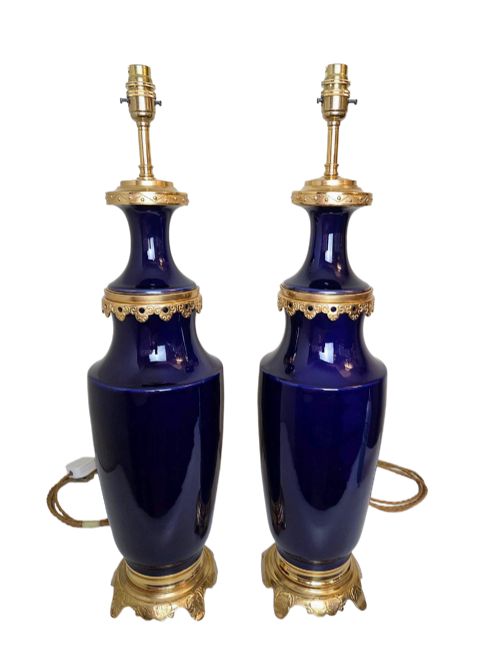
These antique cobalt lamps bring deep, saturated blue hues into a room through converted porcelain vases, cut glass, and brass fittings.
Antique Cobalt Lamps
When you search for antique cobalt lamps, you encounter a specialised range of lighting fixtures spanning the nineteenth and early twentieth centuries. These pieces predominantly take the form of table lamps, chandeliers, and oil lamps, many created by converting earlier ceramic vases into electrical or oil-burning fittings.
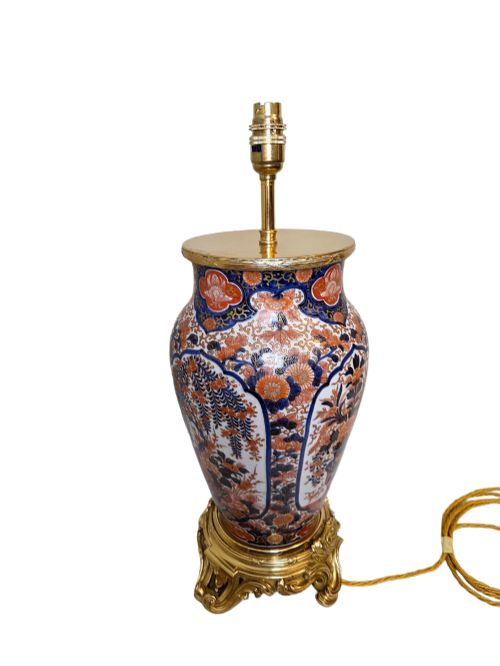
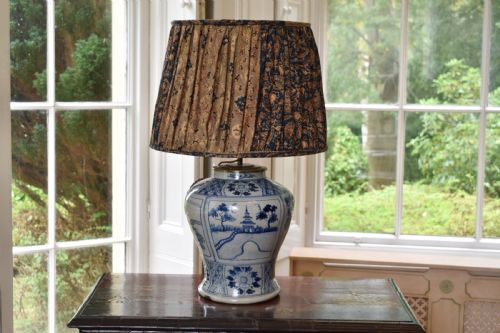
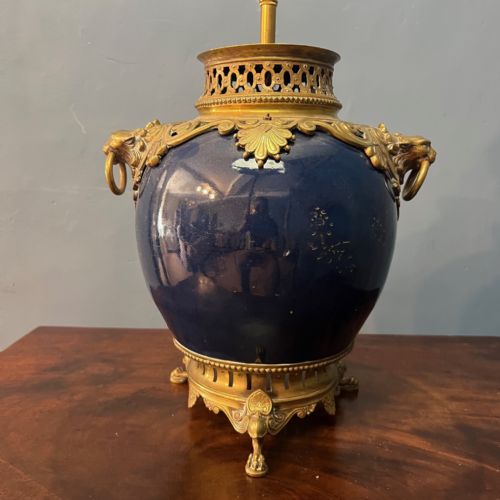
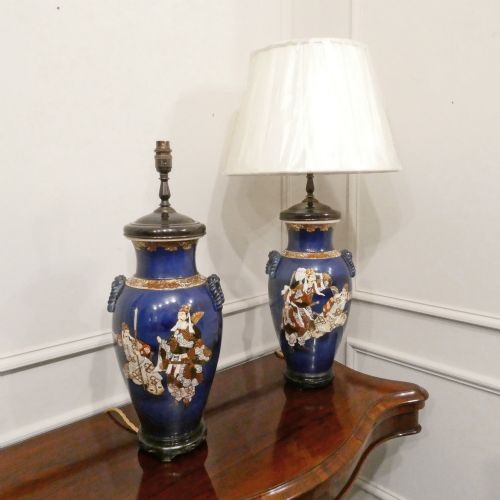
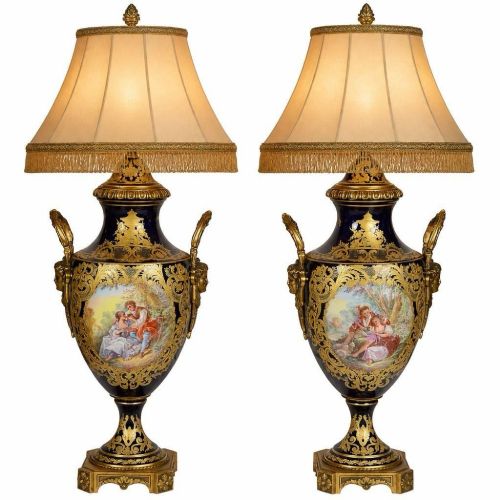
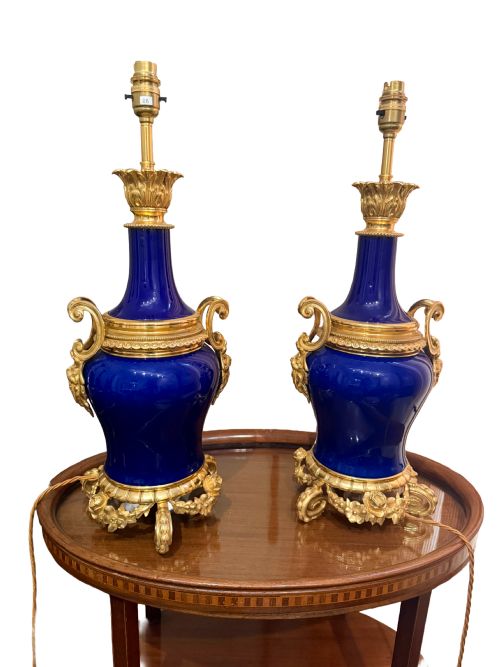
The selection here draws heavily from French Sevres style porcelain, Japanese Meiji period Satsuma and Imari wares, and traditional Chinese blue and white ceramics. You will frequently find these rich blue bodies mounted in ormolu, gilt bronze, or brass, reflecting European taste for Asian and continental craftsmanship.
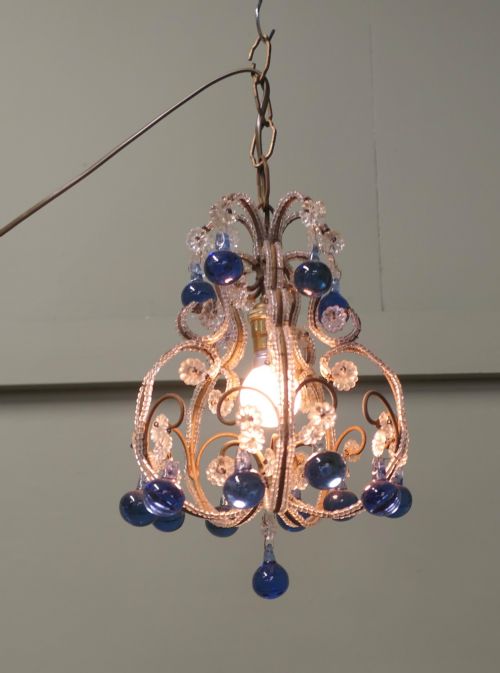
Alongside porcelain and pottery, the inventory includes blue glass ewer lamps, leaded glass pendants, and crystal chandeliers set with coloured prisms. These variations demonstrate how diverse manufacturing traditions utilised deep blue glass and ceramic pigments across the Victorian, Edwardian, and Arts and Crafts periods.
Materials and construction methods
Makers utilised high-fired porcelain and ceramic bodies glazed in cobalt oxide, achieving the signature deep blue ground that defines these objects. Many of these ceramic vessels were later drilled and adapted to house lighting hardware, combining traditional pottery with contemporary metalwork.
Metal mounts in ormolu, gilt brass, and chrome provide structural support and decorative frames for the glass and ceramic bodies. These metal components were cast, chased, and fitted around the fragile glass or pottery, often in ornate French Rococo Revival or Louis XVI neoclassical styles.
Glass elements rely on techniques such as cutting, moulding, and leaded construction to shape blue prisms, crystals, and lamp shades. Silk, fabric, and brass elements complete the lighting assemblies found on period desk lamps and oil fixtures.
Antique Cobalt Lamps Retail Price Guide 2026
Typical asking prices for cobalt lamps among the pieces listed under this phrase on Sellingantiques today, from the lower quarter to the upper quarter. They describe what is for sale here now, not the wider market.
Materials documented across the inventory include porcelain, brass, ormolu, gilt bronze, glass, silk, and wood.
Assessing quality and craftsmanship
The distinction between ordinary and exceptional pieces lies in the crispness of the hand-painted decoration and the precision of the ceramic glazing. Superior porcelain displays sharp detail and uniform cobalt saturation without pooling or distortion in the blue pigment.
Mount quality separates mass-produced items from finer studio works, particularly in the weight and chasing of the ormolu and gilt bronze mounts. Finely cast metalwork fits the contours of the vase or glass snugly, with clean lines and deliberate detailing that enhance the overall silhouette.
Royal Doulton·Sevres
The Antique Cobalt Lamps Glossary
- Ormolu
- Gilded bronze mounts applied to furniture, clocks, and porcelain bodies. This technique involves coating bronze in a mercury and gold amalgam.
- Sevres style
- Ceramic design inspired by the historic French porcelain manufactory, known for rich cobalt grounds and hand-painted decorative panels.
- Cloisonne
- Enamelling technique where wire is soldered to a metal base to create compartments filled with coloured paste and fired.
- Imari
- Japanese export porcelain decorated in underglaze blue, iron red, and gold, originating from the town of Arita.
- Prism
- Cut glass pendant suspended from a chandelier or light fitting to refract and scatter light around a room.
Antique Cobalt Lamps: Frequently Asked Questions
What are antique cobalt lamps made from?
These lamps incorporate porcelain, glass, and crystal bodies glazed or tinted in deep cobalt blue. They frequently feature metal mounts made from brass, ormolu, and gilt bronze.
Additional materials include silk shades, leaded glass, and chrome fittings depending on the specific period and style of manufacture.
How do you date an antique lamp?
Dating relies on identifying the style of the ceramic body, such as Japanese Meiji period or Chinese Qing dynasty vases. The manufacturing methods of the metal mounts and wiring hardware also provide clues to the decade of production.
Examining the base and interior fittings helps distinguish original oil lamps from later electric conversions.
Were these always lamps?
Many examples started life as decorative vases, apothecary jars, tobacco jars, or ewers before being converted into lamps. This practice of adaptation was common across the nineteenth and early twentieth centuries.
Other items, such as oil lamps and chandeliers, were manufactured specifically for domestic illumination from the outset.
How do you style them at home?
Their strong blue colouration makes them effective focal points on side tables, desks, or credenzas. They pair well with traditional wooden furniture and neutral interior palettes that allow the cobalt hue to stand out.
Care should be taken to match shade sizes and bulb types to protect historic fabric and metal components from excess heat.