


Antique Cluster Dangle Earrings
Antique cluster dangle earrings bring movement and sparkle to the ear, combining historical charm with intricate gem settings.
Antique Cluster Dangle Earrings
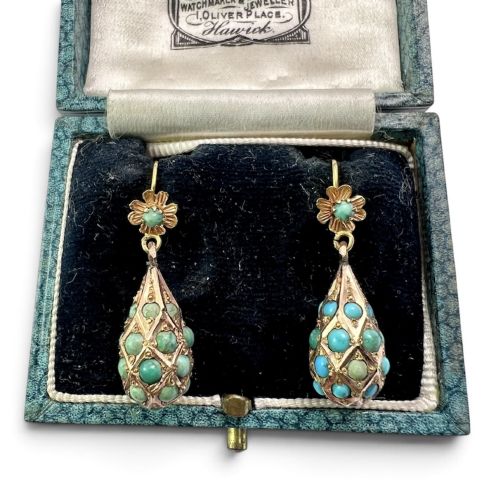
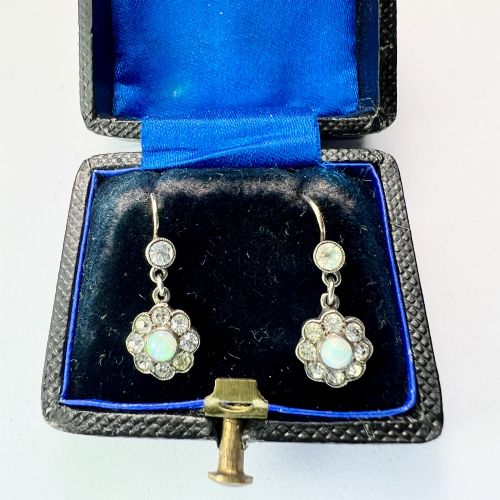
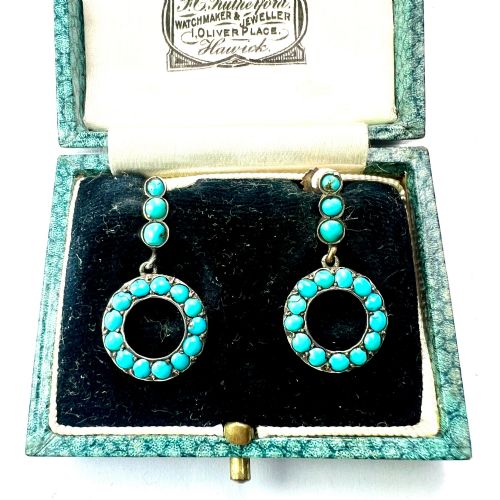
Antique cluster dangle earrings are drop and hanging jewellery pieces designed to sway with movement while displaying a central grouping of stones. When searching for antique cluster dangle earrings, buyers encounter various historical expressions ranging from Georgian paste designs to Victorian floral motifs and Edwardian diamond arrangements.
The Victorian and Edwardian periods dominate the selections, alongside pieces from the Georgian era, the 1930s Art Deco period, and mid-century decades. These earrings utilise drop, dangling, and cluster formations that suspend gemstones below the earlobe.
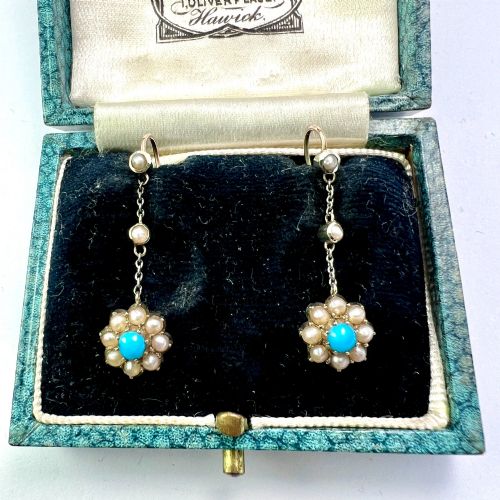
Forms include teardrop silhouettes, flower shapes, sunbursts, and night and day configurations. Materials span gold, silver, platinum, diamonds, pearls, turquoise, paste, and sapphires.
How they were made
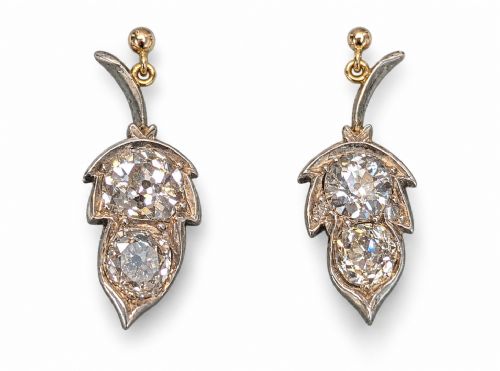
Maker construction relies heavily on combinations of gold, silver, and platinum to support stones securely. Jewellers frequently set old cut, rose cut, and old European cut diamonds into silver topped gold mounts during the nineteenth and early twentieth centuries.
Gemstones such as turquoise, pearls, garnets, amethysts, and paste are integrated into floral clusters, teardrops, and geometric patterns. Methods include hand-piercing metalwork and incorporating screwback mechanisms for non-pierced ears alongside traditional posts and drops.
Some antique earrings transform from daytime simplicity to evening grandeur through clever detachable night and day drops.
What varies in quality
Quality in these earrings rests upon the fineness of the metalwork, the matching and cut of the central gemstones, and the integrity of the setting. Hand-cut diamonds like old cuts and rose cuts show individual character, while uniform paste or natural pearls demonstrate precise lapidary skill.
The sophistication of the articulation between the cluster and the dangle section determines how fluidly the piece moves. Superior examples maintain original mountings without later alterations, preserving the distinct aesthetic of their period.
Knoll & Pregizer
The Antique Cluster Dangle Earrings Glossary
- Old cut diamond
- A hand-faceted diamond cut popular in the Georgian and Victorian eras, known for a small table and high crown that catches candlelight.
- Paste
- Hand-cut lead glass used historically to imitate gemstones, valued in antique jewellery for its own deep lustre and precision.
- Cluster
- An arrangement of smaller gemstones clustered tightly around a larger central stone or focal point.
- Screwback
- A fastening mechanism utilising a threaded screw to secure the earring on an unpierced earlobe, common in vintage and antique pieces.
- Night and day earrings
- Convertible drop earrings designed with detachable sections so the wearer can transition from simple daytime studs to elaborate evening drapes.
Antique Cluster Dangle Earrings: Frequently Asked Questions
How do I care for antique cluster earrings?
Clean these delicate pieces gently with a soft dry cloth, avoiding harsh chemical dips that can damage foil-backed stones or natural pearls. Store them individually in lined boxes to prevent friction against other items.
Check the settings periodically to ensure stones remain secure within their old silver or gold claws.
What periods do these earrings span?
The selections encompass Georgian, Victorian, Edwardian, and Art Deco eras, extending through the 1950s and 1960s. Each era introduces distinct metalworking techniques and gemstone preferences.
Victorian and Edwardian versions frequently feature turquoise, pearls, and old cut diamonds set in silver and gold.
How do I distinguish Victorian from Edwardian styles?
Victorian pieces often lean towards sentimental motifs, heavy gold work, and colourful gems like garnets, amethysts, and turquoise. Edwardian designs favour platinum and lighter silver settings dominated by diamonds, pearls, and delicate lace-like openwork.
Examining the metal combinations and stone cuts helps clarify the manufacturing era.