
Antique Clothing Press
An antique clothing press provides grand storage, bringing sturdy timber and traditional craftsmanship into daily service.
Antique Clothing Press
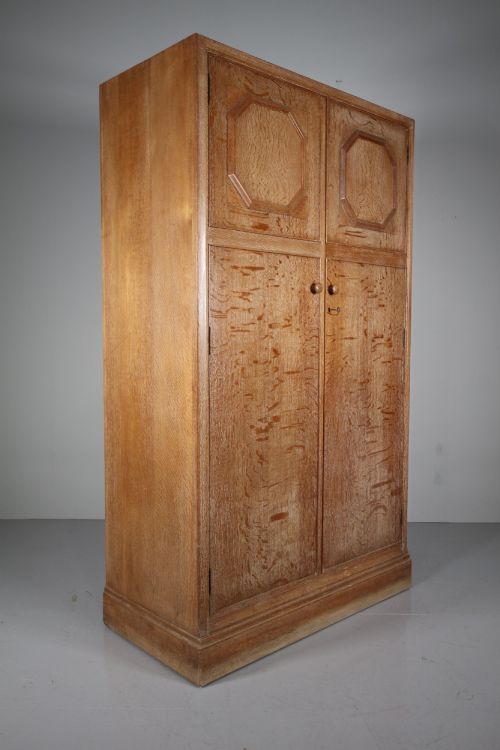
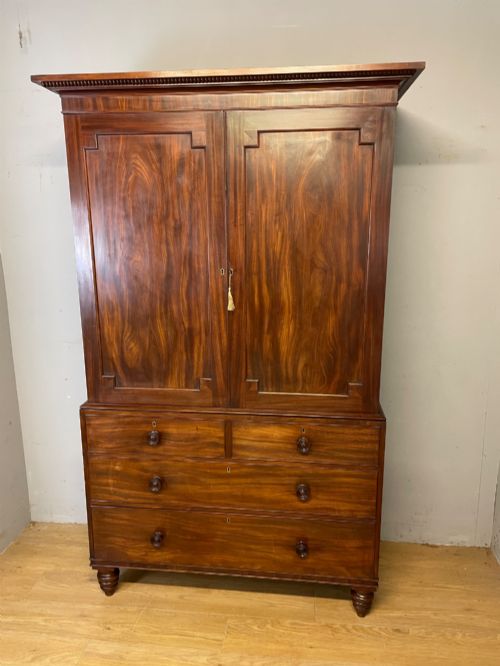
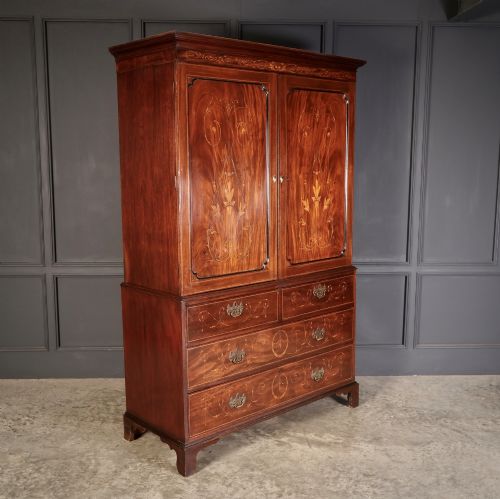
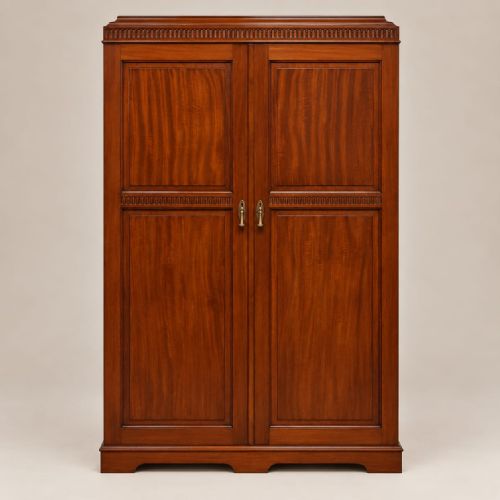
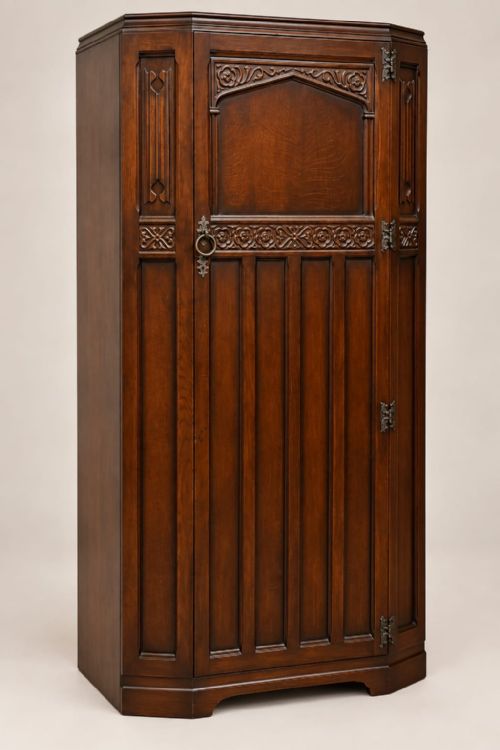
When you search for an antique clothing press, you find substantial timber furniture built to store linens and garments. These pieces combine upper cupboard storage with lower drawer sections, offering deep compartments for household textiles.
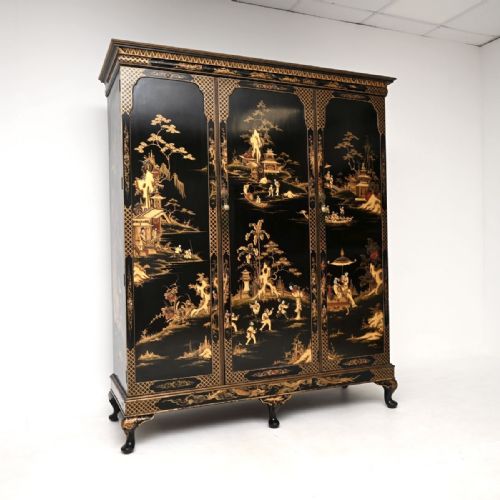
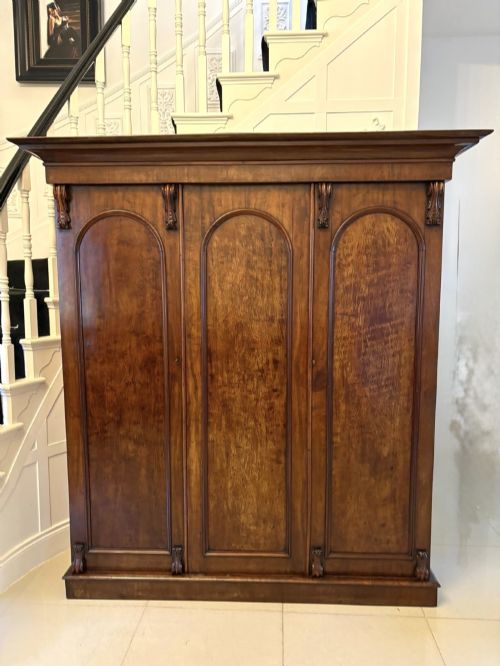
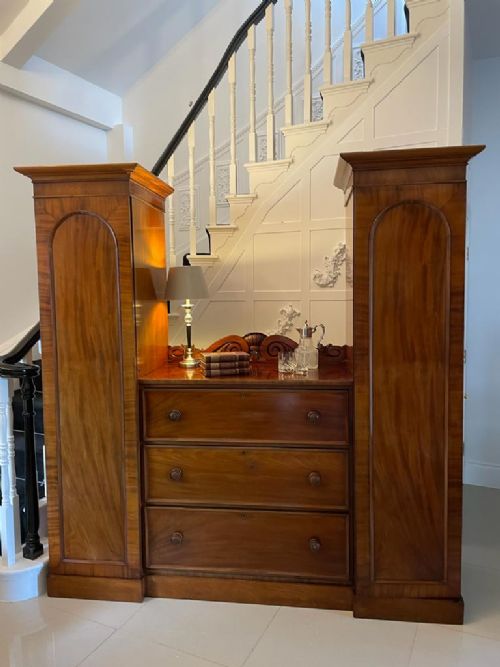
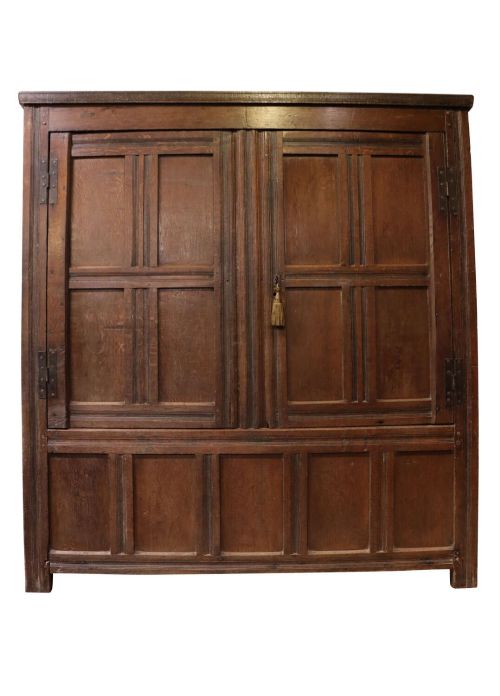
The versions most common on this page span the Georgian, Victorian, and Edwardian eras, alongside later twentieth-century forms. They appear in formats ranging from compact single-door cupboards to large multi-door wardrobes and housekeepers' presses.
Originating in country houses and town residences, these items served to keep textiles flat and protected. Today, they function as primary bedroom storage, holding modern wardrobes within historical cabinetry.
What varies in quality
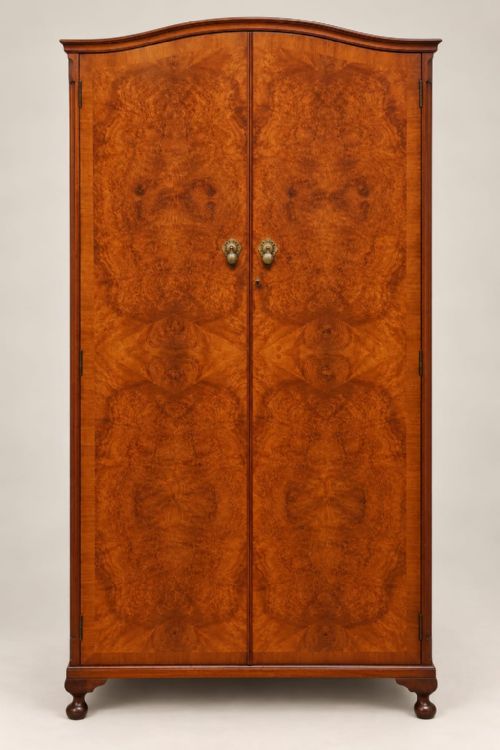
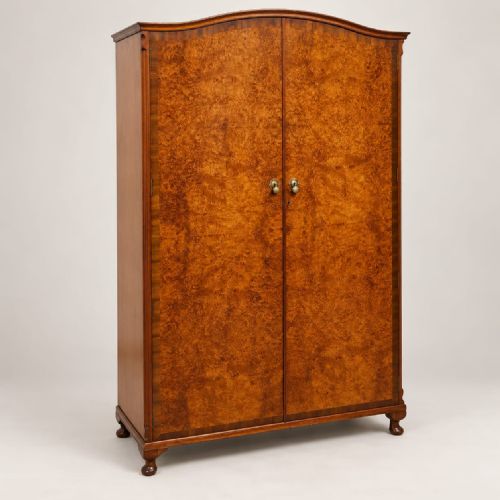
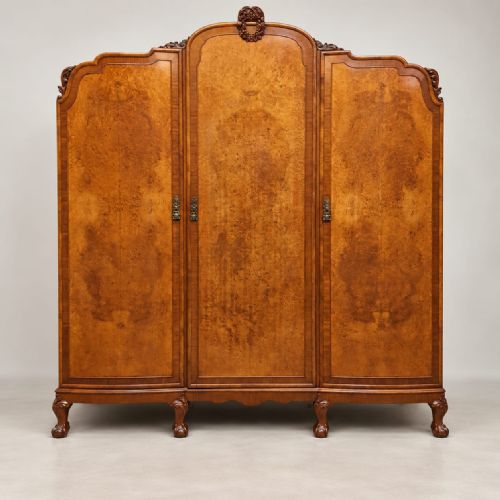
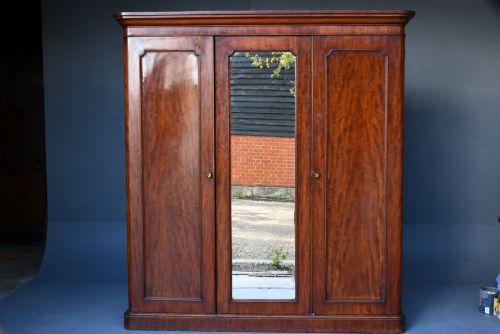
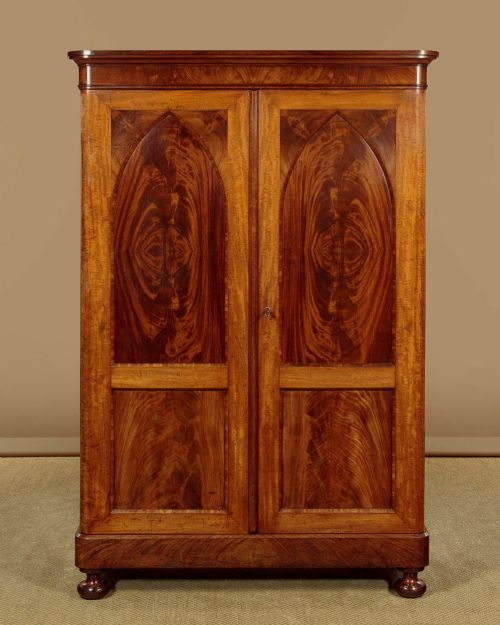
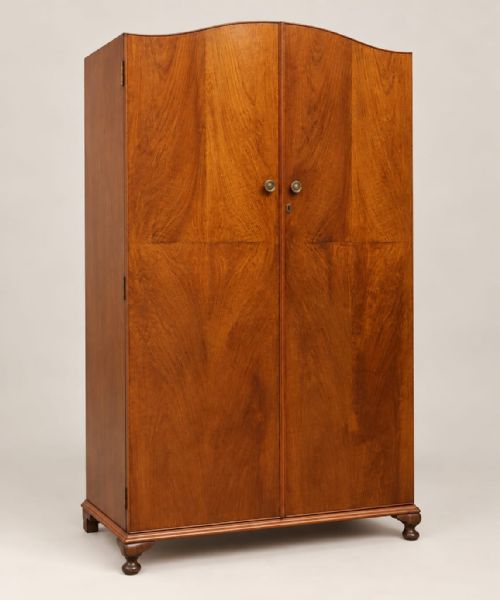
The selection of timber grain defines the visual character of a piece, with matched flame mahogany or burr walnut veneers marking higher grades of craftsmanship. Secondary timbers and internal drawer linings reveal the care taken by the original maker.
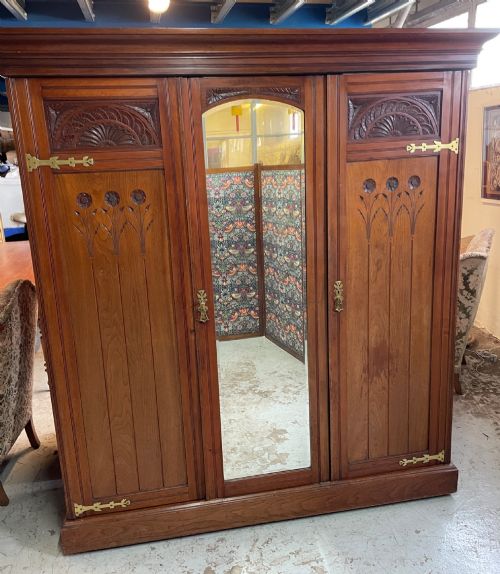
Proportion and architectural detailing distinguish standard utility pieces from exceptional commissions. Refined cornicing, original brass fitments, and well-executed inlay work indicate superior workshop production.
Some Victorian presses retain faint traces of dried lavender tucked behind the sliding trays, left by housekeepers generations ago.
Hille for Harrods
The Antique Clothing Press Glossary
- Linen press
- A tall cupboard featuring upper sliding trays or shelves enclosed by doors, positioned above a chest of base drawers. Originally designed for storing household linens flat.
- Compactum
- A fitted wardrobe divided internally into distinct compartments for hanging garments, shelves, and drawers. It offers maximised storage within a unified cabinet.
- Dentil cornice
- A decorative moulding featuring a series of small, rectangular blocks resembling teeth projecting beneath the top edge of a piece. It is frequently seen on Georgian furniture.
- Cupboard on chest
- A two-part storage form comprising an upper cabinet resting directly upon a lower chest of drawers. This configuration provides substantial vertical storage capacity.
- Flame mahogany
- A timber veneer displaying a rippling, flame-like pattern created by cutting across the bough of a mahogany tree. Cabinet makers used this figure on primary display surfaces.
Antique Clothing Press: Frequently Asked Questions
How do I use an antique clothing press today?
These pieces adapt well to modern bedrooms for hanging clothes and storing folded garments. The internal shelves and drawers accommodate daily apparel while adding traditional character to a room.
Larger multi-door versions provide ample capacity for modern wardrobes. They fit effectively into period properties and contemporary interiors alike.
What is the difference between a wardrobe and a press?
A wardrobe primarily provides vertical hanging space for garments behind full-length doors. Traditional presses feature internal sliding trays or shelves in the upper section for folded textiles.
Many period examples combine both functions within a single multi-door cabinet. Lower drawer sections remain standard across both forms.
How do I identify a Georgian clothing press?
Georgian pieces display classical proportions, often executed in solid mahogany or oak. Details such as dentil cornices, bracket feet, and subtle satinwood inlay characterise the era.
Internal construction employs hand-cut dovetails and solid timber secondary woods. The overall aesthetic prioritises architectural balance and restrained ornamentation.
Are antique clothing presses difficult to move?
Most large presses dismantle into manageable sections for transport, typically separating into an upper cornice, middle cabinet, and lower drawer base. This modular construction assists with positioning in upper rooms.
Professional removal ensures secure handling of heavy timber components and delicate veneers. Correct assembly preserves the alignment of doors and drawers.