





Antique Clock by Georges Brown
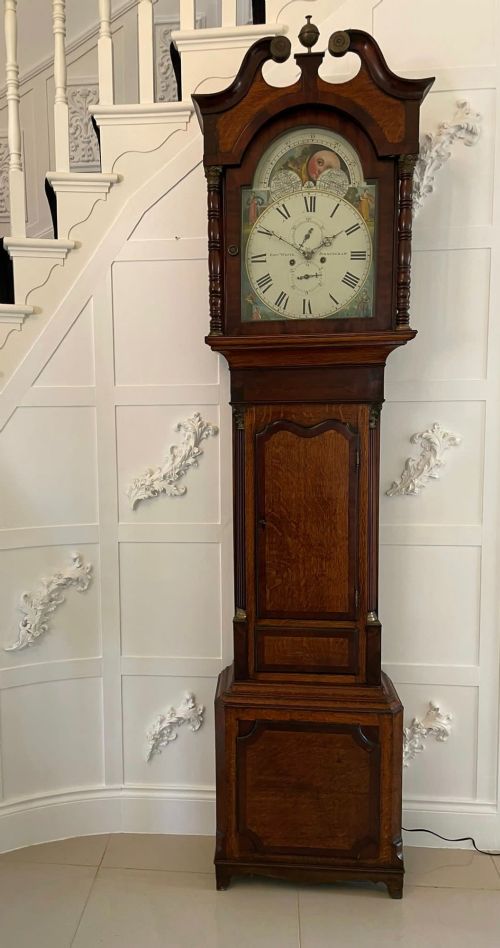
An antique clock by georges brown brings a Scottish maker's dial into the room, pairing longcase proportions with traditional casework.
Antique Clock by Georges Brown
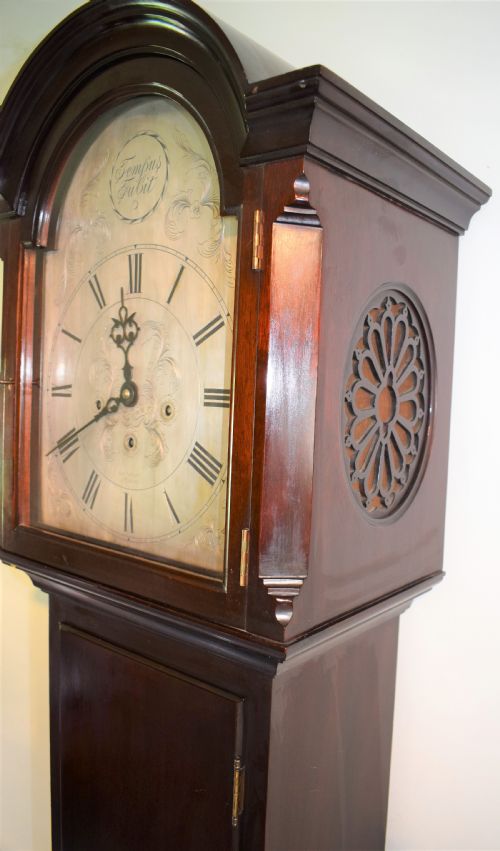
When you search for an antique clock by georges brown, you encounter tall case timepieces and grandfathers rooted in the Georgian era. These floor-standing instruments house mechanical movements within fitted timber housings designed to anchor a hallway or principal room.
The specific examples met here connect to Scottish horology through makers such as G Brown of Edinburgh. They combine regional cabinetry traditions with traditional brass and painted dial work typical of eighteenth and nineteenth century production.
How they were made
Cabinetmakers constructed the tall housings using native hardwoods like mahogany and oak, often incorporating figured veneers and panelled bases. These timbers were selected for stability and grain pattern, then hand-finished to protect the wood.
Clockmakers fitted brass dials, silvered metal chapters, and iron movement plates driven by weights or springs. Each gear train and escapement was hand-adjusted to ensure regular timekeeping across multi-day runs.
Antique Clock by Georges Brown Retail Price Guide 2026
Typical asking prices for clock by georges brown among the pieces listed under this phrase on Sellingantiques today, from the lower quarter to the upper quarter. They describe what is for sale here now, not the wider market.
Early clockmakers occasionally spelled their own names with historical variants, leaving charming spelling quirks on the brass face for centuries to come.
What varies in quality
The degree of refinement in the cabinetwork separates standard utility pieces from finer examples. Crisp mouldings, well-figured timber selection, and intact hood columns indicate higher workshop standards during initial construction.
Dial execution and movement complexity also differentiate the range. Engraved brass faces, signed chapter rings, and specialised strike or moon phase mechanisms reflect greater investment of labour by the maker.
Edward White Birmingham·Mappin & Webb·William McEwan·Geo. Carter·Wm Stanford·Dan Williams·Hudfon Of Nottingham·Matthew And Thomas Dutton·James Maitland·William LIster·John Taylor·Geo Tarratt·G Brown·J Melrose
The Antique Clock by Georges Brown Glossary
- Longcase clock
- A tall pendulum clock enclosed in a wooden case that stands directly on the floor. These pieces are also frequently referred to as grandfather clocks.
- Bracket clock
- A portable table or shelf clock originally designed to sit on a wall bracket. They commonly feature carrying handles and glazed side panels.
- Fusee
- A conical pulley used in spring-driven clocks to equalize the driving force as the mainspring unwinds. This mechanism helps maintain consistent timekeeping accuracy.
- Escapement
- The mechanical linkage that regulates the release of gear train power to the pendulum or balance wheel. It delivers impulses to keep the pendulum swinging.
- Chapter ring
- The outer ring on a clock face that bears the hour numerals. These are frequently fashioned from silvered brass or metal.
Antique Clock by Georges Brown: Frequently Asked Questions
How do I wind a longcase clock?
Winding involves using a key or crank to raise the internal weights via the winding holes on the dial face. Care must be taken not to overwind the movement.
Ensuring the weights are drawn up evenly maintains the proper tension across the gear train for the duration of the run.
Where should I place a grandfather clock?
These tall pieces require a stable, level floor away from direct heat sources and damp external walls. Securing the case to a wall prevents accidental tipping.
Placement in a hallway or principal room allows the pendulum to swing freely without interference from vibrating floorboards.
What is a double fusee movement?
A double fusee movement incorporates two separate fusee cones and gear trains within the clock. One drives the timekeeping mechanism while the second powers the striking train.
This system provides even power distribution to both functions, supporting more reliable mechanical operation over the entire winding cycle.
How do I date a Georgian longcase clock?
Dating relies on examining the casework style, timber usage, dial construction, and the signature of the maker. Regional design traits also offer useful chronological clues.
Comparing the layout of the movement and the execution of the brass face against documented makers helps narrow the period of manufacture.