



Antique Circular Cabinet
An antique circular cabinet brings architectural curve to a room, offering clever storage or display through cylindrical, drum, and demi-lune forms.
Antique Circular Cabinet
When you search for an antique circular cabinet, you encounter a distinct group of cylindrical cupboards, drum tables, and demi-lune pieces designed to soften room corners and linear layouts. These items range from compact bedside stands to large display units and side cabinets intended for china or drinks.
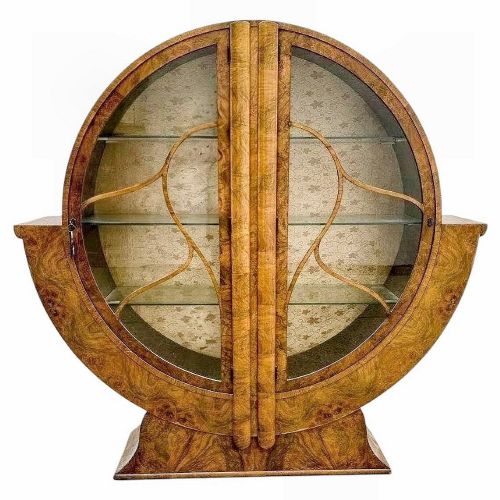
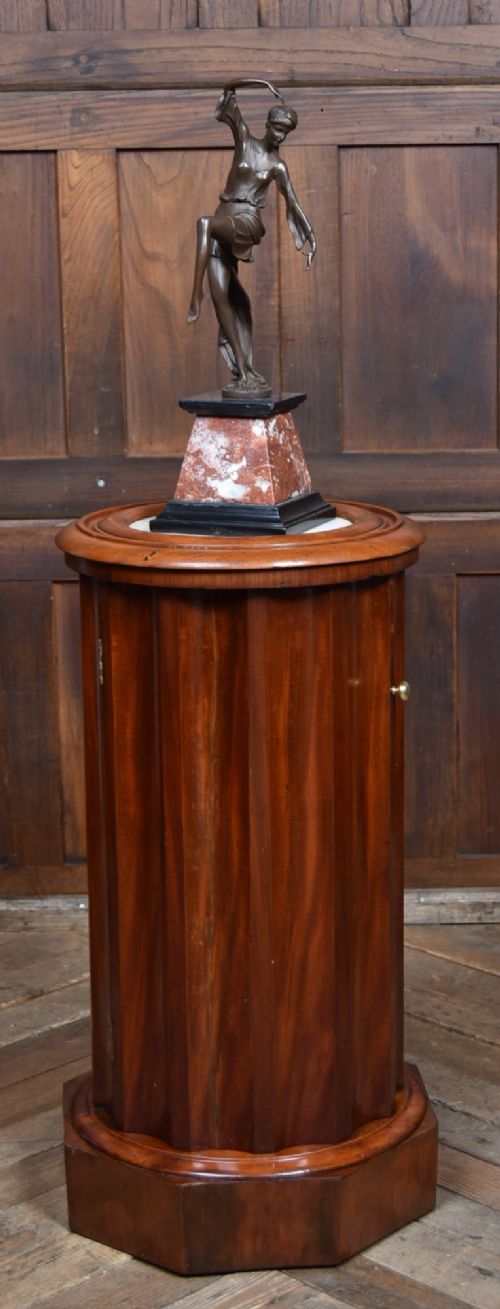
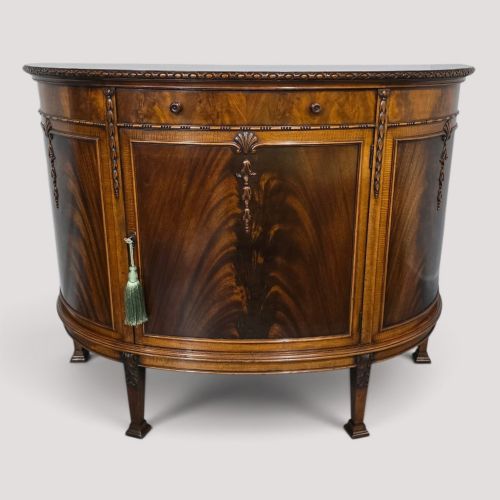
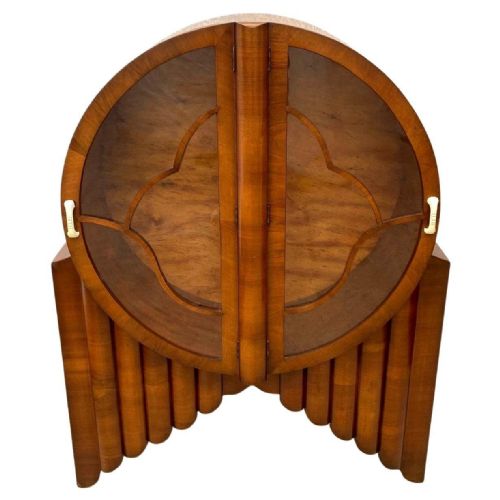
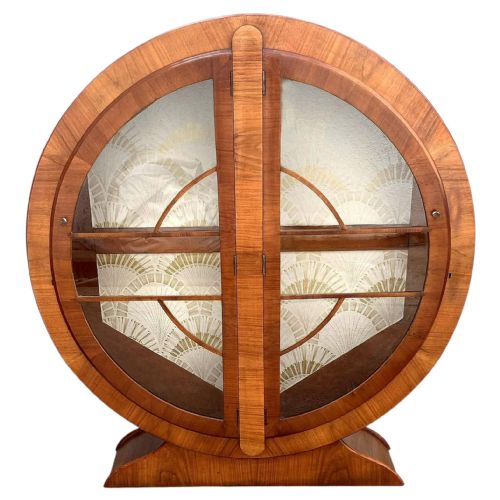
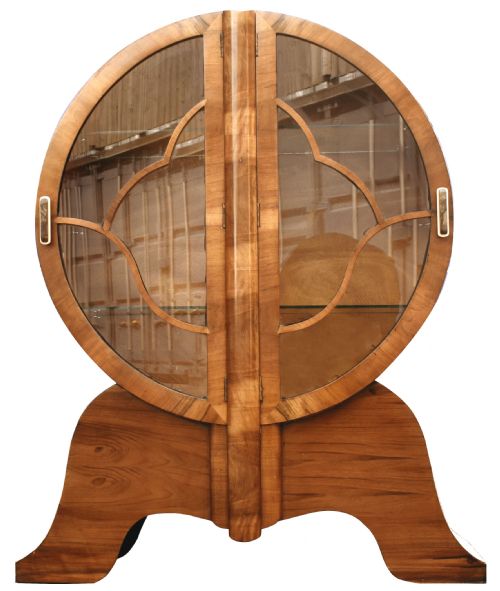
The pieces on this page span several eras, moving from George III and Regency masterworks through Victorian iterations to Art Deco designs of the 1930s. You will frequently meet walnut and mahogany examples, often featuring marble tops, glass panels, or inlaid kingwood veneers that emphasise the curved geometry.
Materials and construction methods
Cabinetmakers built these curved carcasses using dense timbers like mahogany and walnut, frequently applying burr walnut veneer, flame mahogany, or kingwood to create rich grain patterns across the cylindrical surfaces. Bending wood to a true radius required specialist steam-forming or multi-ply carcase construction before applying fine veneers by hand.
Details such as brass mounts, leaded glass, and inset marble tops finish the construction, protecting vulnerable edges and providing durable work or display surfaces. Internal shelving often follows the circular sweep of the outer walls, tailored specifically to hold books, glassware, or bedside essentials.
Antique Circular Cabinet Retail Price Guide 2026
Typical asking prices for circular cabinet among the pieces listed under this phrase on Sellingantiques today, from the lower quarter to the upper quarter. They describe what is for sale here now, not the wider market.
Listings feature circular cabinets spanning the 19th century through to 1930s Art Deco, built in mahogany, walnut, kingwood, and marble.
Assessing quality in curved furniture
Quality rests heavily on the integrity of the curved veneers and the smooth operation of the doors, which must follow the circular track without binding or warping over decades. Superior pieces show seamless grain continuity around the circumference and crisp, precise brass or inlaid decoration.
The weight and selection of secondary materials tell a clear story, distinguishing robust architectural items with genuine marble slabs or heavy cast brass fittings from lighter, purely decorative alternatives. Joinery hidden inside the drum or cylinder reveals whether the maker prioritized lasting structural stability alongside external elegance.
The Antique Circular Cabinet Glossary
- Demi-lune
- A half-moon or semicircular furniture shape designed to sit flush against a wall. These pieces often function as side cabinets or commodes.
- Bijouterie table
- A glass-topped display table utilised for showing small valuables, medals, or curiosities. They frequently appear in Edwardian and Victorian interiors.
- Flame mahogany
- A decorative wood veneer showing distinctive fiery, undulating grain patterns. Cabinetmakers selected these cuts for primary display surfaces.
- Burr walnut
- A highly figured wood veneer harvested from tree growths or burls. It yields intricate, swirling patterns popular in Art Deco and Victorian furniture.
- Cylindrical
- Having the exact shape of a cylinder with straight parallel sides and circular ends. This geometry defines drum bedside cupboards and tall pedestals.
Antique Circular Cabinet: Frequently Asked Questions
What fits inside a circular bedside cabinet?
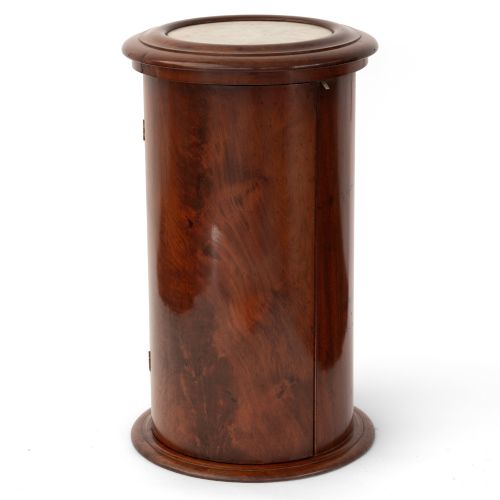
These cylindrical cupboards typically house a single internal shelf suited for night-time essentials, small books, or glassware. The curved door swings wide to make the compact interior surprisingly accessible.
Larger variations can accommodate small lamps or bedside necessities on top, while keeping clutter neatly hidden away behind the curved wooden door.
How do I place a demi-lune cabinet?
A demi-lune or half-moon cabinet sits flat against a wall, making it ideal for narrow hallways, landings, or living room perimeters where square corners block traffic. The curved front softens the transition between intersecting walls.
Pair these cabinets with a wall mirror or a small table lamp to balance the proportion and draw the eye toward the architectural curve.
Are Art Deco circular cabinets practical?
Art Deco pieces from the 1930s often incorporate clever storage, including cocktail bars, revolving sections, or extensive shelving for display. Their walnut and maple construction provides sturdy utility alongside striking geometric presence.
Ensure you check the interior depth before storing larger bottles or modern items, as period dimensions were tailored to the glassware of the era.
How do I distinguish Victorian from Art Deco models?
Victorian cylindrical cabinets often feature heavy mahogany or walnut timber, sometimes topped with marble or fitted with simple panelled doors. They lean towards traditional revival styles and classical proportions.
Art Deco versions embrace streamlined styling, featuring book-matched burr walnut veneers, leaded glass panels, or dramatic clove shapes that reflect 1930s modernist taste.