


Antique Church Landscape
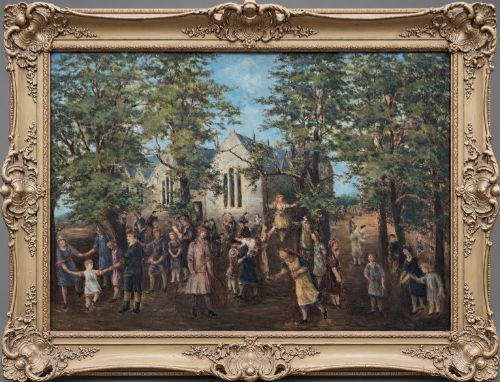
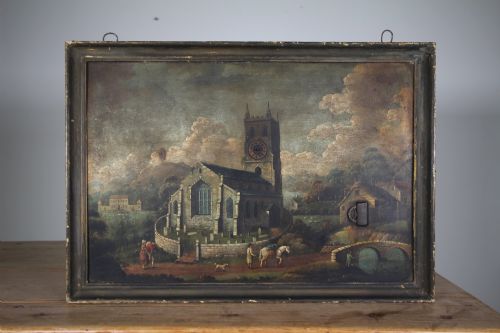
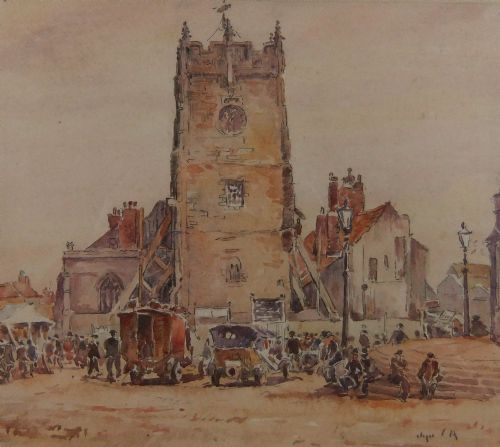
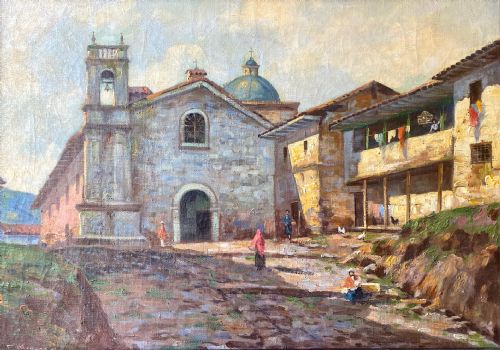
An antique church landscape brings historic ecclesiastical architecture into domestic spaces through nineteenth and early twentieth-century watercolours and oils.
Antique Church Landscape
The search phrase antique church landscape gathers British topographical and rural views focusing on churches, cathedrals and churchyards. These works span the Victorian, Edwardian and early twentieth-century periods, recorded by artists working in watercolour and oil paint.
Buyers encounter framed paintings and drawings depicting specific named locations, from Yorkshire abbeys to London parish churches. The selection balances naïve folk art and skilled British Impressionism.
Watercolour on paper and oil on canvas or board dominate the forms. Scenes range from quiet village graveyards with cattle grazing to moonlit cathedral studies.
How They Were Made
Painters utilised oil paint on stretched canvas, wood panels or boards to build rich, textured compositions. Watercolours were applied to paper, often combining pencil underdrawing with washes of pigment to capture light and shadow.
Artists worked en plein air or developed studio pieces from initial charcoal and ink sketches. Finished paintings were housed in gilt wood frames, slips or glazed surrounds.
One unexpected canvas captures a church steeple flying the Red Duster merchant flag.
What Varies in Quality
Quality rests in the precision of architectural rendering and the handling of atmospheric light. A master hand defines stone textures and distant foliage with economy and sureness.
Compositional balance separates routine topographical records from compelling artistic statements. Stronger pieces integrate human activity, such as parishioners or stonemasons, naturally into the landscape.
John Smith Atherton·Alfred George Morgan·William Greaves·John Edward Bale·Walter Meegan·Kershaw Schofield·John Cawthorn·Rowland Henry Hill·Maurice Asselin·Henri Therme·David Bates·Frederick Underhill·Stephanie Cooper·Fred Lawson·Daniel Sherrin·John Thirttle·Thomas Henry Hunn·Max Ludby·AF de Breanski·Eugène Galien-Laloue·George Charles Haite·Everhardus Koster·Edwin Moore·Clement Morris·Edwin Ridsdale Tate
The Antique Church Landscape Glossary
- Watercolour
- A painting method where fine pigment is suspended in a water-based, translucent solution. It is typically applied to heavy paper.
- Naive art
- Visual work created by an artist without formal academic training. These pieces display charming perspective quirks and direct observation.
- Gilt frame
- A wooden picture surround covered with a thin layer of gold leaf or metallic gilt paint. It protects the edge of canvas or paper.
- Topography
- The detailed mapping or picturing of particular geographical locations. In art, it denotes accurate recording of identifiable buildings and terrain.
Antique Church Landscape: Frequently Asked Questions
What is an antique church landscape?
An antique church landscape is a painting or drawing created before the mid-twentieth century featuring a church, cathedral or abbey within a rural or urban setting.
These artworks serve as historical records of British topography, documenting how parishes and surrounding villages appeared to artists of the Victorian and Edwardian eras.
How were these paintings displayed?
Period works were mounted behind glass in watercolours or stretched onto frames for oils, usually encased within moulded wood and gilt surrounds.
Many retain their original framing materials, which complement the tonal qualities of the pigment and protect the paper or canvas from atmospheric damage.
Are the locations identifiable?
Many pieces depict named sites such as Whitby Abbey, South Creake or specific London churches. Artists frequently inscribed titles and locations directly onto the mount or reverse of the work.
Local archives and historical maps often help modern owners trace the exact viewpoint the artist occupied.
What mediums are most common?
Watercolour on paper and oil paint on canvas or board form the majority of surviving examples. Pencil, ink and charcoal sketches also appear.
Each medium offers a distinct visual texture, from the translucent washes of nineteenth-century watercolours to the heavier impasto of oil paintings.