
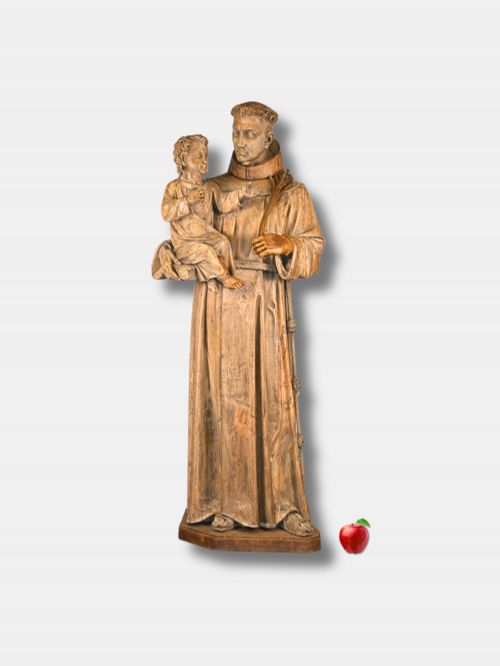


Antique Church Icon
These antique church icon pieces bring centuries of devotional art into modern spaces, offering carved wood and painted panels steeped in ritual history.
Antique Church Icon
An antique church icon encompasses sacred religious artworks and statues originating from various Christian traditions across Europe and Russia. The selection here leans heavily towards carved wooden saints, framed painted panels, and figural sculptures spanning several centuries of devotional practice.
Buyers encounter distinct regional forms ranging from Russian Orthodox tempera panels to Spanish Baroque carvings and French ecclesiastical figures. These pieces represent both private domestic shrines and larger church furnishings created for veneration.
The objects vary from flat arched panels depicting the Resurrection and the Crucifixion to substantial three-dimensional wooden saints and devotional groups. Each piece reflects the specific liturgical requirements and artistic conventions of its period and origin.
How they were made
Traditional makers built panel icons using timber boards prepared with gesso layers before applying pigments mixed in egg tempera or oil. Artisans frequently incorporated gold leaf and silver elements to highlight sacred figures and backgrounds.
Carved wooden figures and statues rely on solid timbers such as oak and polychrome wood, shaped with hand chisels and finished with painted or gilded details. Plaster served as an alternative medium for certain later ecclesiastical figures.
The listings on this site feature items spanning the sixteenth to the twentieth centuries, utilising wood, gold leaf, gesso, and tempera.
What varies in quality
Quality in these sacred works rests upon the precision of the hand carving and the finesse of the brushwork in the facial expressions and drapery. Master workshops achieved greater anatomical proportion and expressive depth in both wood and tempera.
The survival of original surface treatments, including early gilding, polychrome pigment, and gesso grounds, dictates the visual integrity of each piece. Greater skill is evident in works that retain their original harmony of colour and proportion without heavy later intervention.
The Antique Church Icon Glossary
- Egg tempera
- A permanent fast-drying painting medium consisting of coloured pigment mixed with a water-binder such as egg yolk. This technique created the durable, matte surfaces seen on traditional Russian panels.
- Gesso
- A paint mixture consisting of a neutral binder mixed with chalk, gypsum, or pigment. It served as the foundational preparation layer on wooden panels before gilding and painting.
- Polychrome wood
- Timber sculpture decorated in a variety of different colours. This finish brought realism and visual distinction to carved saints and religious figures.
- Russian Orthodox
- Pertaining to the autocephalous Eastern Orthodox Church centred in Russia. Icons from this tradition follow strict iconographic canons regarding composition and subject matter.
- Santos figure
- A carved wooden statue representing a saint or religious figure, particularly associated with Spanish and Latin American devotional traditions. These figures were often dressed in real textiles for processions and church displays.
Antique Church Icon: Frequently Asked Questions
What is an antique church icon?
An antique church icon is a sacred artwork, panel painting, or carved wooden statue created for Christian worship and veneration in churches or homes.
These pieces range from traditional Russian tempera and gold leaf panels to Spanish and French carved wooden saints spanning the sixteenth to the twentieth centuries.
How were wooden icons constructed?
Makers typically joined solid timber boards, applied a gesso ground layer, and painted the sacred subjects using egg tempera or oil pigments.
Many examples incorporate delicate gold leaf or silver detailing to illuminate the spiritual figures depicted on the panels.
Where should I place an icon?
These sacred works suit quiet spaces in the home where their detailed carving and devotional history can be appreciated up close.
Wall-mounted panels and freestanding wooden figures require stable interior environments away from direct sunlight and excessive moisture fluctuations.
How do I tell different periods apart?
Differentiating periods relies on observing the artistic style, the choice of materials, and regional woodworking or painting techniques.
Early works often display traditional iconography and hand-mixed tempera, while later nineteenth and twentieth-century pieces incorporate expanded material use including plaster and framed oil panels.