

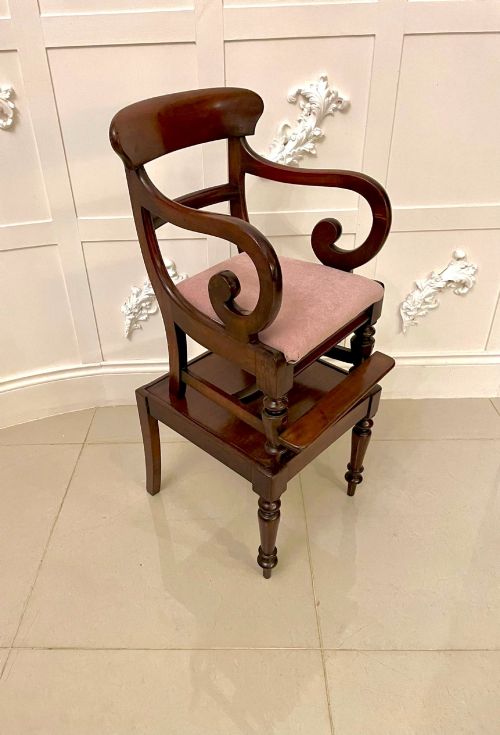
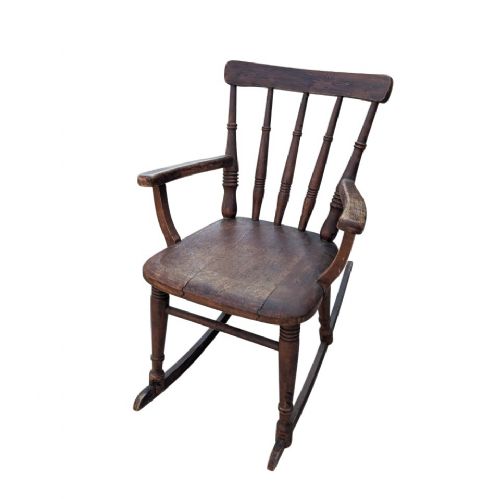


Antique Childs Arm Chair
These antique childs arm chair examples offer miniature scaling paired with period timber and construction, giving any room an immediate sense of scale and history.
Antique Childs Arm Chair
An antique childs arm chair represents scaled-down seating intended for young occupants, surviving from periods such as the Georgian, Victorian, and William IV eras. These pieces take various forms including Windsor models, rockers, high chairs, and carvers.
The materials recorded in these pieces include mahogany, elm, ash, yew, pine, birch, fruitwood, and walnut, alongside bentwood and upholstered variants. Styles span English Country, Scandinavian Country, Rustic Country, Regency, and Queen Anne influences.
On this page, buyers are most likely to encounter nineteenth-century examples and Victorian country rocking chairs or armchairs constructed from mixed timbers like ash and elm. Formal mahogany pieces from the Georgian and William IV periods also appear alongside bentwood designs.
How they were made
Cabinet makers and country joiners utilised solid hardwoods such as mahogany, walnut, and fruitwood for formal urban seating, employing traditional joinery methods. Turned spindles and shaped seats frequently characterise these smaller frames.
Country pieces combine timbers like ash, elm, and yew, using steam-bending and Windsor construction techniques to achieve sturdy frames. Rocking variants integrate curved wooden rockers fixed to the base of the chair legs.
Antique Childs Arm Chair Retail Price Guide 2026
Typical asking prices for childs arm chair among the pieces listed under this phrase on Sellingantiques today, from the lower quarter to the upper quarter. They describe what is for sale here now, not the wider market.
Listings span the nineteenth century, Victorian era, Georgian period, and nineteen hundred, incorporating woods like mahogany, elm, ash, yew, pine, birch, and walnut.
What varies in quality
Quality depends on the crispness of the timber turning, the choice of primary woods such as figured mahogany or rich fruitwood, and the integrity of the original construction. Regional vernacular pieces demonstrate varying levels of joinery sophistication compared to urban workshop output.
The presence of original surfaces, patination, and unaltered miniature proportions separates standard utilitarian seating from finer decorative examples produced in the Georgian and William IV periods.
The Antique Childs Arm Chair Glossary
- Windsor
- A chair style characterised by wooden seats into which bent spindles and back legs are wedged directly. This construction method provides robust support in country seating.
- Carver
- An open armchair, often designed to match a set of dining chairs. In children's seating, it denotes a miniature armchair with wooden arm supports.
- Bentwood
- Wood softened by steam and bent into curved shapes, famously utilised by Thonet in the nineteenth century. This technique created light, resilient furniture frames.
- Fruitwood
- A dense timber derived from fruit-bearing trees such as pear, apple, or cherry. Cabinet makers valued it for its fine grain and warm tone.
- Vernacular
- Furniture made by local country craftsmen using regional materials and traditional techniques rather than following academic urban pattern books.
Antique Childs Arm Chair: Frequently Asked Questions
Were these miniature chairs actually used by children?
These pieces were built specifically for young occupants in domestic settings, serving as functional seating for nurseries and parlours.
Their sturdy timber construction and scaled dimensions accommodated children during daily life.
How do I identify a Georgian child's chair?
Georgian examples often display formal styling cues such as mahogany frames, carved splats, and proportions reflecting adult furniture of the eighteenth century.
They contrast with the rustic country Windsor and rocking chairs typical of later nineteenth-century production.
What is the difference between a rocking chair and an armchair?
Rocking chairs feature curved wooden rockers attached beneath the legs to permit motion, making them popular in Victorian nurseries.
Standard armchairs stand on fixed legs and offer stable seating at tables or firesides.
How should I care for antique wooden children's chairs?
Maintain these pieces in stable indoor environments away from direct heat sources and dramatic humidity fluctuations.
Apply traditional beeswax occasionally to nourish the historic timber surface without building up synthetic residues.