



Antique Child Toy
An antique child toy brings the domestic life of past centuries into focus through miniature services, wooden horses and handmade models.
Antique Child Toy
When searching for an antique child toy, collectors encounter a diverse range of survivals, from miniature ceramic tea services to carved wooden rocking horses and push-along animals. These objects reflect the material culture of childhood across the eighteenth, nineteenth, and early twentieth centuries, capturing how children played and learned in earlier eras.
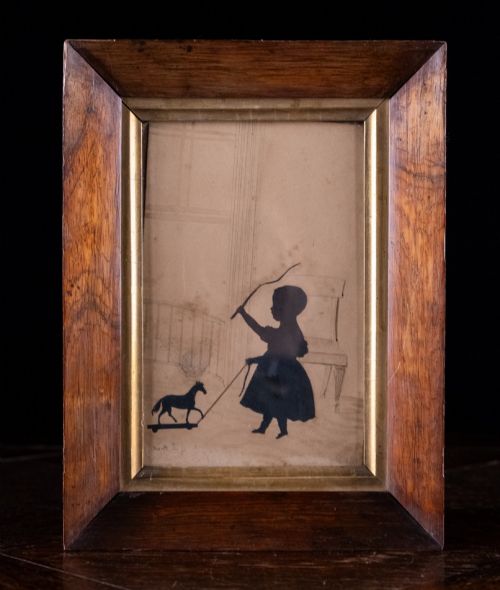
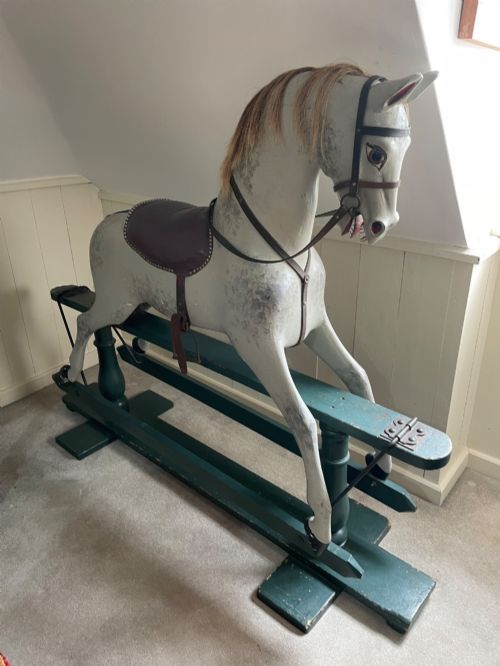
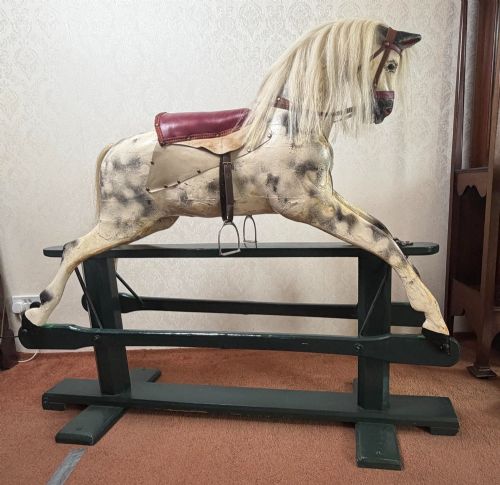
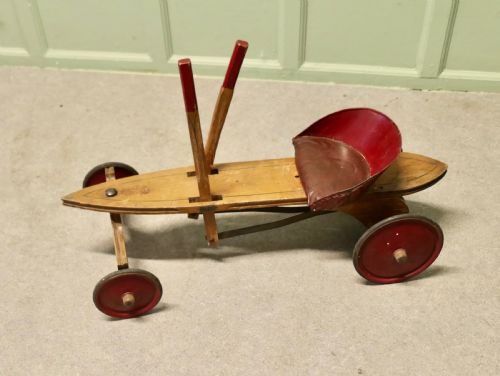
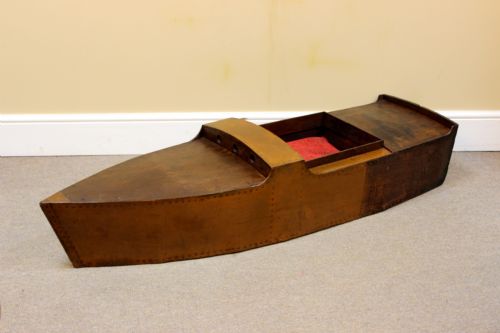
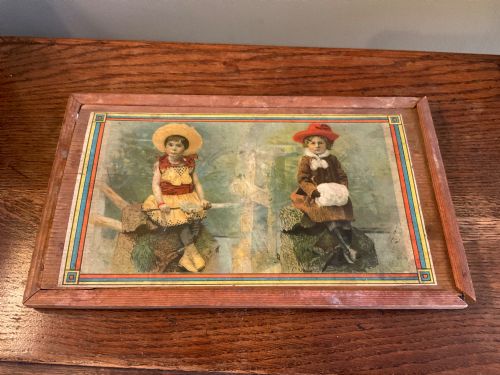
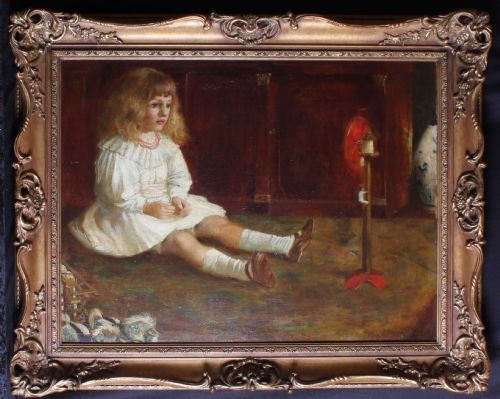
The most common examples on this page are carved wooden rocking horses and miniature tableware, spanning the Victorian and Edwardian periods. Alongside these, buyers find wheeled ride-on toys, pull-along wooden figures, and framed artworks depicting children with their playthings.
Origins vary from vernacular folk art pieces made at home to factory-produced ceramics from potteries and commercial tricycles from the interwar decades. Each item preserves a specific domestic function, whether intended for daily nursery use or preserved as a decorative miniature.
Materials and construction methods
Wood serves as the primary medium for structural toys, utilising carved pine and hardwoods combined with leather tack, horsehair stuffing, and applied paint on rocking horses and pull-along animals. Artisans shaped these materials by hand, attaching components to iron stands or wooden rockers.
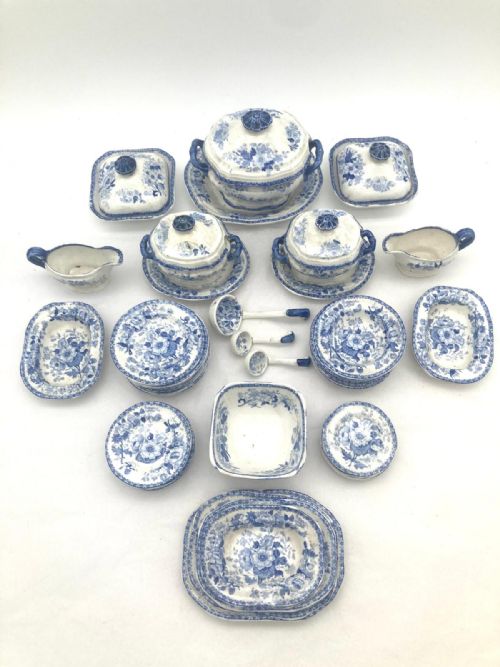
Ceramics and earthenware form the substance of miniature dinner and tea services, decorated with blue and white transfer printing in floral and historical patterns. Makers shaped clay and fired it in kilns, producing durable miniature wares designed to emulate adult dining sets.
Antique Child Toy Retail Price Guide 2026
Typical asking prices for child toy among the pieces listed under this phrase on Sellingantiques today, from the lower quarter to the upper quarter. They describe what is for sale here now, not the wider market.
Listings feature items spanning the eighteenth century through the 1950s, incorporating wood, earthenware, metal, and watercolour paintings.
Factors determining quality
Quality in an antique child toy rests on the integrity of the original materials and the sophistication of the craftsmanship. Hand-carved wooden figures with retained original paint surfaces and leather elements stand apart from heavily altered or later repainted examples.
For ceramic tea and dinner services, clarity of the transfer print and completeness of the service define the standard. Pieces that survive in matched sets without extensive replacement components command greater interest among collectors.
Augustin Edouart·Periclès·Minton·Collinsons·Robert Gemmell Hutchison·Charles Edward Wilson
The Antique Child Toy Glossary
- Transfer printing
- A method of decorating ceramics by applying a design from an engraved copper plate onto tissue paper and then onto the fired clay body before glazing. This technique allowed for intricate blue and white patterns on miniature tea and dinner services.
- Folk art
- Objects created by self-taught or vernacular makers outside academic artistic traditions, often using readily available materials like carved wood. In this category, items include simple pull-along animal figures and handmade toys.
- Prattware
- A type of earthenware produced in England during the late eighteenth and nineteenth centuries, typically featuring moulded relief decoration painted in specific underglaze colours. Collectors find this technique on commemorative child plates and tea wares.
- Treen
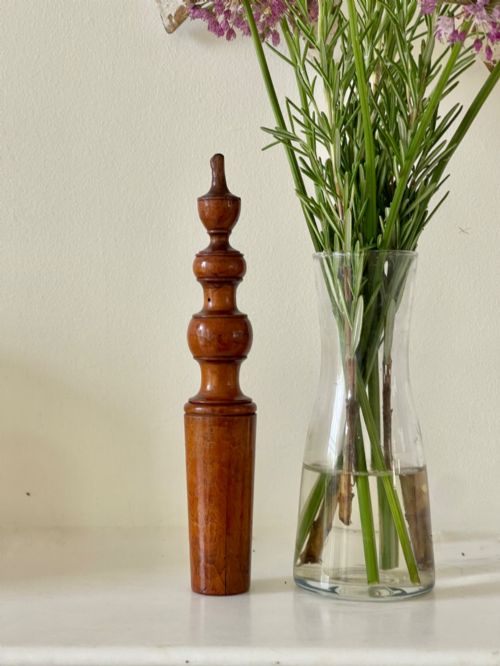
- Small handmade wooden objects produced before the widespread adoption of plastic, encompassing utilitarian items and small toys. This term covers items like carved rattles and miniature wooden accessories found in the nursery.
Antique Child Toy: Frequently Asked Questions
What materials make up antique rocking horses?
Makers constructed these large toys primarily from carved wood such as pine or hardwoods, mounted onto original wooden rockers or metal brackets.
Additional materials include genuine horsehair for manes and tails, leather tack for bridles, and layers of gesso beneath applied paint finishes.
How were miniature ceramic services used?
Children used these small porcelain and earthenware sets for nursery tea parties and doll dining, designed to teach domestic etiquette.
Potteries produced these scaled-down services as exact replicas of adult tableware, complete with tureens, plates, and teapots.
How do I date an antique wooden toy?
Dating relies on examining tool marks, construction techniques, and the type of paint or finish applied to the wood surface.
Victorian and Edwardian examples often display specific wheel configurations, iron bracing, and hand-carved details characteristic of their production decade.
Are pull-along toys historically significant?
These wheeled animals and carts provide direct evidence of nineteenth-century nursery entertainment and early childhood development.
Surviving examples demonstrate vernacular woodworking skills and often retain traces of child play through worn surfaces and patinated paint.