



Antique Chess Board Set
An antique chess board set is a tactile piece of social history that brings enduring strategic play to your table.
Antique Chess Board Set
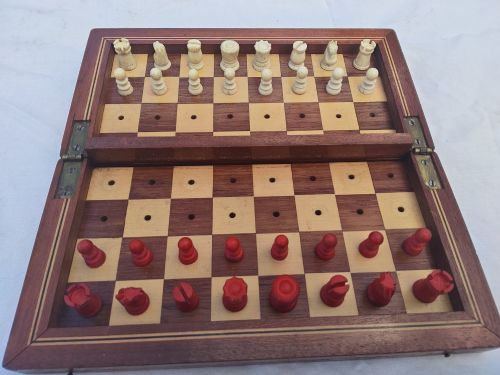
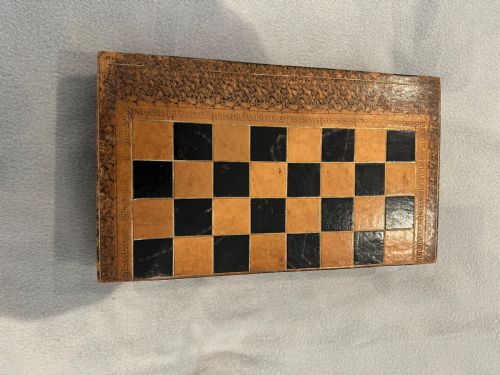
When you search for an antique chess board set, you encounter complete sets of playing pieces paired with folding boards, rigid boxes, or leather folios designed for play and display. The selection spans the nineteenth century up to the early twentieth century, offering portable travelling sets alongside substantial library pieces.
The objects originate from British and European workshops, featuring styles such as Victorian, Ottoman Revival, and Edwardian designs. Forms range from miniature travelling companions to large rosewood boxes and folding leather-bound books.
Materials and construction
The pieces and boards rely on traditional timbers such as mahogany, rosewood, boxwood, and burr walnut, often paired with contrasting light and dark inlays. Cabinetmakers shaped folding wooden boxes with precise hinges to enclose the playing pieces securely during storage.
Alternative materials include carved bone for miniature or folding sets, alongside brass accents and gold leaf details. Leather appears extensively on folding boards and travelling cases, sometimes tooled to resemble decorative library books.
Antique Chess Board Set Retail Price Guide 2026
Typical asking prices for chess board set among the pieces listed under this phrase on Sellingantiques today, from the lower quarter to the upper quarter. They describe what is for sale here now, not the wider market.
Periods represented span from mid-Victorian 1850 pieces through Edwardian folding boards up to 1930s travelling sets.
Evaluating craftsmanship
Quality rests in the precision of the woodwork, the crispness of the turned or carved playing pieces, and the durability of the hinges and clasps. Superior examples display tightly fitted joints and well-balanced proportions that withstand regular handling.
Finer travelling sets maintain complete sets of pieces within compact, purpose-built leather cases without looseness in the compartments. Material selection also dictates rank, with richly grained burr walnut and carefully selected boxwood marking out superior workshop output.
The Antique Chess Board Set Glossary
- Staunton style
- The standard pattern for chess pieces introduced in the mid nineteenth century, featuring realistic carved details and distinctive crown motifs on the rooks and kings.
- Compendium
- A multi-game box housing equipment for chess alongside board games like backgammon and draughts in fitted compartments.
- Travelling chess set
- A portable set designed for journeys, often featuring pegged pieces or magnetic boards to keep units secure during movement.
- Boxwood
- A dense, pale wood frequently utilised for the light side of chess sets and intricate turnery.
- Mother-of-pearl
- An iridescent inner shell material applied to board surfaces for decorative contrast.
Antique Chess Board Set: Frequently Asked Questions
How do I date an antique chess set?
Dating relies on material choices, hinge styles, and stylistic markers such as Victorian aesthetic preferences or Edwardian forms. Packaging and case design also offer clues to the manufacturing decade.
Comparing the turned shapes of the chess pieces against established patterns helps narrow down the period of production.
Were these sets meant for travel?
Many surviving sets were specifically built for journeys, housed in leather cases, faux books, or folding boxes with secure compartments. These allowed players to continue matches while away from home.
Larger library editions remained static on household tables for daily fireside engagement.
What is a games compendium?
A games compendium is a fitted wooden box containing the equipment for multiple pastimes, usually including chess, backgammon, and draughts. They became popular household items during the Victorian era.
Owners opened the hinged lids and lifted internal trays to access different boards and playing pieces.
How should I care for a wooden chess board?
Keep wooden sets away from direct sunlight and fluctuating humidity to protect the natural timbers and inlays from warping. Gentle dusting with a dry cloth maintains the polished finish.
Avoid applying modern chemical polishes that might damage antique lacquers or leather surfaces.