




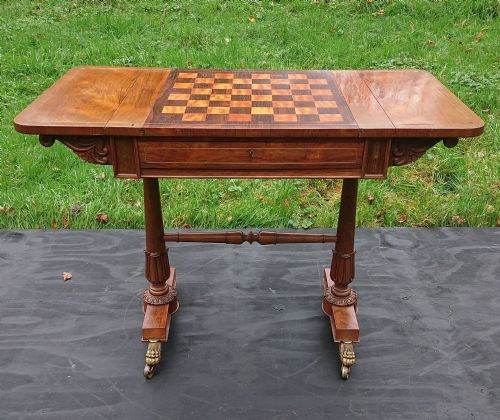

Antique Chess and Backgammon
These antique chess and backgammon sets combine two ancient board pastimes into versatile folding boxes and multi-purpose tables for the Victorian parlour.
Antique Chess and Backgammon
When you search for antique chess and backgammon, you find dual-purpose items designed for nineteenth-century leisure, ranging from compact folding boards to elaborate standing furniture. These pieces accommodate two distinct board games within a single object, often housing the playing pieces in a drawer or interior compartment.
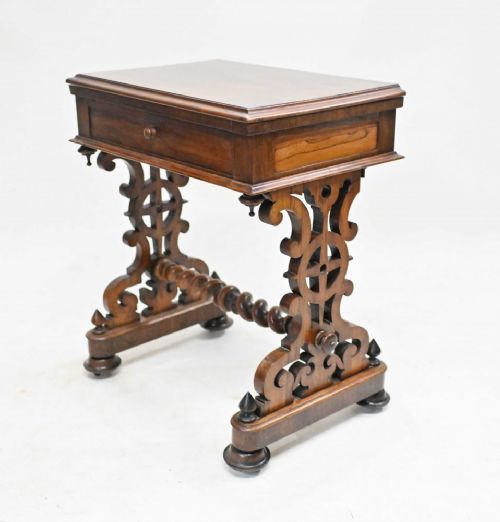
The most common formats on this page include Victorian games tables in burr walnut or rosewood, alongside portable folding boards and decorative boxes. Many examples integrate card playing and sewing facilities into the same piece of furniture.
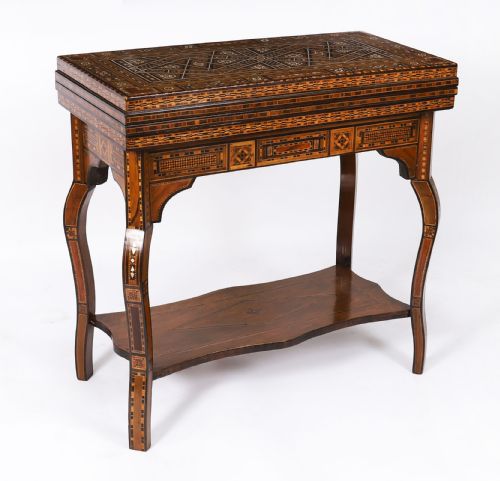
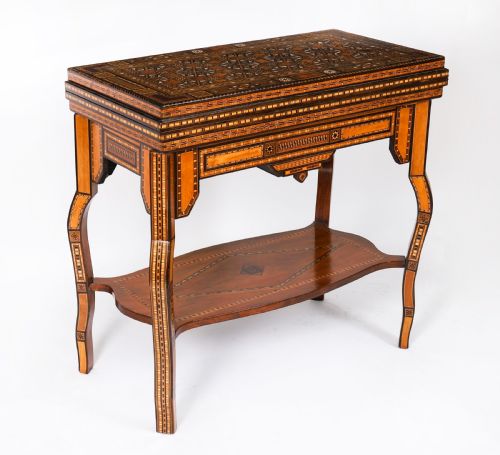
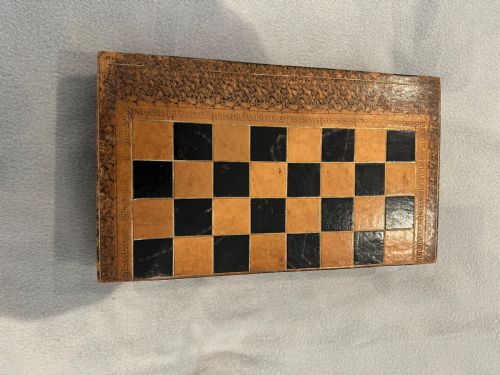
Origins span standard nineteenth-century British cabinet-making and more exotic Levantine workshops, reflecting the global reach of Victorian pastimes. The forms vary from simple faux book boards to swivelling foldover tables with intricate marquetry.
How they were made
Cabinet-makers built these items using solid and veneered timbers such as walnut, burr walnut, and rosewood, applying precise wood inlay for the board squares. Brass hinges and swivelling mechanisms allowed tables to fold over and rotate smoothly.
Decorative surfaces often incorporate mother-of-pearl, bone, and floral marquetry, particularly on Levantine and Ottoman revival pieces. Interior compartments utilised leather binding and fitted trays to secure bone or wooden playing pieces.
Antique Chess and Backgammon Retail Price Guide 2026
Typical asking prices for chess and backgammon among the pieces listed under this phrase on Sellingantiques today, from the lower quarter to the upper quarter. They describe what is for sale here now, not the wider market.
Materials recorded on this page include walnut, burr walnut, rosewood, brass, bone, mother-of-pearl, and wood inlay.
What varies in quality
Quality depends on the precision of the timber matching and the complexity of the inlay, with burr walnut and multi-material marquetry representing the finer standard. The stability of the swivelling mechanism and the crispness of the wood contrast also distinguish standard production from exceptional pieces.
Interior fittings reveal distinctions in craftsmanship, such as neatly dovetailed drawers, leather-lined book spines, and well-preserved mother-of-pearl work. Maker attributions and integrated multi-game utility further elevate the standing of individual tables.
The Antique Chess and Backgammon Glossary
- Marquetry
- Decorative veneer work forming pictures or geometric patterns on furniture surfaces. It utilises contrasting wood types and natural materials like bone to create detailed motifs.
- Burr walnut
- A highly figured timber prized for its swirling grain patterns. Cabinet-makers used its decorative veneer on the top surfaces of fine Victorian tables.
- Levantine
- Pertaining to the eastern Mediterranean region. These items often feature intricate geometric wood inlay and mother-of-pearl decoration.
- Foldover top
- A table design featuring a hinged leaf that opens to double the surface area. It reveals a hidden playing board or baize-lined interior beneath.
- Regency
- A British design period spanning the early nineteenth century. Furniture from this era often incorporates clean classical lines and rosewood veneers.
Antique Chess and Backgammon: Frequently Asked Questions
What is an antique games table?
An antique games table is a piece of multi-functional furniture designed with a reversible or foldover top to accommodate pastimes like chess, backgammon, and card games. Many examples also incorporate sewing compartments or small drawers for storing counters and dice.
These items served as social focal points in the nineteenth-century parlour, combining practical furniture with entertainment. Their convertible designs allowed households to save space while maintaining formal entertaining standards.
How do I date an antique games board?
Dating relies on identifying the prevailing styles, construction methods, and materials recorded across the nineteenth century. Pieces from the Regency era tend to feature rosewood and simpler classical forms, whereas Victorian examples frequently showcase burr walnut and elaborate marquetry.
Specific hardware types, such as brass hinges and swivelling mechanisms, also provide chronological clues. Cabinet-making techniques evolved from early nineteenth-century framing methods to mid-Victorian mass production.
Where were these games tables made?
These items originated in British cabinet-making workshops and international centres influenced by European trade. Specific regional styles include Syrian and Ottoman revival pieces characterised by intricate geometric inlay and mother-of-pearl work.
Domestic production centred on major furniture workshops in Britain, where cabinet-makers utilised locally available timbers like walnut alongside imported rosewood. Attributions to specific makers occasionally survive through stamps or distinct construction signatures.