






Antique Cherrywood Chest
An antique cherrywood chest brings warmth and distinct grain to a room, offering practical storage through pieces shaped in 18th and 19th-century provincial workshops.
Antique Cherrywood Chest
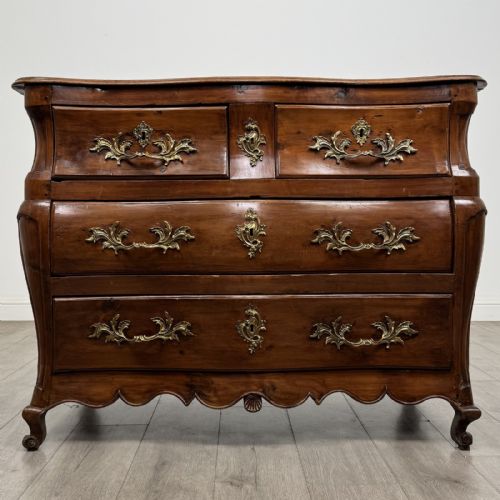
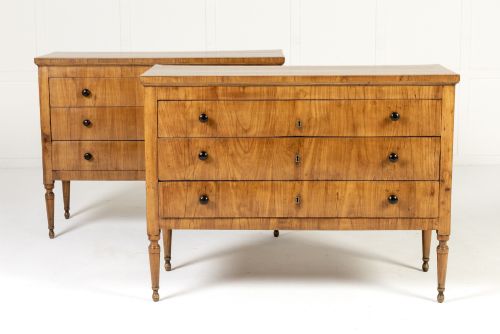
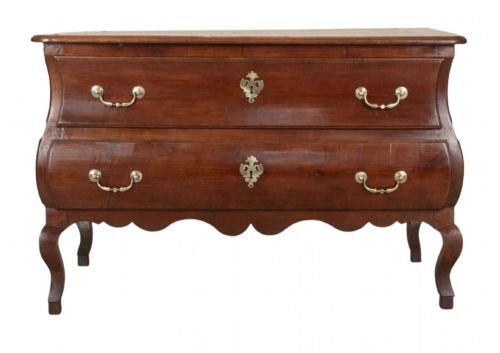
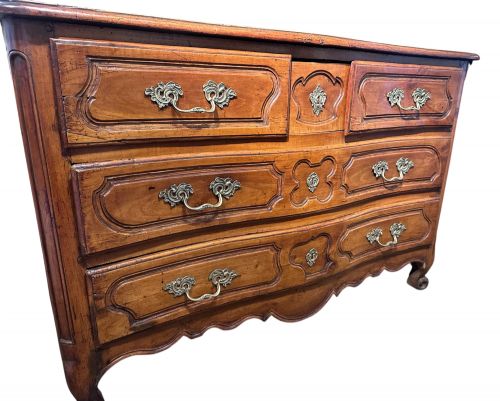
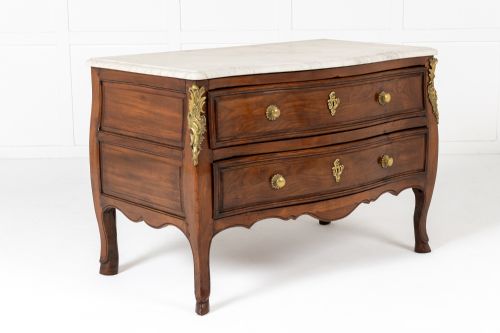
When you search for an antique cherrywood chest, you enter a field dominated by French provincial commodes and regional blanket boxes. These pieces range from substantial 18th-century commodes with serpentine fronts to 19th-century chests of drawers and lowboys.
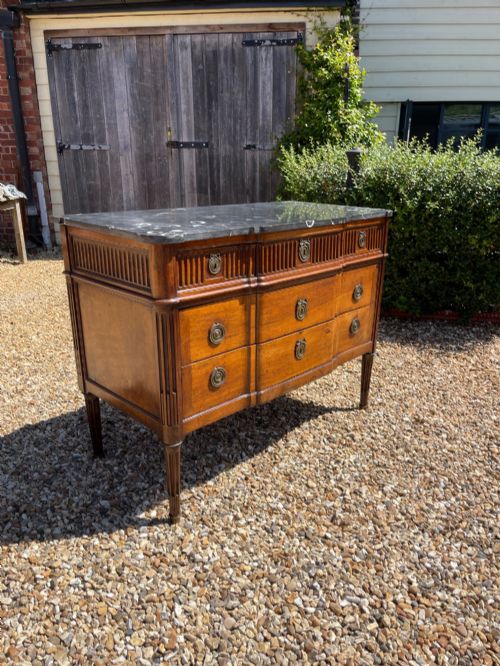
The most common form you will meet on this page is the French commode, often featuring panelled sides and generous proportions suited to bedroom or hallway storage. Alongside these, occasional lowboys and blanket chests appear from both Georgian and continental origins.
The selection bridges several eras, drawing heavily on 18th-century craftsmanship while including later 19th-century interpretations and early 20th-century pieces made in transitional styles. Each item displays the characteristic warm tone of cherry wood developed over decades of use.
How they were made
Cabinetmakers built these pieces primarily using solid cherrywood, complemented by secondary timbers and shaped panels. The timber was selected for its rich grain, which responded well to hand planing and traditional polishing.
Hardware played a functional and decorative role, with brass handles and escutcheons fitted to drawers and doors. On finer examples, surfaces were sometimes paired with marble tops, adding weight and a contrasting texture to the timber.
Antique Cherrywood Chest Retail Price Guide 2026
Typical asking prices for cherrywood chest among the pieces listed under this phrase on Sellingantiques today, from the lower quarter to the upper quarter. They describe what is for sale here now, not the wider market.
Cabinetmakers occasionally utilised fruitwood because it was locally abundant, turning everyday kitchen timber into enduring bedroom furniture.
What varies in quality
The distinction between standard provincial utility pieces and finer regional furniture lies in the handling of the timber and the refinement of the silhouette. Crispness in carved mouldings and the fluid sweep of a serpentine front separate simpler boxes from ambitious commodes.
Construction details also dictate the standing of a piece, particularly the joinery of the drawer linings and the integrity of the original hardware. Timber selection matters greatly, with well-figured cherrywood ageing to a deeper, more lustrous patina than plain stock.
The Antique Cherrywood Chest Glossary
- Commode
- A low chest of drawers or cabinet, originating in France during the 18th century. These pieces usually feature multiple drawers and stand on relatively short legs.
- Lowboy
- A small dressing table or side table with drawers, popular during the Georgian period. They typically feature cabriole or straight legs supporting a waist-height carcase.
- Serpentine
- A shape characterised by a line that curves inward centrally and outward at the ends. This contour appears frequently on the drawer fronts of finer commodes.
- Semainier
- A tall chest of drawers traditionally designed with seven drawers, one for each day of the week. This form provides substantial vertical storage.
- Provincial
- Describing furniture made in the regions outside major capital cities, often displaying local traditions and robust construction. These pieces emphasise utility and native timbers like cherrywood.
Antique Cherrywood Chest: Frequently Asked Questions
What is a cherrywood commode?
A cherrywood commode is a drawer chest originating primarily from 18th and 19th-century French provincial workshops. These pieces served as practical storage for garments and household goods.
They combine robust construction with regional decorative touches like shaped aprons and panelled sides.
How do I date an old chest?
Dating relies on examining construction methods, timber movement, and stylistic details such as hardware mounts and leg profiles. Pieces from the 18th century often feature hand-cut dovetails and pegged joints.
Later 19th-century versions introduce subtle shifts in proportion and machine-assisted preparation while retaining traditional assembly.
Where did these chests originate?
The majority of these chests originate from French provincial regions, where local cabinetmakers utilised native cherrywood. English examples from the Georgian period also appear, notably in forms like the lowboy.
Each region applied distinct stylistic influences, from Louis XV curves to transitional and directoire lines.
How do I care for cherry wood?
Cherry wood benefits from stable room temperatures and protection from direct sunlight to preserve its warm colour. Regular dusting with a dry, soft cloth maintains the polished surface.
Avoid placing damp items directly on the timber and use traditional wax sparingly when the surface appears dry.