
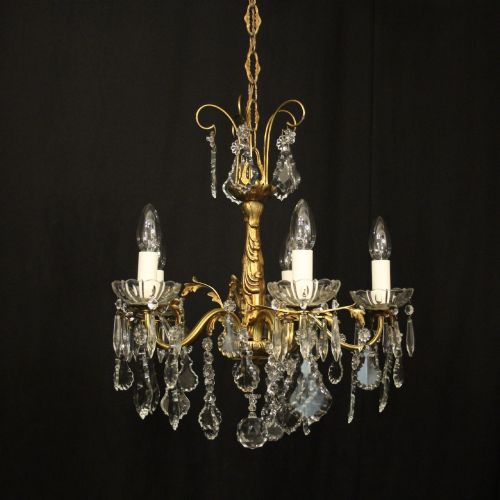
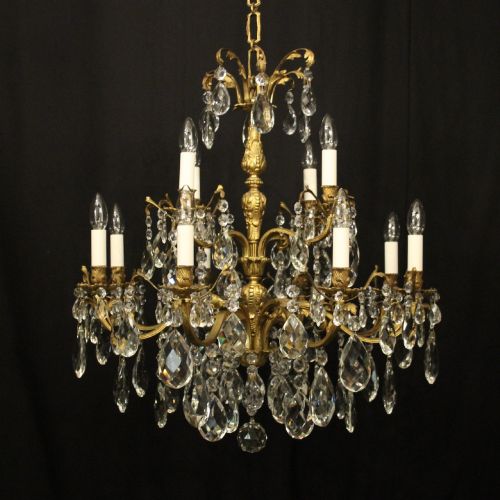
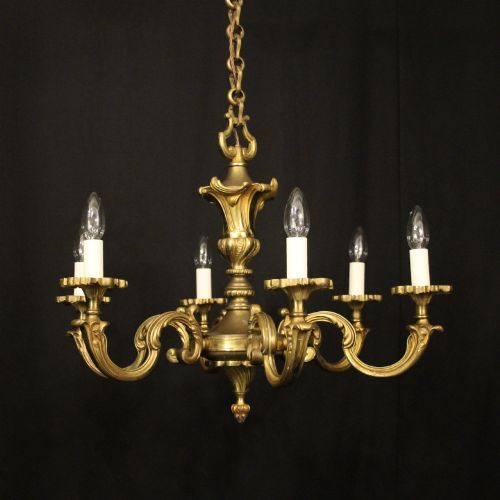
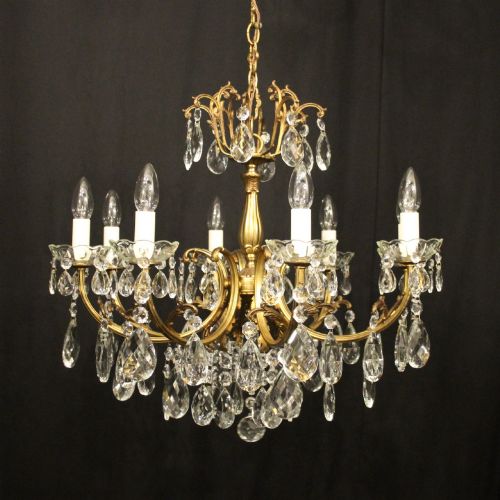
Antique Chateau Lighting
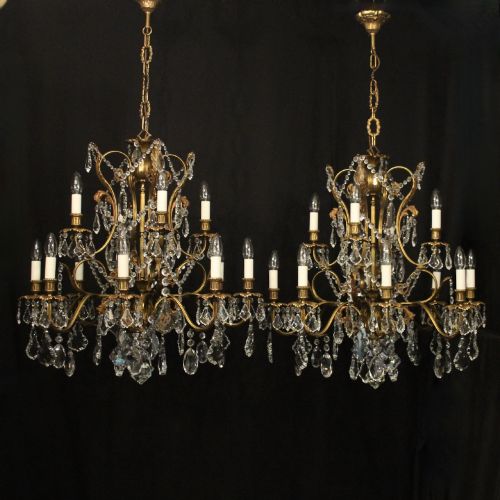
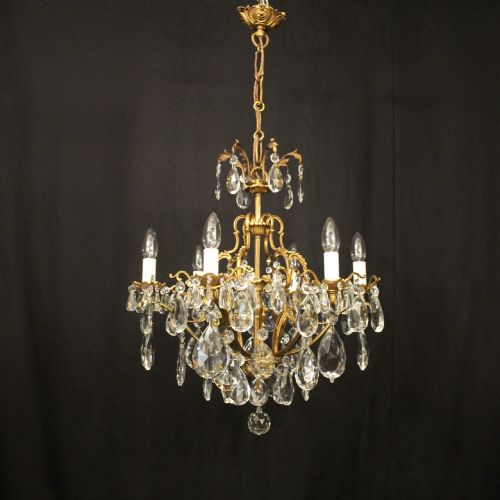
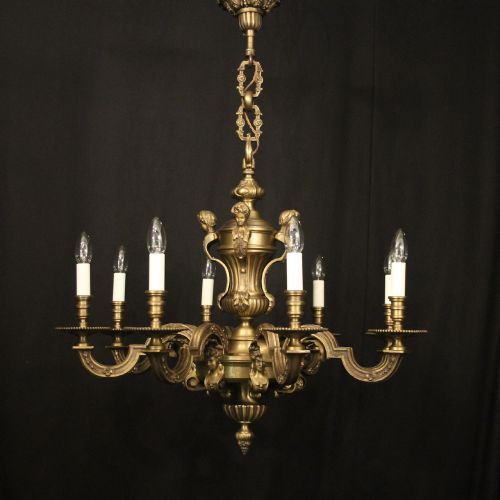
Antique chateau lighting brings grand French and Italian styling into a room through heavy bronze, brass, and cut crystal.
Antique Chateau Lighting
When searching for antique chateau lighting, buyers encounter substantial fixtures designed to illuminate large reception rooms and halls. The selections here span the nineteenth century up through the nineteen-thirties, drawing heavily on French Rococo, Neoclassical, and Italian Florentine traditions.
Chandeliers form the core of the selection, ranging from simple six-light configurations to large ballroom fixtures with numerous arms. Alongside these hang wall lights, hall lanterns, and pendant lights suited to high ceilings.
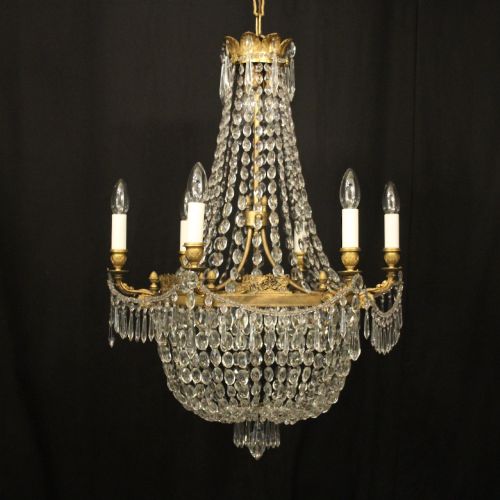
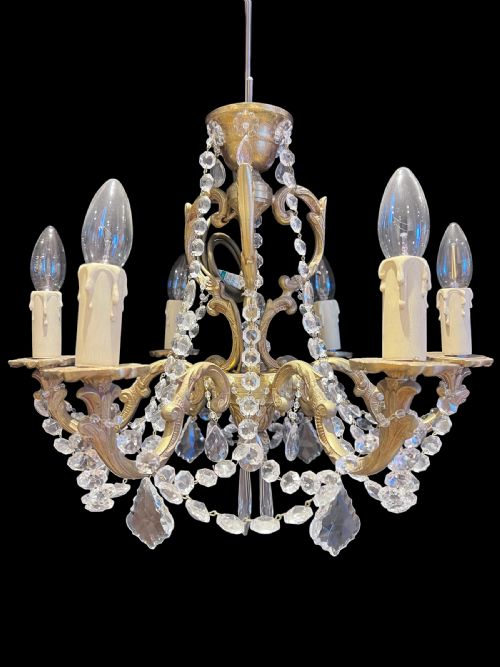
Materials lean toward the opulent, combining gilded metals with reflective glass elements. Pieces often incorporate specific regional traits, such as the tent and waterfall droplet arrangements typical of classic French salon design.
Materials and construction methods
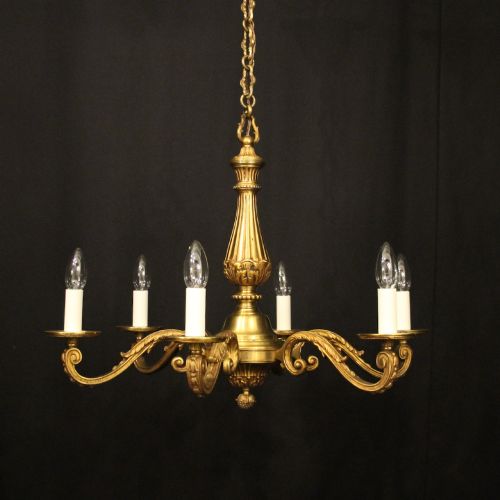
Foundries cast bronze and brass into ornate frames, which workers then gilded to achieve a rich metallic finish. Iron and zinc also appear in utilitarian exterior or hanging lanterns intended for covered porches and grand vestibules.
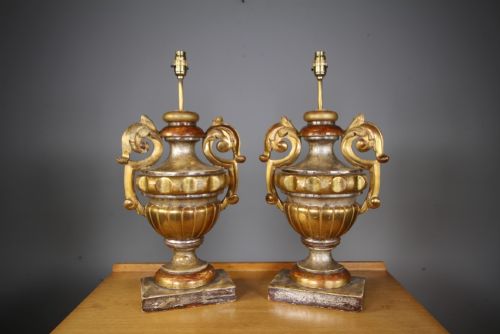
Casting is paired with detailed hand work, including the carving of pine or oak on specific architectural pieces like bed canopies and urn lamps. Metal components receive silver or gold surface treatments to catch and reflect candlelight or early electric bulbs.
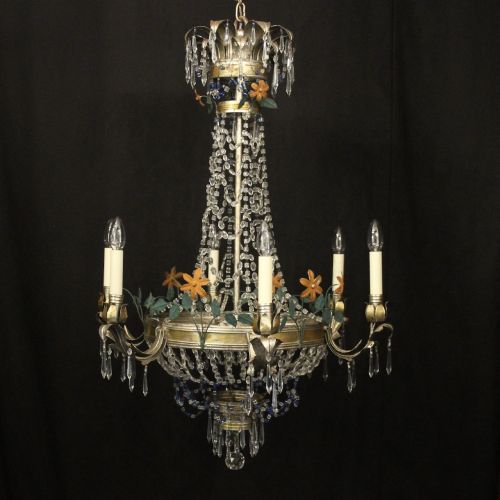
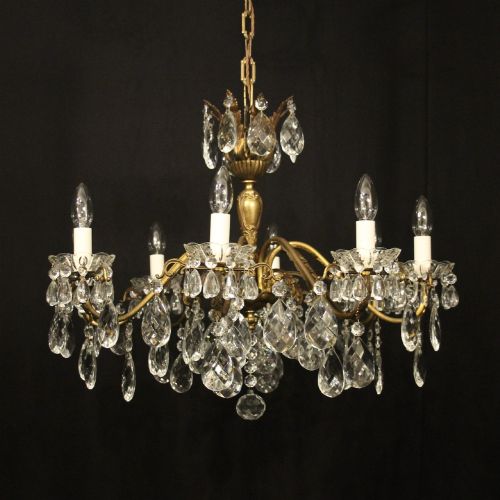
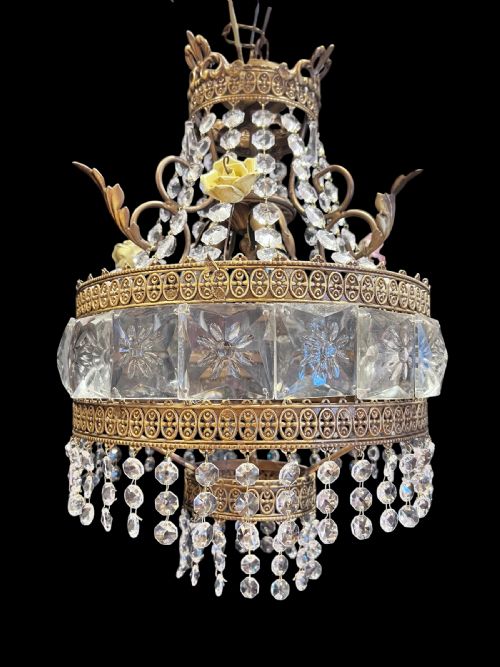
Glassmakers produced heavy crystal lustres, etched panes, and amethyst droplets suspended from wire pins. Porcelain flowers and crackle ware elements occasionally supplement the metalwork, adding delicate floral or ceramic texture to the heavy frames.
The listings combine nineteenth-century pieces with twentieth-century items, using brass, gilt bronze, and crystal.
Distinctions in manufacture and finish
Quality rests in the crispness of the metal casting and the depth of the gilding applied to the bronze or brass. Finer examples display sharp relief work on leaf decorations and arm sockets, whereas simpler pieces show softer contours.
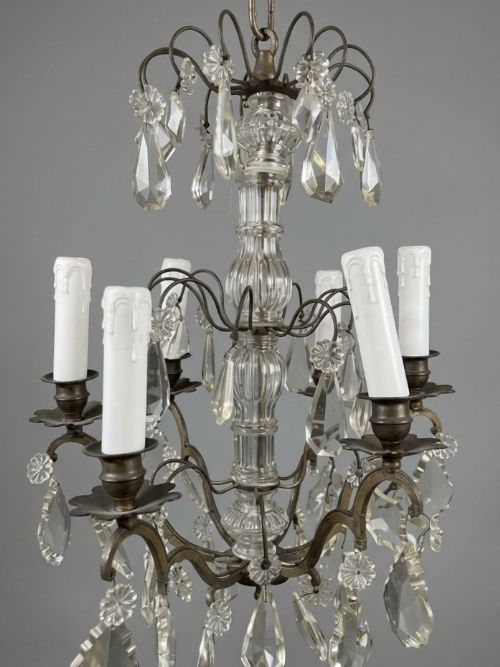
The composition of the glass elements dictates much of the visual weight, with high-clarity cut crystal producing more refraction than standard pressed glass. Complete matching sets of lustres and original drops elevate a fixture above examples assembled from mismatched parts.
The Antique Chateau Lighting Glossary
- Chandelier
- A branched lighting fixture suspended from the ceiling. These units hold multiple candles or electric bulbs across several tiers of arms.
- Gilt Bronze
- Bronze metal coated with a thin layer of gold leaf or applied gold powder. This finish protects the underlying metal while providing a warm metallic sheen.
- Tent and Waterfall
- A chandelier arrangement featuring strings of small crystals gathered in a conical tent shape above a cascading vertical fall of drops. This design maximises light reflection.
- Hall Lantern
- An enclosed hanging light fixture designed for entryways and corridors. They often use convex glass panels mounted within a brass or gilt frame.
- Lustre
- A cut glass or crystal pendant hung from a lighting fixture. Lustres multiply the illumination by refracting the light outwards into the room.
Antique Chateau Lighting: Frequently Asked Questions
How do I hang a heavy chandelier?
Heavy fixtures require direct support from ceiling joists using steel hangers or hooks rated for the total weight of the bronze and crystal.
Professional installation ensures the electrical wiring safely connects to a reinforced junction box.
Were these fixtures electrified originally?
Most pieces dating from the nineteenth and early twentieth centuries originally burned candles or gas before later conversion to electricity.
Rewiring is standard practice to meet modern safety standards while retaining the original sockets and candle tubes.
How do I clean crystal drops?
Crystal lustres should be removed individually and washed in warm water with a mild detergent before drying with a lint-free cloth.
Leaving the drops attached while cleaning risks damaging the delicate wire pins that secure them to the bronze frame.
What rooms suit a hall lantern?
Convex hall lanterns work best in high-ceilinged entryways, stairwells, and corridors where their enclosed design protects the candles or bulbs from drafts.
Their compact profile provides focused downward and outward illumination without dominating a smaller floor space.