
Antique Chain Necklace
An antique chain necklace spans solid gold pocket watch albert conversions, long guard muff chains, and gemstone pendants from the Victorian, Edwardian, and Art Deco eras.
Antique Chain Necklace
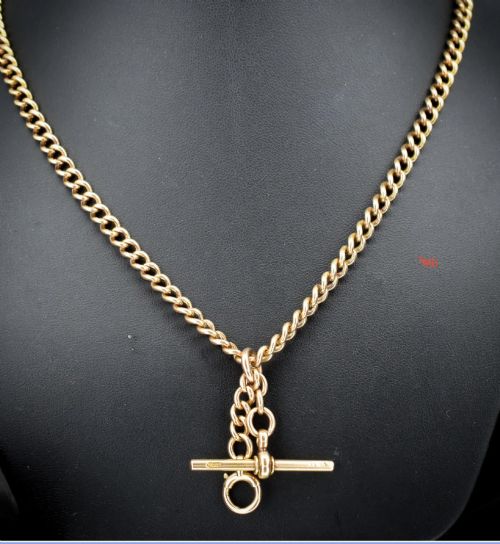
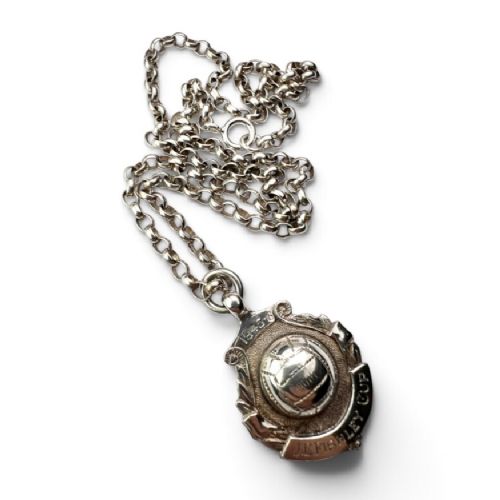
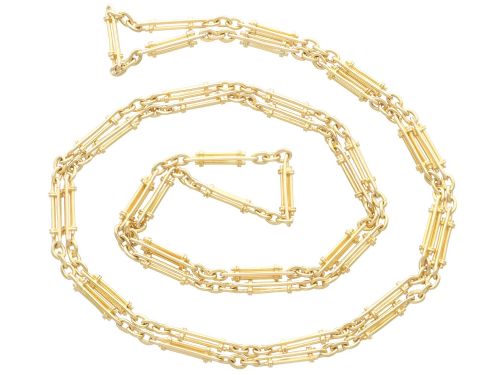
An antique chain necklace encompasses diverse lengths and linkage designs originating primarily from the nineteenth and early twentieth centuries. Many pieces on offer began life as pocket watch albert chains or long guard muff chains before finding new purpose as necklaces.
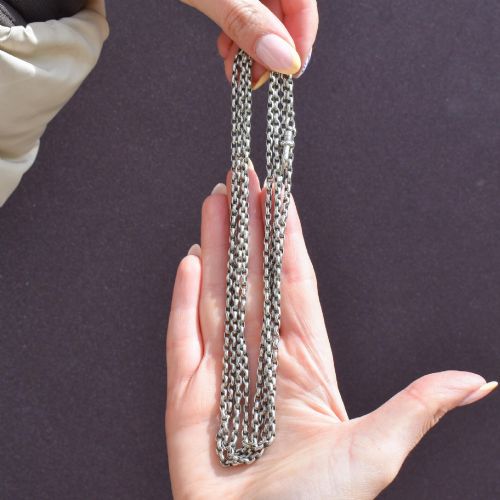
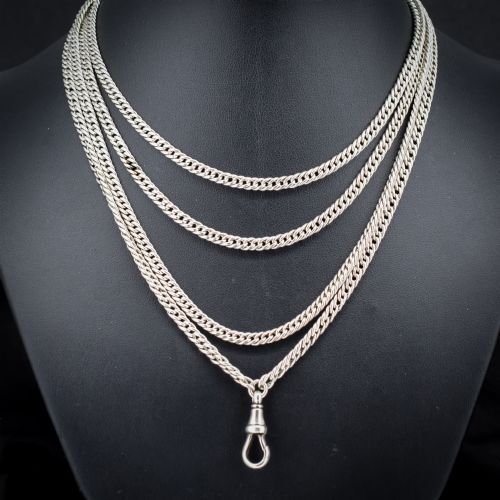
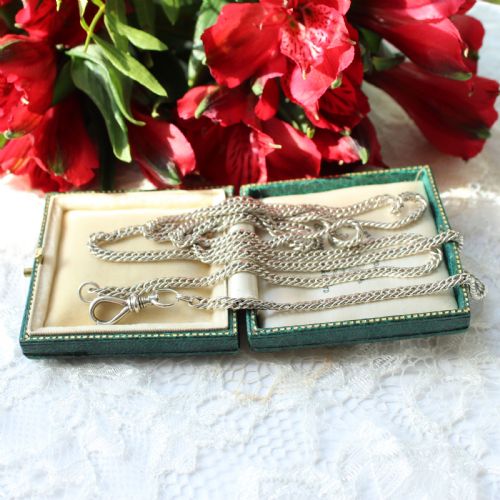
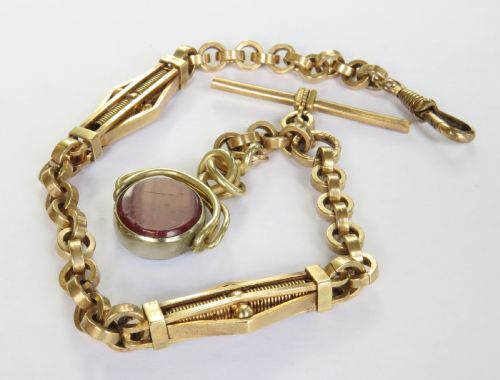
The selection includes substantial curb links, intricate trombone and love knot patterns, and long guard chains measuring over fifty inches. These utility chains often retain original dog clips and T-bars, adding distinct character to everyday wear.
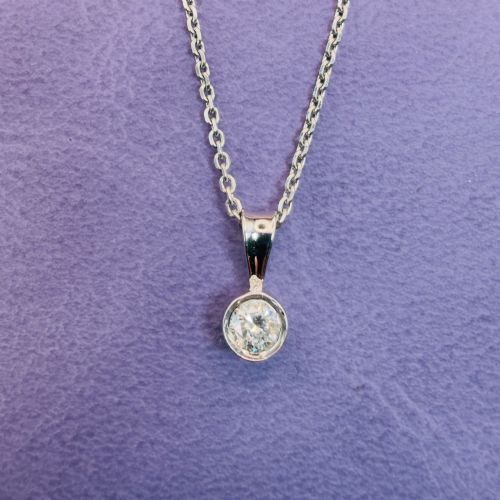
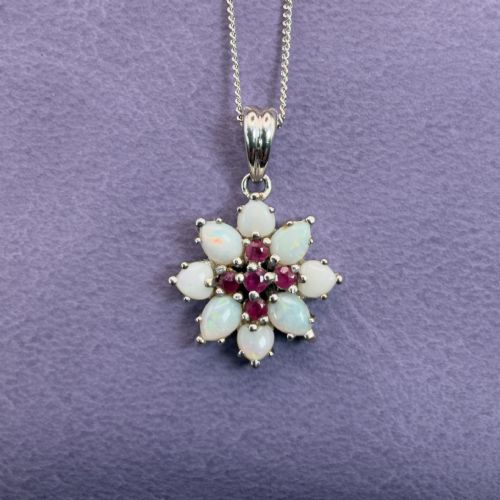
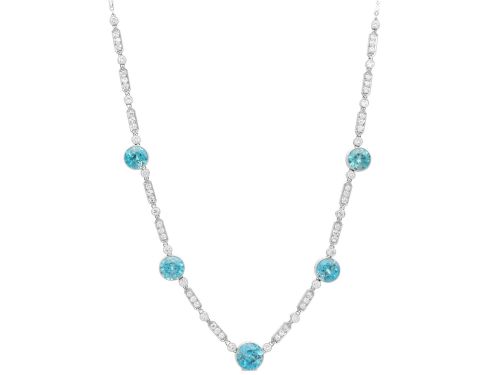
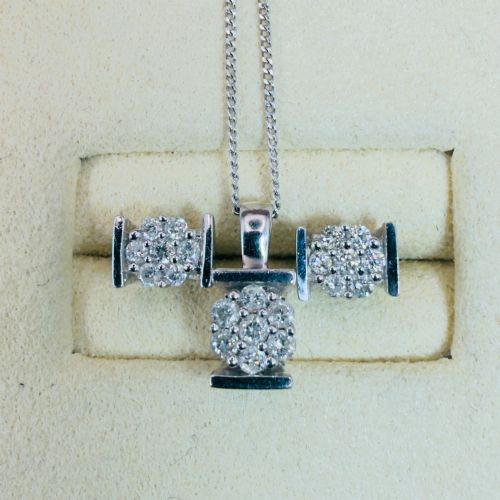
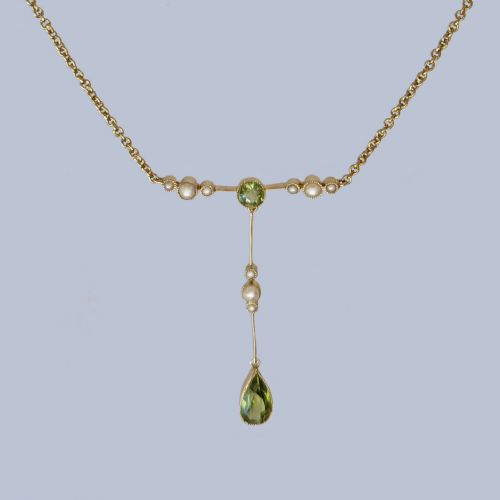
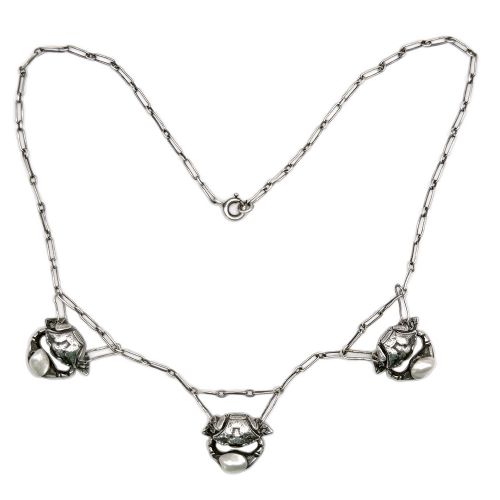
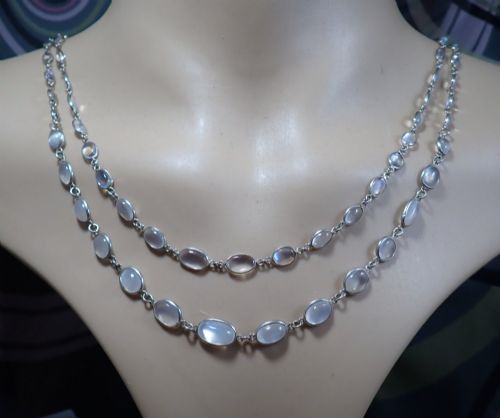
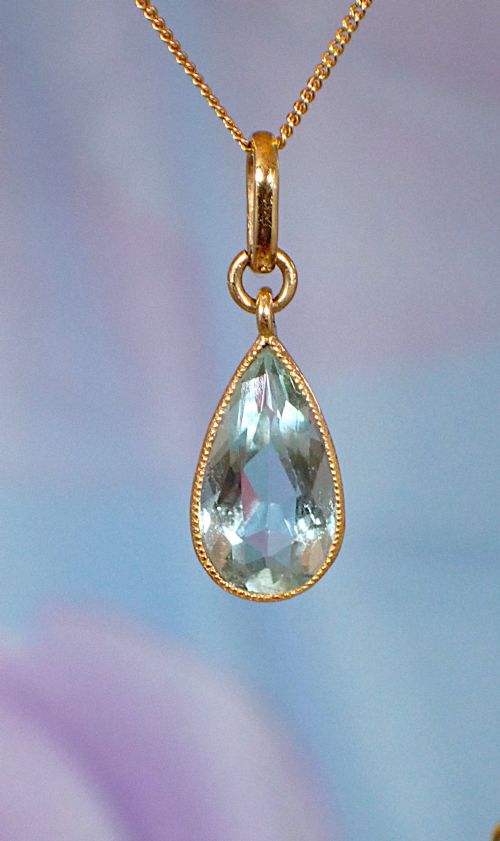
Pendant combinations appear frequently alongside plain lengths, incorporating gems such as amethyst, aquamarine, moonstone, and paste stones. Makers from the Victorian, Edwardian, and Art Deco periods utilised sterling silver and various carats of gold to construct these durable items.
How they were made
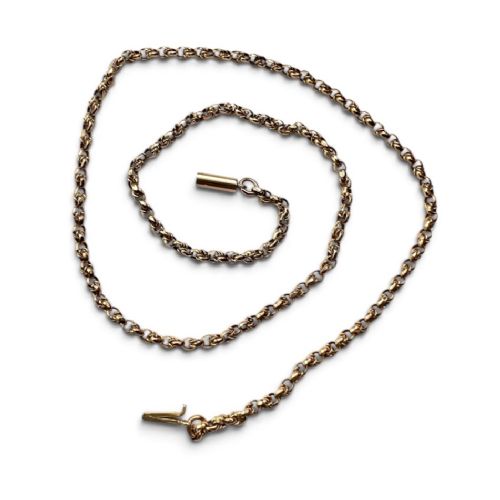
Goldsmiths and silversmiths constructed these chains using sterling silver, 9ct, 15ct, and 18ct gold in yellow and rose hues. Metal components were shaped into hollow or solid links, including curb, trombone, rolo, and belcher formations, often hallmarked on individual links or stamped with assay office details.
Assembly relied on manual soldering of jump rings, swivelling dog clips, and T-bars to secure pocket watches and fobs. Gemstone pendants set into these chains employed prong or bezel settings holding natural pearls, turquoise, diamonds, and hand-cut paste or crystals.
Some guard chains run over five feet long, originally built so a Victorian lady could keep her muff warm without dropping it.
What varies in quality
The structural integrity of individual links and the presence of complete hallmarks across components set sturdier examples apart. Solid gold and heavy gauge sterling silver retain their weight and form better over decades of daily handling than lighter hollow alternatives.
Original attachments such as functioning dog clips, swivel clasps, and matching T-bars elevate the completeness of albert conversions. The quality of gem-setting and the clarity of stones like aquamarine, amethyst, and moonstone influence the overall refinement of pendant designs.
Charles Horner
The Antique Chain Necklace Glossary
- Albert chain
- A heavy link chain originally designed to secure a pocket watch to a waistcoat, frequently converted into a necklace today. These often feature T-bars and dog clips.
- Dog clip
- A spring-loaded swivel clasp attached to the end of a watch chain, allowing secure fastening to a pocket watch, fob, or matching link.
- T-bar
- A short transverse bar attached to the centre of an albert chain designed to pass through a buttonhole. It remains a decorative feature on many converted necklaces.
- Guard chain
- An exceptionally long chain worn looped around the neck or draped over garments, often measuring over fifty inches. They were used to secure muff hand-warmers or spectacles.
- Trombone link
- A repeating geometric chain link pattern composed of alternating elongated rectangular bars and small circular or oval connectors. This design originates from the nineteenth century.
Antique Chain Necklace: Frequently Asked Questions
How do I wear a long guard chain?
Long guard chains measure anywhere from thirty to over sixty inches in length, designed originally to be doubled or tripled around the neck. They provide versatile styling options for everyday wear without requiring complex clasps.
Many owners clip the ends together using the original swivel dog clip to create a secure single long loop or a layered choker effect. Their substantial length accommodates pendants or can be worn simply as plain metal strands.
Are all links hallmarked on antique chains?
Many Victorian and Edwardian gold and silver chains feature hallmarks stamped on every individual link. Other pieces bear a single stamp on the dog clip, T-bar, or an adjacent tag.
Assay office marks and purity stamps indicate the specific metal standard, such as sterling silver or nine carat gold. Finding marks across multiple links confirms the uniform quality of the original manufacture.
What gemstones appear on these necklaces?
Pendant additions and station links frequently incorporate amethysts, aquamarines, moonstones, turquoise, and natural pearls. Paste stones and hand-cut crystal also appear in Edwardian and Art Deco designs.
These gems were chosen for their colour and contrast against yellow gold, rose gold, or sterling silver. They reflect the dominant aesthetic preferences of their respective periods of production.