
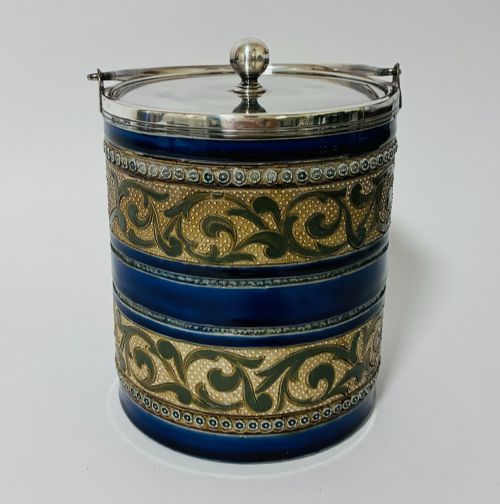
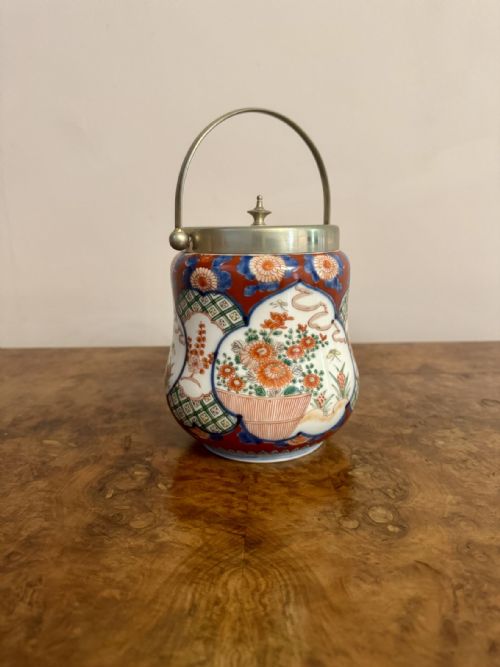


Antique Ceramic Biscuit Jar
An antique ceramic biscuit jar is a table vessel for holding dry biscuits, combining practical storage with decorative ceramic charm.
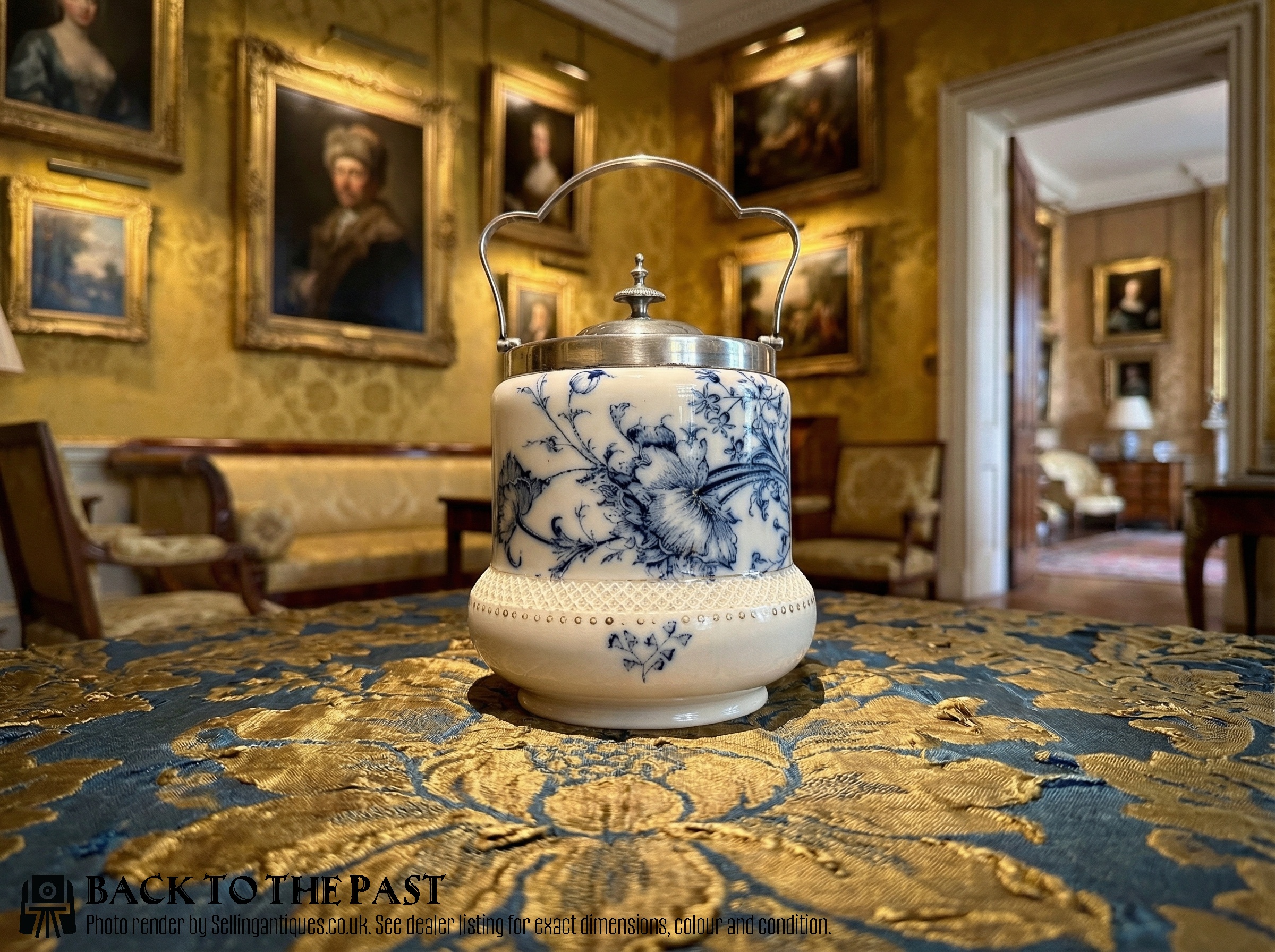
Antique Ceramic Biscuit Jar
An antique ceramic biscuit jar is a covered container designed to keep biscuits fresh on the dining table or sideboard. These vessels appear in forms commonly called biscuit barrels, originating during the Victorian era and continuing into the Edwardian period.
The pieces listed here date from the late nineteenth century through to around nineteen hundred. They encompass styles ranging from Victorian and Edwardian to Neoclassical, Victorian Arts and Crafts, and Japanese Imari influences.
Makers represented include Doulton Lambeth, Crown Devon, Carlton Ware, and Wedgwood. Buyers frequently encounter ceramic bodies paired with metal mounts and covers.
How they were made
Makers utilised stoneware, jasperware, earthenware, ceramic, and porcelain for the bodies of these jars. Techniques included relief moulding for jasperware and flow blue transfers for earthenware.
Metalwork components involved silver plate and brass to form the rims, hinged lids, and swing handles. Artisans occasionally applied gold leaf for decorative accenting on the ceramic surfaces.
Some multi-coloured jasperware jars required exceptional kiln control to keep three distinct ceramic shades from blurring together.
What varies in quality
Quality rests upon the crispness of the ceramic moulding and the depth of colour within the body, particularly on jasperware and flow blue pieces. Finer examples display sharp relief details and balanced proportions.
The standard of the metal mountings also distinguishes the range. Substantial silver plate work and robust hinges indicate superior original manufacture.
Doulton Lambeth·Crown Devon·Carlton Ware·Wedgwood
The Antique Ceramic Biscuit Jar Glossary
- Biscuit barrel
- A covered container designed specifically for storing biscuits at the table. This form gained popularity in British households during the Victorian period.
- Jasperware
- A type of fine stoneware developed by Josiah Wedgwood, characterised by a matte surface and contrasting raised white reliefs. It often appears in blue or multi-coloured variations.
- Flow blue
- A style of cobalt blue transfer printing on white earthenware where the glaze causes the colour to blur slightly during firing. This technique creates a soft, hazy aesthetic.
- Silver plate
- A thin layer of silver applied to a base metal such as brass or nickel silver. It provides the bright finish seen on the mounts and covers of these jars.
Antique Ceramic Biscuit Jar: Frequently Asked Questions
What is an antique ceramic biscuit jar?
An antique ceramic biscuit jar is a covered vessel created to store and present biscuits in nineteenth and early twentieth-century dining rooms. They combine ceramic bodies with metal mounts.
These pieces reflect the domestic habits of the Victorian and Edwardian eras, serving as both functional kitchenware and decorative table items.
How were biscuit jars used?
These jars sat on dining tables or sideboards during tea and after-dinner-service to keep baked goods dry and clean. The hinged lids and handles allowed easy access.
Household servants filled them before meals, and guests helped themselves to the biscuits contained within.
How do I date an antique biscuit jar?
Dating relies on stylistic markers, ceramic types, and manufacturer stamps found on the base of the vessel. Victorian examples often feature heavy ornamentation.
Edwardian pieces tend to show lighter forms and distinct transfer-printed patterns like flow blue.
What materials make up these jars?
The bodies consist of ceramic materials such as stoneware, earthenware, porcelain, and jasperware. Metal elements include silver plate and brass.
Gold leaf occasionally appears as a surface decoration on specific styles.