
Antique Centrepiece Bowl
An antique centrepiece bowl commands the dining table with silver, porcelain, or bronze, bringing nineteenth-century presence and formal display to modern rooms.
Antique Centrepiece Bowl
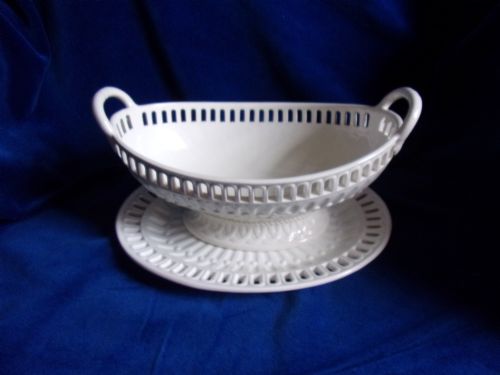
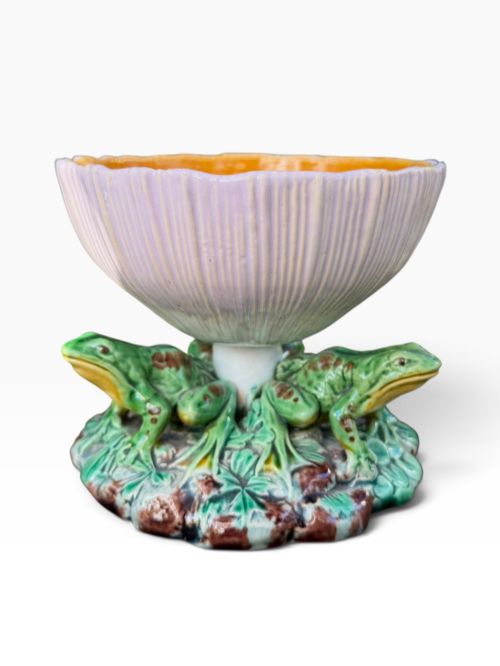
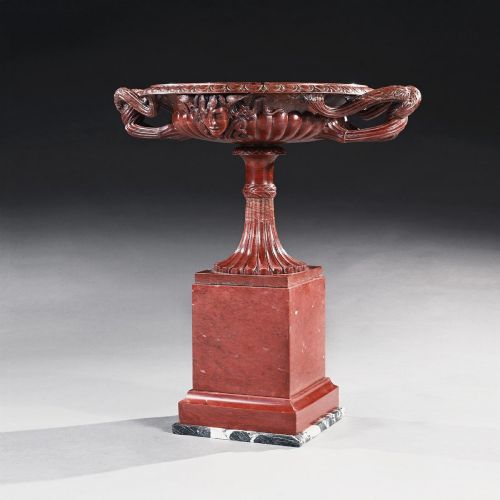
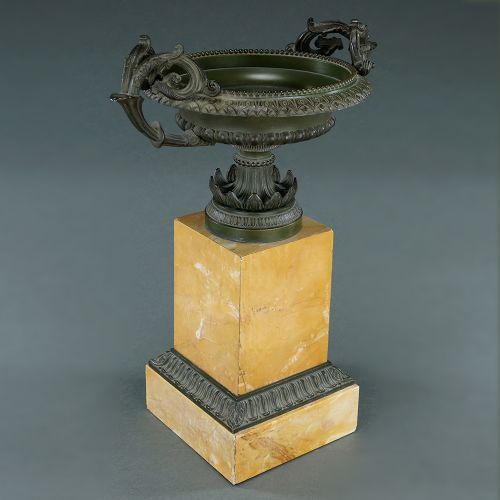
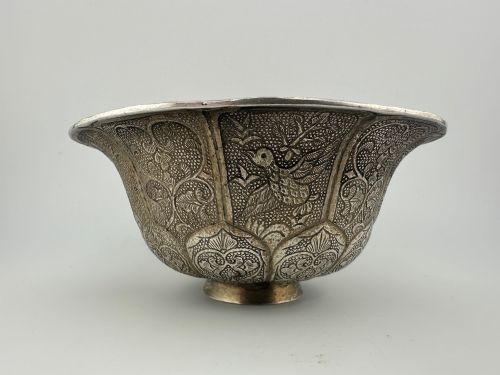
The antique centrepiece bowl appears in numerous guises across this selection, spanning tazzas, pedestal vessels, fruit baskets, and heavy presentation pieces. Victorian and Edwardian examples dominate the offerings, supplemented by earlier Georgian porcelain and later twentieth-century interpretations.
Makers utilised various materials for these large vessels, ranging from sterling silver and silver plate to bone china, cut glass, and gilt bronze. Originating primarily from British workshops, French foundries, and Asian export centres, these bowls served as the focal point of formal table settings.
Materials and Techniques
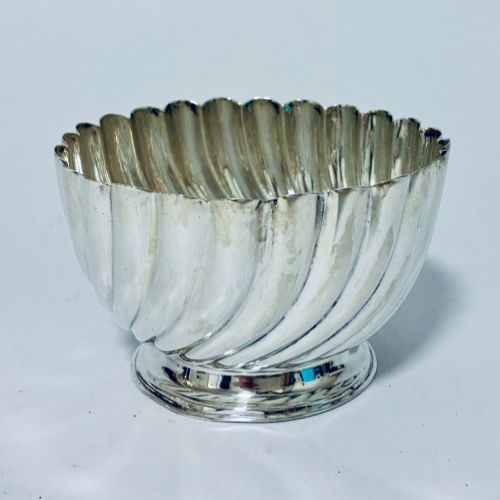
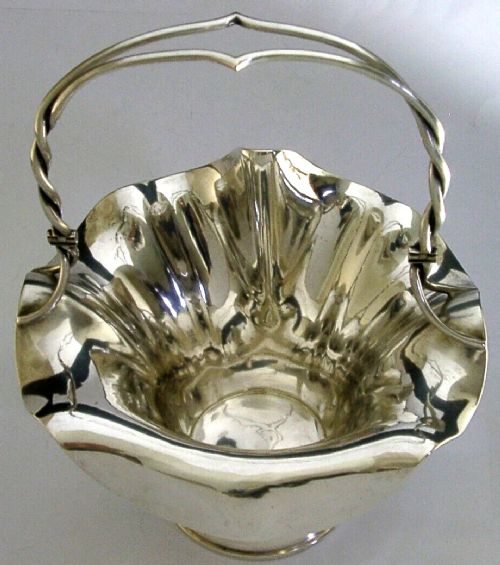
Silversmiths constructed solid silver and plated vessels through hammering, casting, and piercing, frequently incorporating swing handles and raised pedestal feet. Planished surfaces and flowing organic motifs reflect the distinct ethos of Arts and Crafts and Art Nouveau workshops.
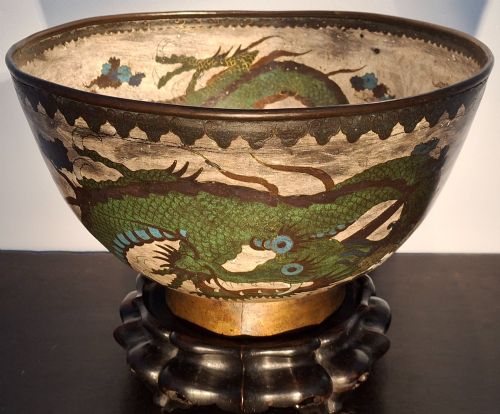
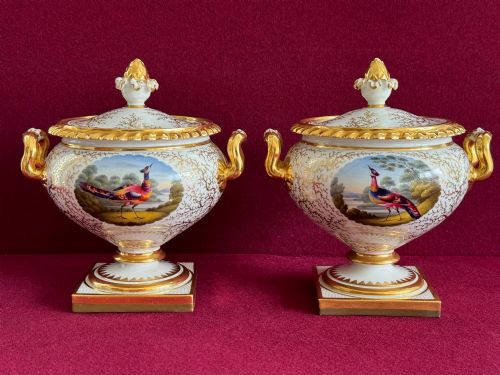
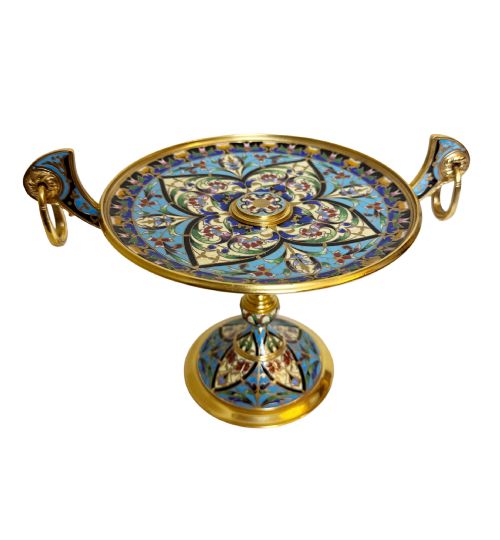
Ceramic and glass centrepieces combine moulded or blown bodies with hand-painted decoration, enamel work, and gilt bronze mounts. Champlevé enamel and crystal components demonstrate the intricate assembly methods employed by nineteenth-century artisans.
Listings feature materials spanning sterling silver, porcelain, glass, gilt bronze, copper, and oak across periods from the eighteenth century to the mid-twentieth century.
Assessing Craftsmanship
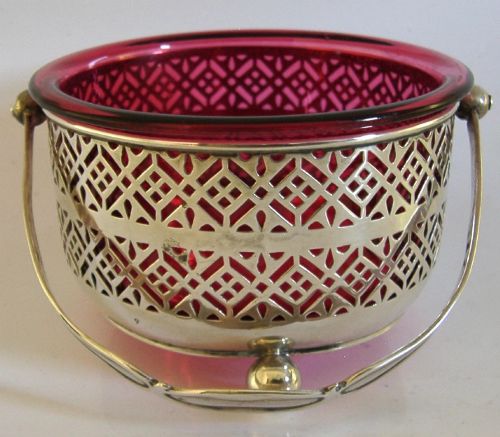
Quality rests upon the crispness of cast decoration, the weight of the metal, and the precision of pierced work. Heavy gauge silver and well-modelled bronze mounts indicate superior production standards.
Hand-painted ceramics and detailed glass liners show variation through the depth of colour, the execution of enamelling, and the integration of metal mounts with the primary body.
Stephan Wekeva·Goldsmiths and Silversmiths Company
The Antique Centrepiece Bowl Glossary
- Tazza
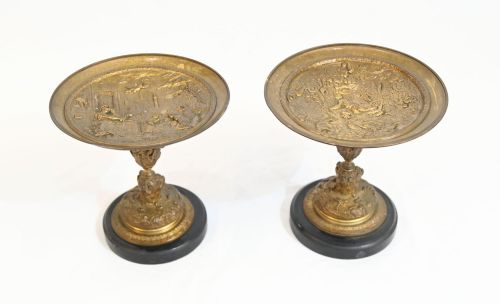
- A shallow bowl or dish mounted on a stem and foot, traditionally used for serving fruit or sweetmeats at the table. These elevated vessels dominate formal Victorian and French displays.
- Champlevé
- An enamelling technique where troughs are dug into a metal surface and filled with vitreous enamel before firing. This method creates rich coloured patterns on gilt bronze bodies.
- Planished
- A metalworking finish achieved by hammering the surface with a round-ended tool to produce small, controlled facets. Arts and Crafts silversmiths favoured this tactile texture.
- Imari
- A style of Japanese porcelain decorated in underglaze blue, iron red, and gilt. Exported widely to Europe, these scallop-edged bowls provide vibrant colour.
- Silver Plate
- A manufacturing process applying a thin layer of silver to a base metal such as copper or brass. Victorian makers utilised this method to achieve grand scale at lower cost.
Antique Centrepiece Bowl: Frequently Asked Questions
What were antique centrepiece bowls used for?
These large vessels sat in the middle of dining tables to hold fruit, flowers, or sweetmeats during formal meals. They acted as visual anchors for the entire table arrangement.
Over time, many functioned purely as decorative objects or presentation pieces awarded for special achievements.
How do I date a silver centrepiece bowl?
British silver bears hallmarks that indicate the assay office, the specific year of manufacture, and the silversmith's mark. These stamps provide a reliable timeline for pieces from the Victorian era onwards.
Stilistic details like Art Nouveau whip lines or heavy Victorian scrollwork help narrow down unmarked or foreign examples.
Are glass liners original to these bowls?
Many silver and gilt bronze baskets and bowls originally accompanied coloured glass liners to protect the metal from moisture and fruit acids. Finding a matching cranberry, opaline, or cut glass liner completes the historic function of the piece.
Replacements do occur, so examining how snugly the glass sits within the metal frame helps determine its period relationship.
How do I style a centrepiece bowl today?
A large antique bowl functions well on a dining table, sideboard, or entrance hall console without needing any contents at all. Their sculptural form and chased or pierced surfaces provide enough visual weight on their own.
Alternatively, filling them with seasonal fruit, glass balls, or dried botanicals echoes their historic domestic role.