



Antique Ceiling Bowl
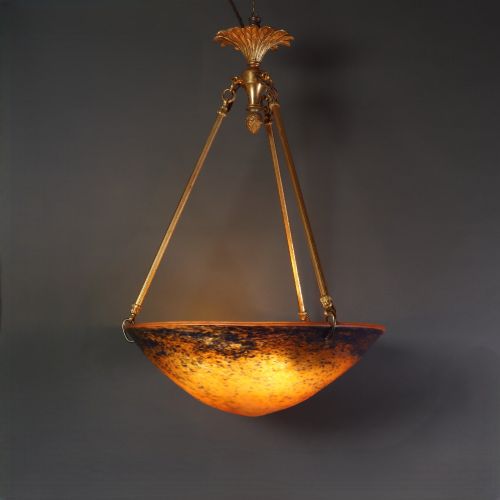
An antique ceiling bowl delivers diffuse, downward light through suspended glass, alabaster, or crystal basins.
Antique Ceiling Bowl
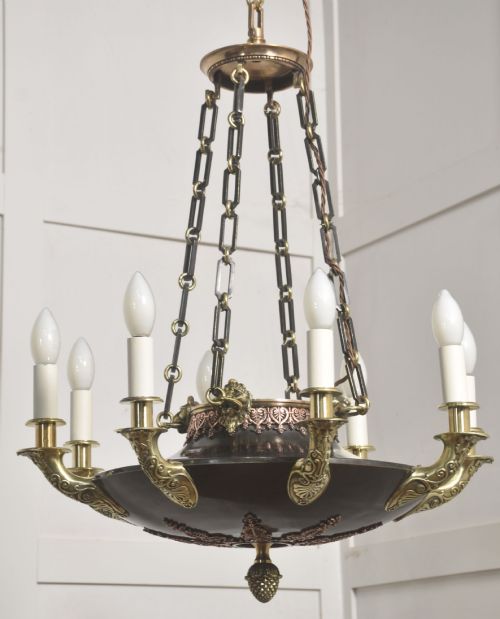
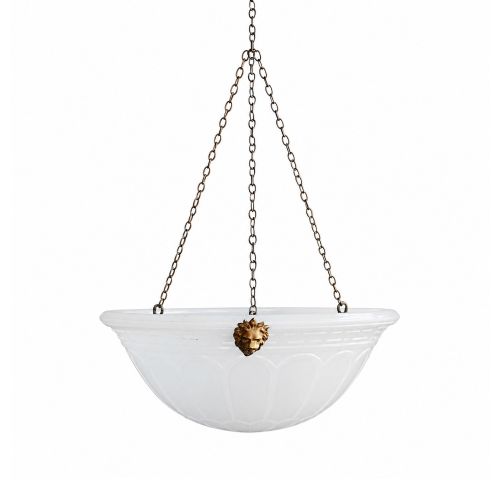
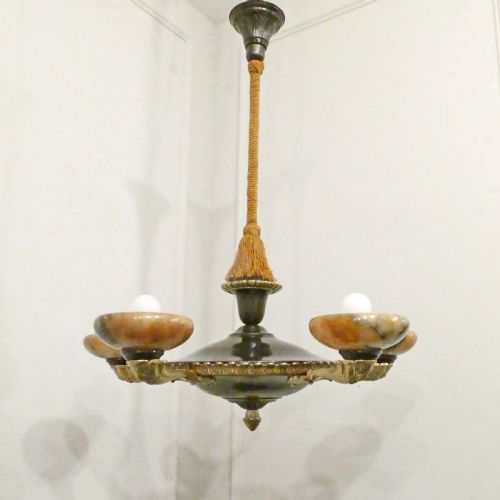
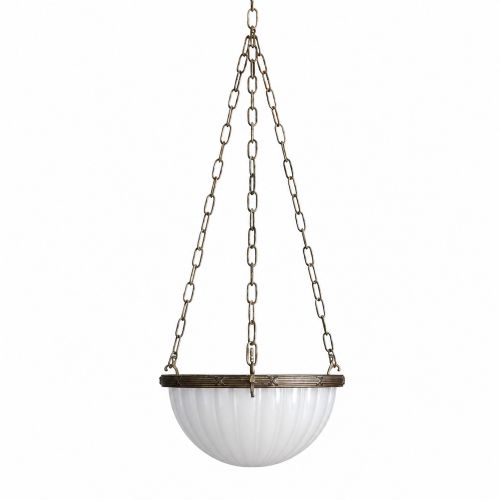
An antique ceiling bowl encompasses shallow dish lights, domed plafonniers, and suspended bowl chandeliers that mount directly to overhead points or hang on cords and chains. These fixtures illuminate rooms with softened overhead glare rather than harsh, direct rays.
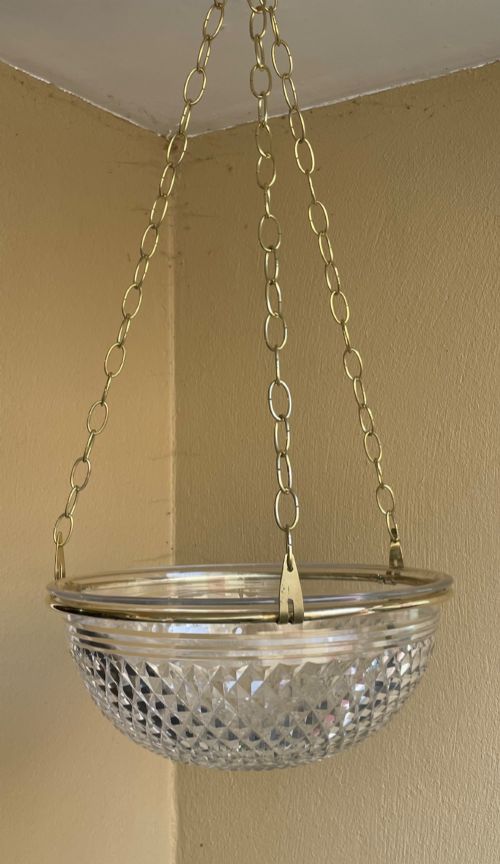
The pieces on this page span the Victorian era, the Edwardian period, and the interwar decades of the nineteen-twenties and thirties. Buyers most frequently encounter Edwardian cut glass dishes and geometric Art Deco alabaster or pressed glass bowls.
Originating across England, Sweden, and continental Europe, these hanging bowls reflect prevailing classical, revivalist, and modernist aesthetics. Makers utilised durable brass, bronze, and copper frames to secure heavy glass and stone vessels safely aloft.
Materials and construction
Artisans combined heavy casting metals with worked minerals, pairing brass, bronze, copper, and silver plating with carved alabaster or moulded glass. Frames were forged or cast to support the significant weight of stone and crystal bowls without warping.
Glass components rely on specialised techniques including acid frosting, mould pressing, and hand-cutting to achieve opalescent, moonstone, and crystal finishes. These treatments diffuse the internal lamp glow evenly across the entire surface of the bowl.
Antique Ceiling Bowl Retail Price Guide 2026
Typical asking prices for ceiling bowl among the pieces listed under this phrase on Sellingantiques today, from the lower quarter to the upper quarter. They describe what is for sale here now, not the wider market.
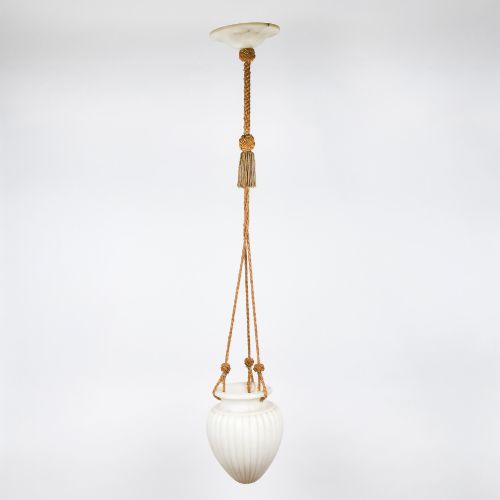
Listings feature heavy carved alabaster, pressed satin glass, and cut crystal bowls suspended on bronze, brass, and copper frames.
Craftsmanship and design
Superior examples distinguish themselves through the depth of glass moulding, the crispness of bronze casting, and the purity of the alabaster stone. Finer bowls feature intricate decorative motifs such as moulded floral patterns or classical rams head mounts.
The distinction between standard production and masterwork pieces rests in signed glassworks from known studios and heavy, unclouded crystal. Robust metal suspension hardware and balanced proportions separate distinguished fixtures from basic utility lighting.
Charles Schneider·René Lalique·Verrerie Des Vosges
The Antique Ceiling Bowl Glossary
- Plafonnier
- A ceiling-mounted or shallow suspended bowl light, usually made of glass or alabaster. This French term describes fixtures that sit relatively flat against or close to the ceiling surface.
- Moonstone glass
- An opaque, milky white glass variant that diffuses light with a soft lunar glow. It gained popularity during the early twentieth century for domestic lighting.
- Alabaster
- A fine-grained, translucent stone carved into heavy hanging bowls and shades. Natural veining patterns ensure that every carved stone fixture remains entirely unique.
- Opalescent glass
- Glass containing ingredients that cause it to milky-blue in transmitted light and warm amber in reflected light. This optical property creates shifting colour tones when illuminated.
- Chandelier
- A branched ceiling light fixture designed to hold multiple illumination points. In bowl configurations, a central hanging basin is often supported by branching arms or multiple metal suspension chains.
Antique Ceiling Bowl: Frequently Asked Questions
How are antique ceiling bowls mounted?
These fixtures suspend from ceilings using fabric cords, metal chains, or rigid brass rods attached to a central canopy. The weight of the glass or alabaster bowl is distributed across sturdy metal frames.
Professional installation is recommended to ensure the ceiling structure safely supports the combined weight of the metal and stone components.
What rooms suit a ceiling bowl?
Shallow bowls and plafonniers work well in hallways, bedrooms, and rooms with lower ceiling heights where hanging pendants might obstruct movement. Their diffused upward and downward glow creates an even, ambient room illumination.
Larger multi-light bowls suit reception rooms and dining spaces as a decorative focal point.
How do I distinguish Art Deco from Edwardian bowls?
Edwardian fixtures lean towards cut glass, silver plating, and refined classical detailing with crystal drops. They emphasise traditional craftsmanship and clear reflective surfaces.
Art Deco bowls favour geometric symmetry, frosted satin glass, carved alabaster, and streamlined bronze or copper mounts characteristic of the nineteen-thirties.
Can modern bulbs be used safely?
Historic wiring and lamp holders often require professional rewiring to meet contemporary safety standards before installation. Modern low-heat LED bulbs can then be fitted inside the glass or alabaster bowls.
Retaining the original sockets is sometimes possible, but contemporary internal wiring ensures safe daily operation.