

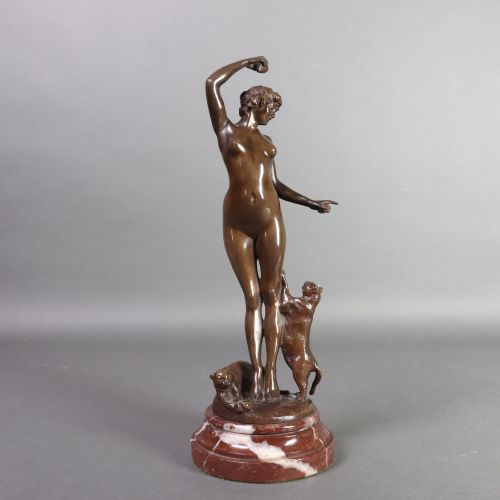


Antique Cat Figures
These antique cat figures capture the fierce grace and quiet poise of felines in bronze, porcelain, and terracotta.
Antique Cat Figures
When you search for antique cat figures, you encounter a diverse gathering of domestic pets and wild big cats rendered across the nineteenth and twentieth centuries. These pieces range from folk art pottery roof tiles and Victorian Staffordshire pairs to sophisticated Animalier bronzes and Art Deco panthers.
The domestic cat appears most frequently as mantel ornaments, wall pockets, and glazed ceramic figures from English and French makers. Meanwhile, the wild members of the cat family emerge in dynamic bronze studies of tigers, leopards, and panthers mounted on marble bases.
Originating from periods spanning the Victorian era through the Art Deco movement, these sculptures reflect changing tastes in animal portraiture. They move from rigid, decorative pairs intended for the fireplace to naturalistic, muscular representations of movement.
How they were made
Bronzes rely on the lost-wax casting technique to capture fine muscle tension and fur texture, frequently finished with a dark patination or cold painting. Foundries like Siot and Barbedienne applied meticulous hand-chasing to refine the surface details before mounting the sculptures onto marble or alabaster bases.
Ceramic examples utilise traditional earthenware, pearlware, and porcelain bodies shaped into moulds and decorated with hand-applied glaze, enamel, and paint. Pottery figures often incorporate simple folk techniques, such as the distinct terracotta working methods seen in French roof tile figures.
Antique Cat Figures Retail Price Guide 2026
Typical asking prices for cat figures among the pieces listed under this phrase on Sellingantiques today, from the lower quarter to the upper quarter. They describe what is for sale here now, not the wider market.
Some nineteenth-century ceramic cats doubled as wall pockets, designed to hang securely while holding small household items.
What varies in quality
The standard of an antique cat figure rests in the anatomical accuracy and the liveliness of the form. Master sculptors capture tension in a crouching tiger or the lazy stretch of a domestic cat with a fluidity that lesser casting or moulding misses entirely.
Material choice and finishing elevate certain pieces above commercial production. A crisply cast bronze with a subtle, multi-toned patina or a hand-painted porcelain piece with delicate facial detailing demonstrates a higher level of workshop skill than a plain, heavily glazed earthenware press.
Gustave Dussart·Georges Gardet·Michel Decoux·Louis Riche
The Antique Cat Figures Glossary
- Animalier
- A nineteenth-century artistic movement dedicated to the realistic portrayal of animals, particularly wild beasts in motion. Sculptors in this tradition studied anatomy closely at menageries.
- Cold painted
- A method where metal figures are painted with oil or similar non-heat-set paints after casting. This technique requires careful preservation to prevent flaking over the decades.
- Spelter
- A zinc alloy frequently utilised as a less expensive alternative to bronze during the Art Deco period. It provides a crisp surface for patination but possesses a lighter weight than true bronze.
- Staffordshire
- A term for pottery manufactured in the English region of Stoke-on-Trent. Figures from this area often feature hand-painted markings and distinct earthenware bodies.
- Patina
- The surface sheen and coloration developed naturally through age or applied artificially by the maker. A good bronze patina enhances the depth and texture of the metal.
Antique Cat Figures: Frequently Asked Questions
How do I clean antique bronze cats?
Dust bronze figures gently with a soft, dry brush to remove particles without disturbing the underlying surface. Avoid harsh chemical cleaners or water, which can strip away the historical patina.
Apply a very thin coat of microcrystalline wax if the metal requires protection against humidity. Buff the surface lightly with a clean cloth to maintain a soft, stable sheen.
What is an Animalier cat sculpture?
Animalier sculptures focus strictly on the realistic behaviour and anatomy of animals rather than allegorical subjects. These pieces emerged strongly in nineteenth-century France through the work of specialised bronze founders.
Depicting wild cats like panthers, tigers, and lions in predatory stances, these works prioritize dynamic movement and muscular tension.
How do I date an Art Deco bronze cat?
Art Deco bronze cats typically feature stylized geometric lines, sleek postures, and materials such as marble or alabaster bases. The styling emphasises streamlined elegance rather than Victorian sentimentality.
Check the signature of the sculptor and the foundry mark if present. Prowling panthers and sleek felines from this era frequently utilise patinated spelter or bronze.