



Antique Castle Watercolour Artwork
These antique castle watercolour artwork pieces capture historic fortresses across Britain through delicate pigment applied to paper.
Antique Castle Watercolour Artwork
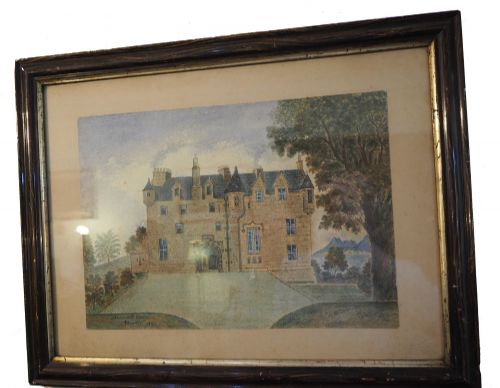
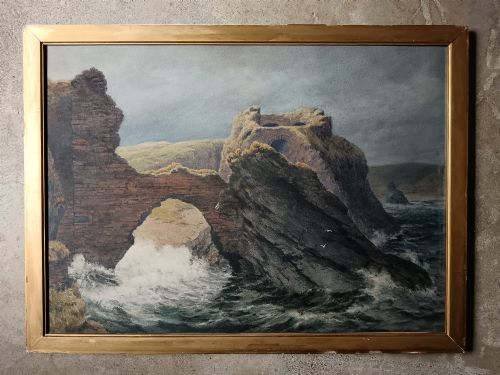
An antique castle watercolour artwork focuses on historic British strongholds, coastal fortifications, and ruined keeps rendered by landscape artists. These framed paintings frequently record recognizable sites such as Windsor Castle, Bamburgh Castle, and Castle Bolton across varying atmospheric conditions.
Buyers encounter works originating from the nineteenth century through the early decades of the twentieth century, encompassing Victorian and Edwardian periods. Landscapes range from expansive coastal vistas to intimate architectural studies executed in traditional British style.
Materials and construction
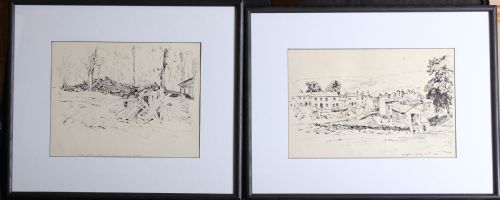
Artists executed these watercolours using finely ground pigment suspended in water, applied directly to paper supports often laid down on card or board. Pen and ink occasionally supplemented the washes to define architectural masonry and distant landscape contours.
Finished works commonly reside behind protective glass within wooden frames, occasionally accented with gilt mouldings. The combination of water-soluble pigment and paper necessitates careful framing to isolate the delicate surfaces from environmental moisture.
Several watercolours record artists battling the elements while sketching damp castle stones across Yorkshire and the Thames.
Factors influencing quality
Differentiation across the range depends upon the artist's command of perspective, handling of atmospheric light, and precision in rendering stone architecture. Stronger examples display confident brushwork and balanced composition that effectively convey the scale and rugged texture of ancient fortifications.
Condition plays a primary role, distinguishing works that retain their original pigment vibrancy from those affected by fading or paper discolouration. The quality of the accompanying period frame and the clarity of the artist's signature further separate standard examples from finer works.
Alfred Young Nutt·Thomas Cooper Moore·James Orrock·David Cox Jnr·William Wyld
The Antique Castle Watercolour Artwork Glossary
- Watercolour
- A painting method in which the paints are made of pigments suspended in a water-based solution. The technique relies on the white of the paper to provide luminosity through transparent washes.
- Gilt
- A thin layer of gold applied to wood or plaster frame mouldings. This decorative finish enhances the presentation of framed fine art.
- Victorian
- The period of British history spanning the reign of Queen Victoria from 1837 to 1901. Many listed landscape paintings originate from this era of artistic production.
- Edwardian
- The period covering the reign of King Edward VII from 1901 to 1910. Works from this time continue traditional British landscape conventions.
- Provenance
- The documented history of ownership associated with a work of art. Clear attribution helps establish the authenticity of signed paintings.
Antique Castle Watercolour Artwork: Frequently Asked Questions
How should I hang a watercolour?
Watercolours are sensitive to strong sunlight and require placement on interior walls away from direct windows to prevent pigment fading over time.
Maintaining stable room temperatures helps protect the underlying paper from warping within its frame.
What periods do these paintings span?
The available selection primarily encompasses the nineteenth and early twentieth centuries, including Victorian and Edwardian interpretations of British scenery.
Artists during these eras frequently travelled across the country to record historic castles and coastal ruins.
Are these paintings original works?
The inventory consists of hand-painted original watercolours rather than modern reproductions or mechanical prints.
Many examples bear the artist's signature or contemporary inscriptions identifying the specific castle or landscape depicted.
How is paper protected in framing?
Historic watercolours are traditionally mounted behind glass to shield the fragile paper and water-soluble pigments from atmospheric dust and direct contact.
Conservation framing methods also utilise acid-free mounts to prevent chemical discolouration of the paper support.