
Antique Carved Trunk
An antique carved trunk brings centuries of storage tradition into a room through heavy timber and hand-cut ornamentation.
Antique Carved Trunk
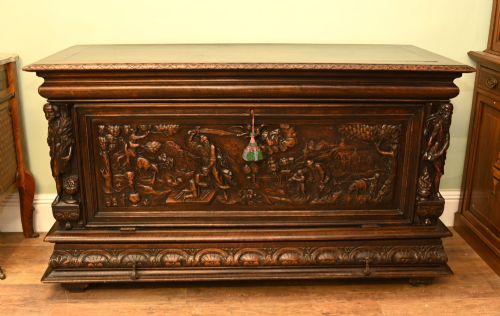
When searching for an antique carved trunk, a buyer examines domestic storage chests, coffers, and mule chests spanning the sixteenth century through the Georgian era and into later revival styles. These pieces function as heavy storage boxes that double as furniture, frequently constructed from regional timbers with carved panels.
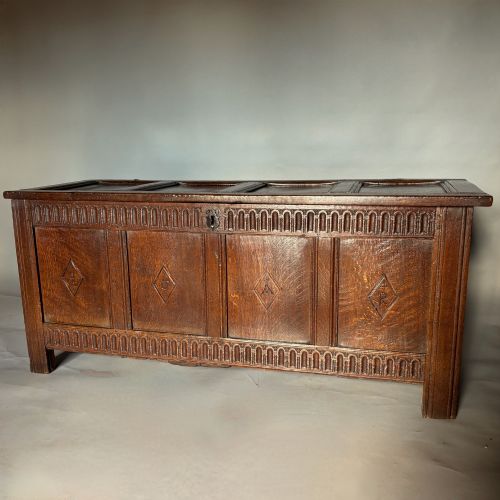
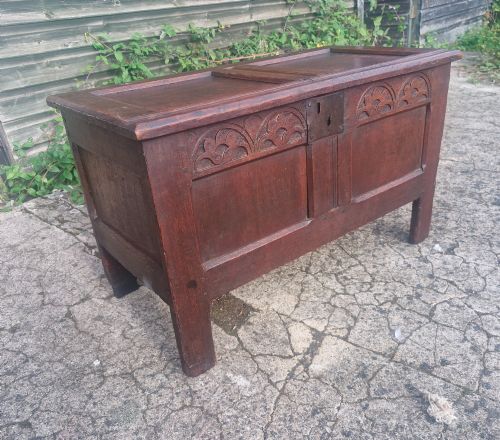
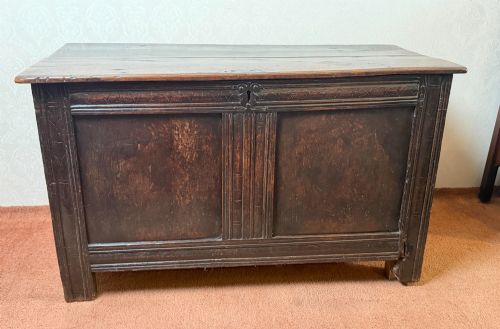
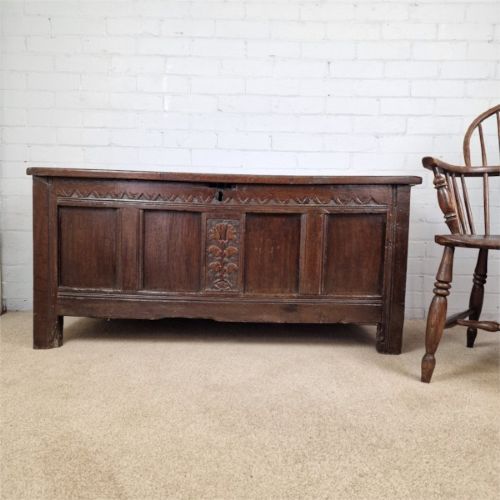
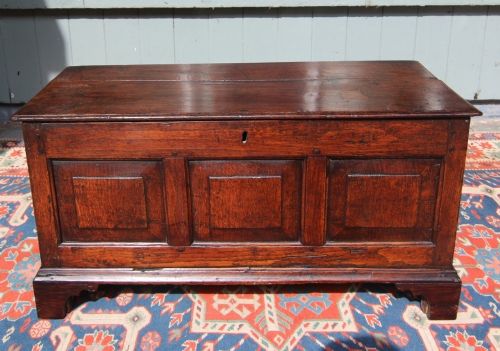
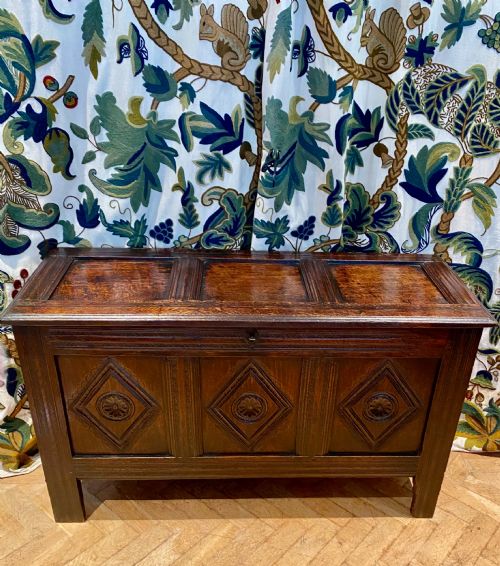
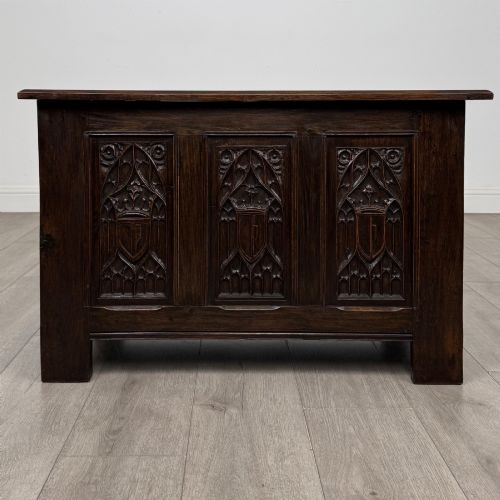
The version most commonly met on this page is the oak coffer originating from the seventeenth or eighteenth century. Such pieces display panelled construction, hinged lids, and carved decoration across the front face, ranging from simple geometric patterns to elaborate motifs.
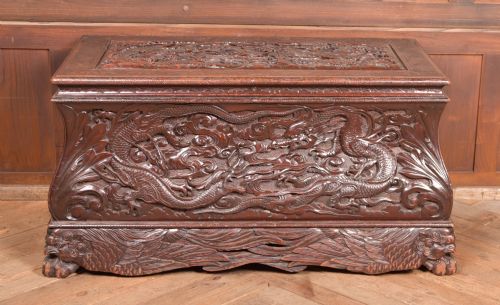
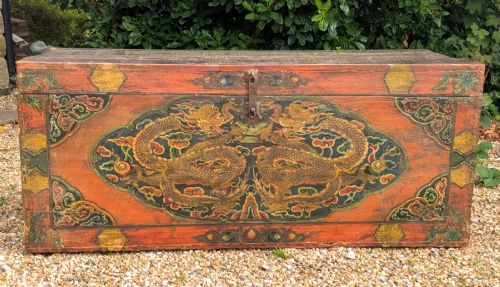
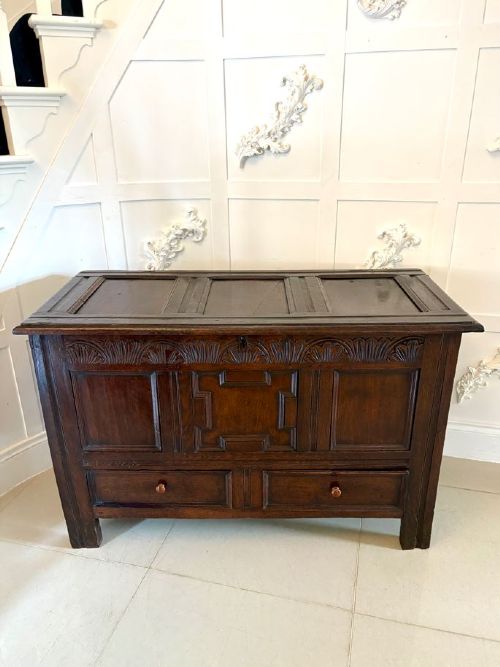
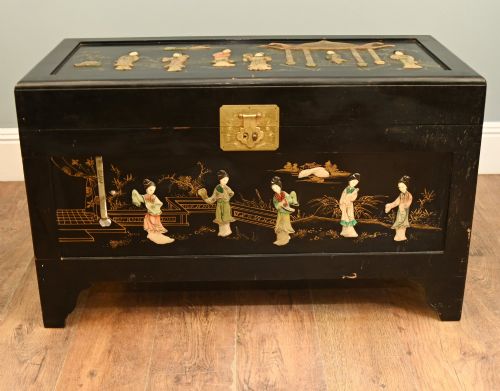
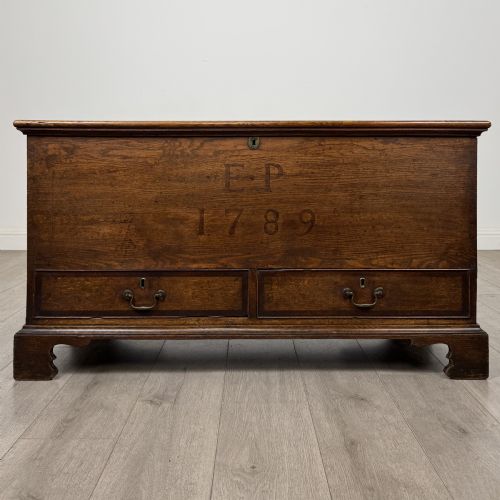
Beyond standard oak coffers, the selection includes specialised forms such as mule chests incorporating lower drawers, alongside examples utilising walnut, mahogany, and mineral pigment. Origins extend across British regional workshops, European provinces, and Tibetan traditions, providing distinct regional characteristics.
How they were made
Cabinet makers utilised solid native hardwoods like oak, walnut, and mahogany, often combining joined frame-and-panel construction to accommodate the natural expansion and contraction of timber over centuries. Iron and brass hardware, including strap hinges and locks, secured the heavy lids.
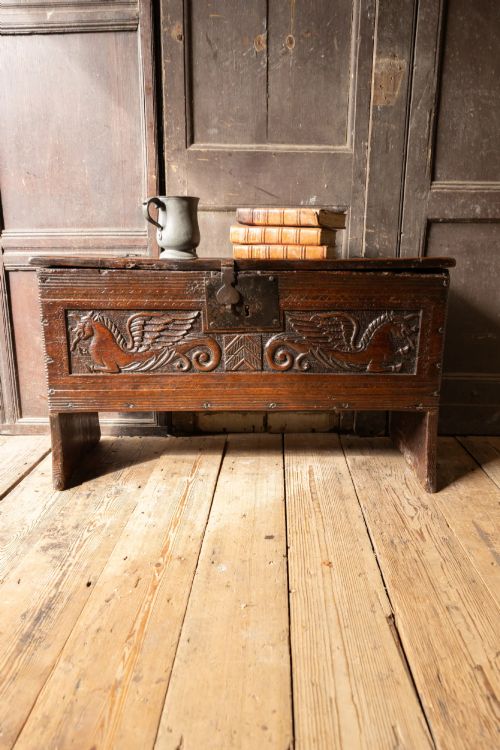
Carpenters employed hand chisels and gouges to carve decoration directly into the wood of the front styles and rails, sometimes incorporating marquetry inlay or mineral pigment for surface contrast.
Listings span multiple centuries from the 16th century through the 1930s, featuring oak, walnut, mahogany, and iron.
What varies in quality
Quality rests in the integrity of the timber selection and the depth and crispness of the hand carving across the structural panels. Pieces retaining their original hinges, boarded bottoms, and unreplaced lid boards command greater regard.
Proportion and regional character distinguish standard utility boxes from exceptional regional examples, such as Welsh coffer bachs or pieces featuring marquetry inlay.
The Antique Carved Trunk Glossary
- Coffer
- A large wooden chest used historically for storing valuables, linen, or documents. These storage pieces typically feature hinged lids and heavy boarded or panelled construction.
- Mule chest
- A storage chest fitted with one or more drawers beneath the main compartment. This form bridges the traditional coffer and the chest of drawers.
- Panelled construction
- A method where thin wood panels fit into grooved frames to prevent splitting as wood expands. This technique defines seventeenth and eighteenth century cabinet work.
- Marquetry
- The art of applying decorative pieces of veneer to a structure to form intricate designs. Examples include contrasting woods inlaid into the primary surface.
- Coffer bach
- A small Welsh oak chest designed for domestic utility. These miniature coffers reflect the construction methods of their larger counterparts.
Antique Carved Trunk: Frequently Asked Questions
What is an antique carved trunk used for today?
These pieces serve effectively as living room coffee tables, blanket storage at the foot of a bed, or hallway seating while keeping household items out of sight.
Their robust timber construction allows them to endure daily domestic use while displaying historic woodworking in modern interiors.
How do I identify a seventeenth century oak coffer?
Seventeenth century pieces utilise joined frame-and-panel construction with pegged joints rather than modern metal fasteners. The timber displays deep patination and hand-cut carving styles typical of the period.
Examination of the interior reveals adze marks or hand-planed surfaces that indicate early hand tool manufacturing methods.
Are these trunks suitable for daily handling?
The heavy oak or hardwood construction stands up well to regular opening and closing, provided the original hinges and lid boards remain stable. Wax polishing maintains the surface finish against normal wear.
Placing them away from direct heat sources prevents the historic timber from drying out or splitting over time.
What distinguishes a mule chest from a standard coffer?
A mule chest incorporates one or more drawers built into the base beneath the main lifting compartment. This addition allowed easier access to stored clothing without opening the heavy top lid.
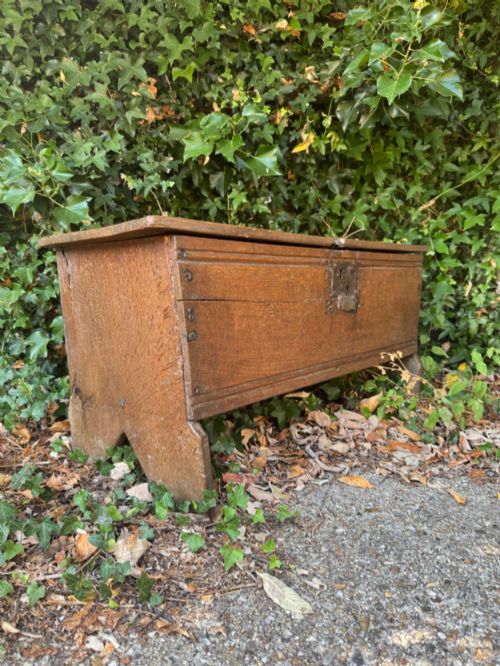
Standard coffers provide only top-access storage through a single hinged lid over an open interior well.