



Antique Carved Coat Rack
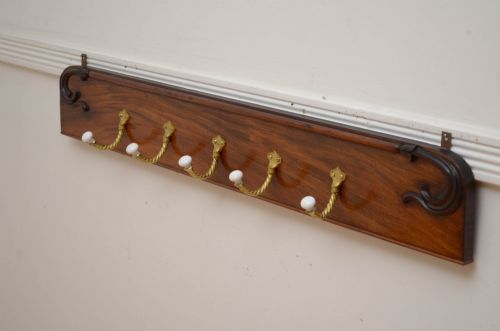
An antique carved coat rack anchors a hallway with solid presence, offering carved timber and robust hooks that keep everyday outdoor gear orderly.
Antique Carved Coat Rack
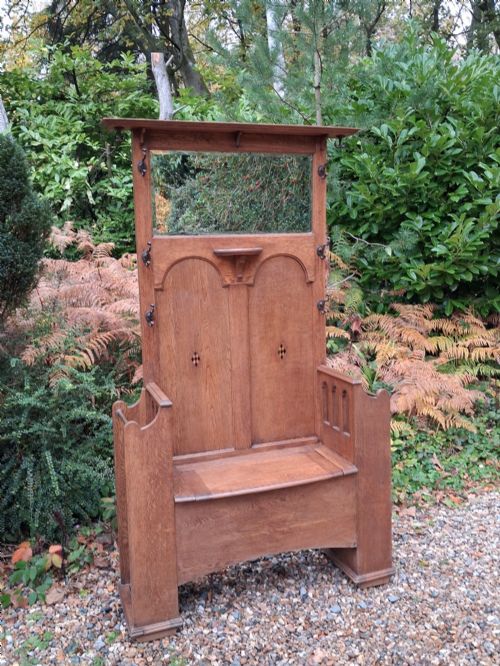
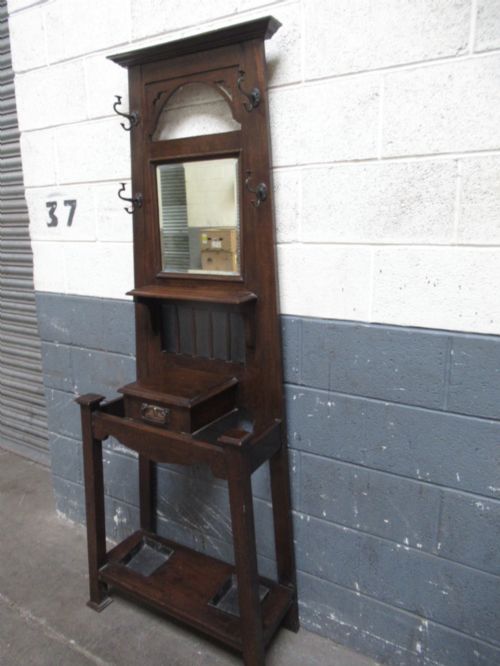
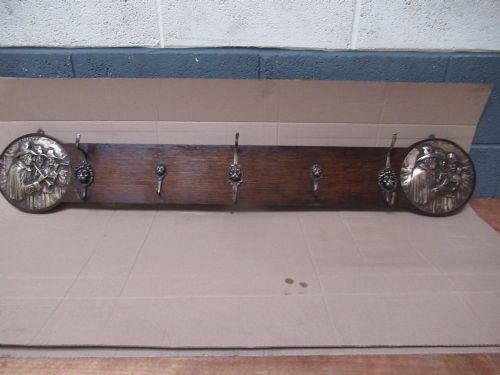
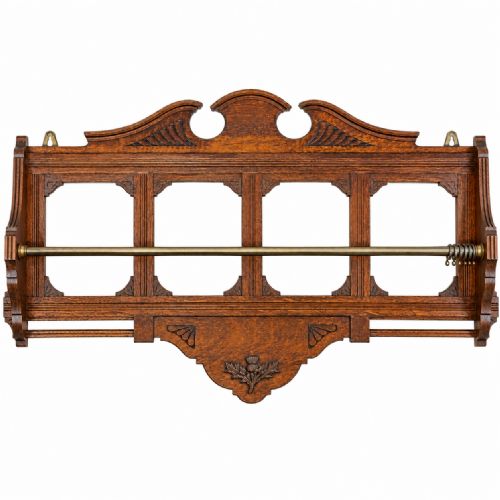
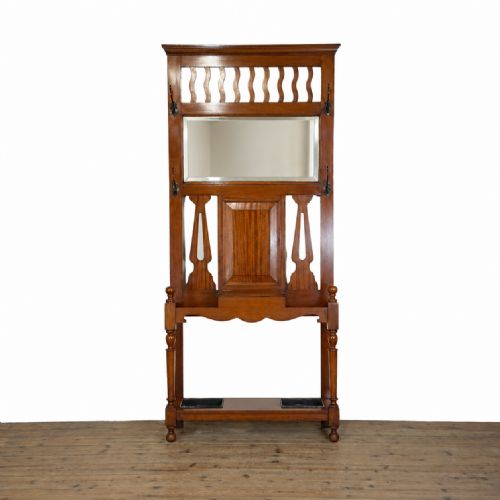
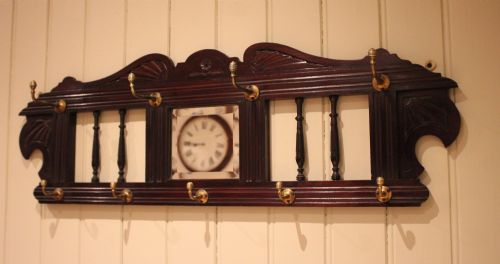
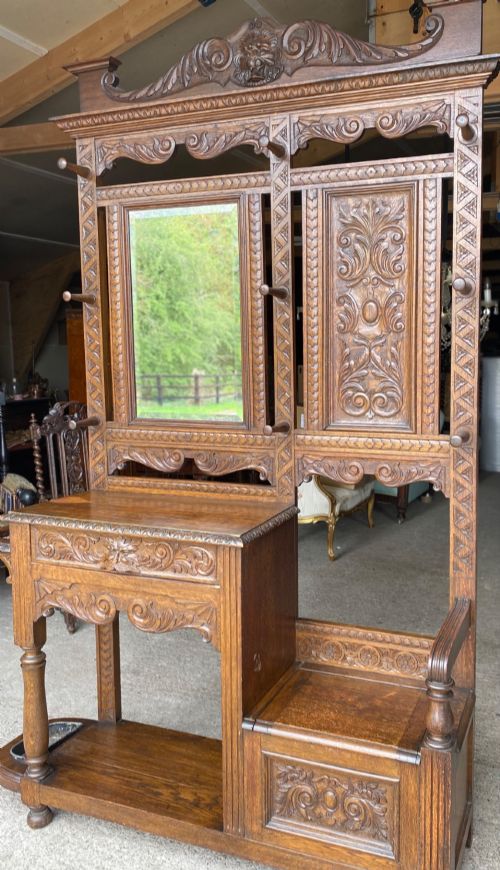
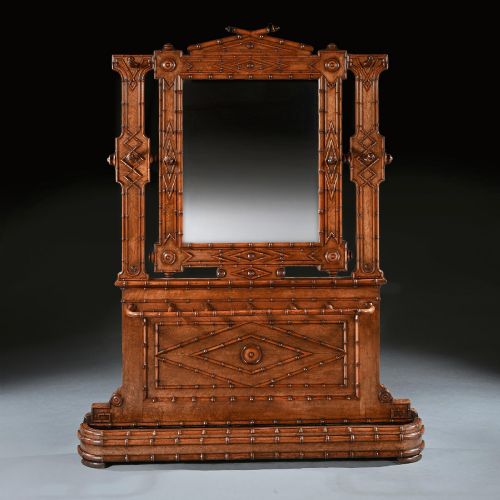
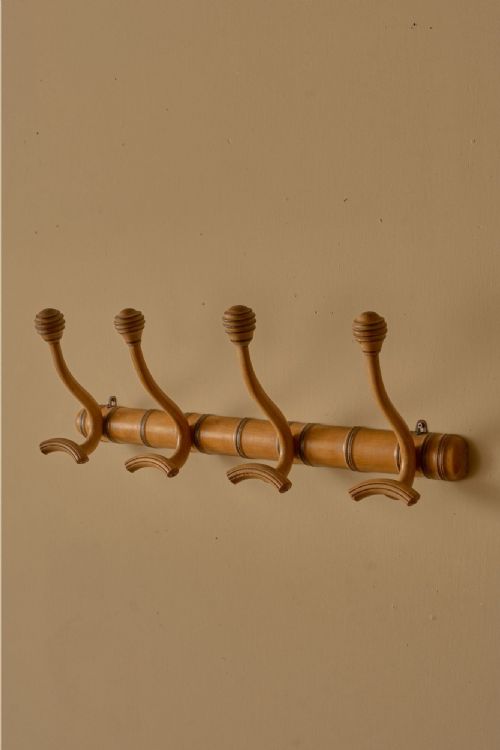
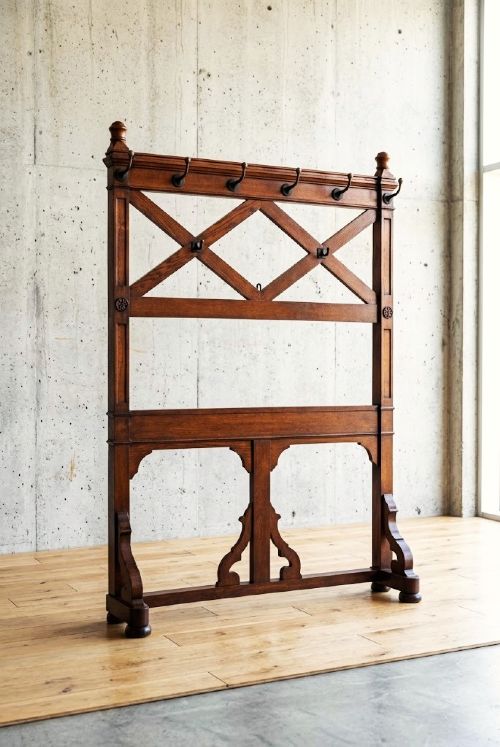
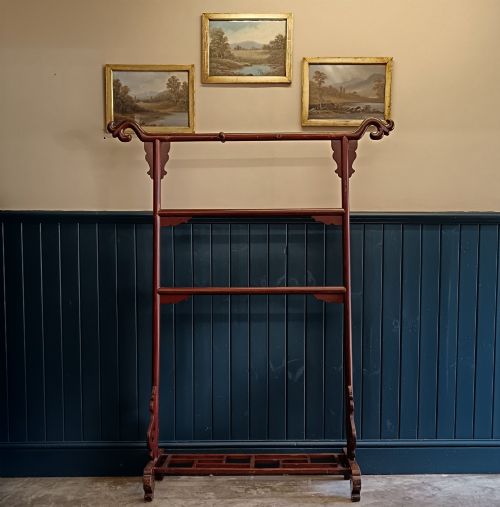
An antique carved coat rack encompasses heavy oak hall stands, wall-mounted timber rails, and freestanding coat stands that originate predominantly from the nineteenth and early twentieth centuries. These pieces appear in forms ranging from simple wall hooks to large hall stands fitted with mirrors, umbrella wells, and occasional seats.
The varieties met most frequently on this page date from the Victorian and Edwardian eras, executed in oak or mahogany with distinct regional styles such as Gothic Revival, Arts and Crafts, and Black Forest carving. Buyers encounter both compact wall racks and substantial pieces designed for country house reception halls.
How they were made
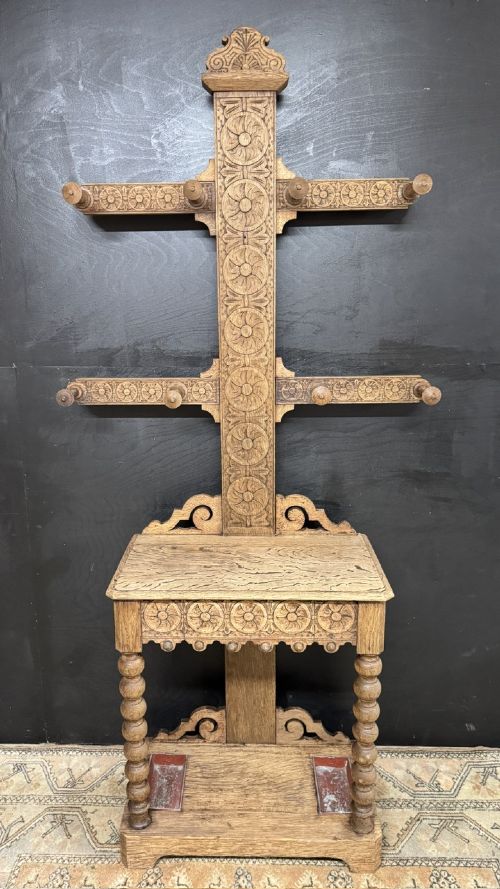
Cabinet makers utilised dense hardwoods like oak, mahogany, and walnut, selecting stock that could withstand deep relief carving and structural stress from heavy winter garments. Surfaces often received hand-carved detailing, incorporating motifs like Green Men, foliage, or animal forms.
Antique Carved Coat Rack Retail Price Guide 2026
Typical asking prices for carved coat rack among the pieces listed under this phrase on Sellingantiques today, from the lower quarter to the upper quarter. They describe what is for sale here now, not the wider market.
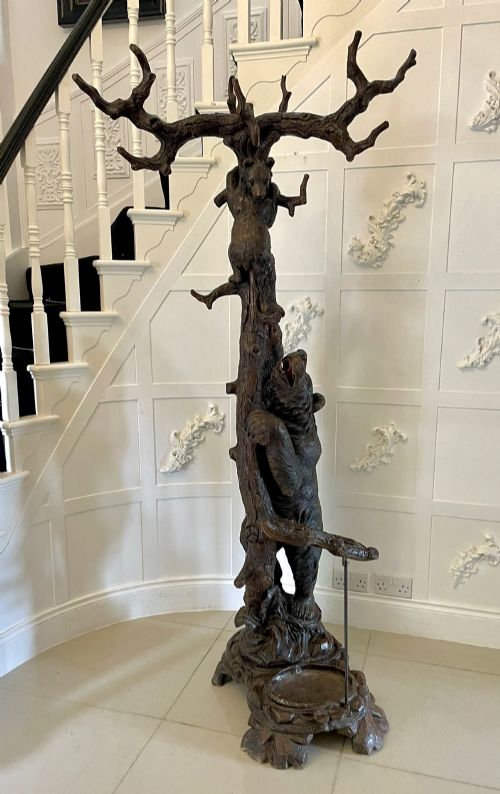
Carved bears and gnomes stand ready to hold hats and whips in the forest carvings.
What varies in quality
The depth and execution of the carving separate standard utilitarian examples from exhibition pieces, where master carvers worked directly into the solid timber with anatomical precision. Crisp detailing in foliage, animal figures, or mythological faces indicates superior workshop standards.
Structural integrity and the retention of original matching hooks, drip pans, and mirror plates determine the standing of a piece. Finer examples maintain their original finish and uncompromised joinery across complex multi-part hall stands.
The Antique Carved Coat Rack Glossary
- Hall stand
- A large hall furniture piece combining coat hooks, a mirror, an umbrella stand, and frequently a small bench seat. These items dominated nineteenth-century entrance halls.
- Green Man
- A sculptural architectural ornament depicting a human face emerging from or entwined in foliage. This motif appears frequently in nineteenth-century carved oak.
- Black Forest carving
- A style of highly detailed woodwork originating from Switzerland and Germany, often featuring bears, gnomes, and naturalistic forest elements. Such pieces display deep animal and plant motifs.
- Faux bamboo
- A decorative technique where hardwood is turned and painted to imitate natural bamboo stalks. This style gained popularity during the Aesthetic Movement and nineteenth-century French design.
Antique Carved Coat Rack: Frequently Asked Questions
Where should I place a hall stand?
A large hall stand requires a wide entrance hallway or reception room with sufficient clearance for coats and seated use.
Wall-mounted versions suit narrower corridors where floor space is limited while still providing functional hanging capacity.
How do I secure a wall rack?
Wall-mounted racks need direct fixing into solid masonry or timber wall studs to support the weight of heavy winter garments.
Using appropriate wall plugs and screws ensures the antique backplate remains stable under daily load.
What wood types are most common?
Oak and mahogany appear most frequently among nineteenth-century examples, chosen for their strength and suitability for carving.
Walnut and birdseye maple also feature in specific aesthetic and continental styles.
How do I date a piece?
Dating relies on stylistic clues, construction methods, and hardware such as brass hooks or bevelled mirror plates.
Victorian and Edwardian pieces often display distinct decorative movements like Gothic Revival or Arts and Crafts.