



Antique Cannon Barrel
These antique cannon barrel pieces are historical firearms and scale models prized by collectors for their distinctive turned muzzles and maritime heritage.
Antique Cannon Barrel
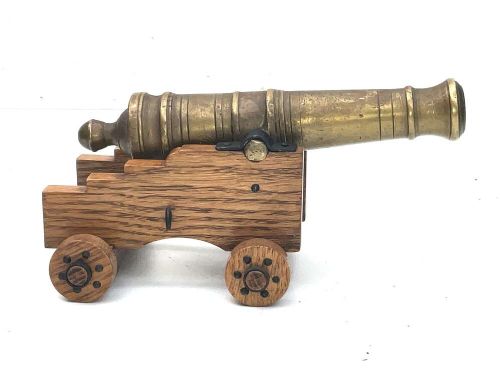
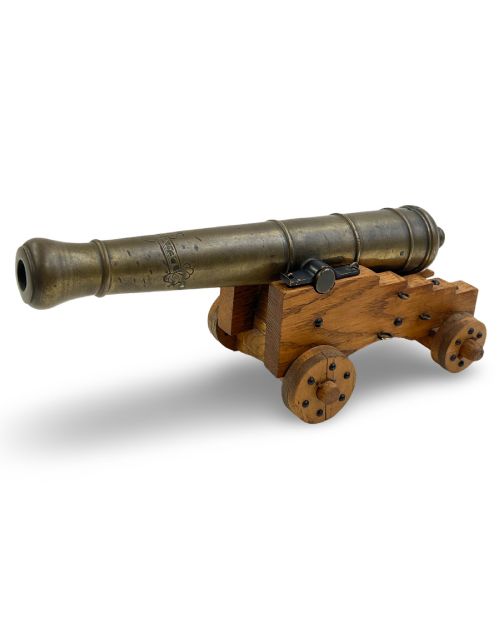
The most common examples on this page are Queen Anne type flintlock turn-off pistols featuring integrated brass or steel barrels. Alongside these pocket arms, you also discover French and English signal cannons paired with timber carriages. Each object demonstrates the compact engineering typical of eighteenth-century gunsmithing.
Materials and construction methods
Makers utilised cast brass, bronze, and steel to form the distinctive round cannon barrels that screw off for loading. These metal components were frequently paired with stocks carved from walnut, oak, or other dense hardwoods. Some iterations incorporate intricate silver wire inlay to embellish the wooden grips.
The ignition mechanisms rely on traditional flintlock systems requiring precise metalwork for the frizzen and pan. Gunsmiths integrated the breech and barrel as a single unit on many pocket pistols, eliminating the standard separate barrel tenon.
Antique Cannon Barrel Retail Price Guide 2026
Typical asking prices for cannon barrel among the pieces listed under this phrase on Sellingantiques today, from the lower quarter to the upper quarter. They describe what is for sale here now, not the wider market.
Listings feature eighteenth-century pocket pistols and signal cannons constructed from brass, bronze, steel, walnut, and oak.
Distinctions in quality
The standing of a maker heavily influences the desirability of an antique cannon barrel piece, with signed examples commanding greater attention. London gunsmiths of the Georgian period applied superior engraving to the metal actions compared to anonymous workshop output. Maker signatures on the lockplate provide a clear indicator of origin.
The preservation of the timber stock and the crispness of the barrel turn-off threads dictate the overall standard of the piece. Crisp hallmarks or maker inscriptions on the brass and steel components separate standard utility pieces from finer cabinet examples.
Twigg London·James Barber·Thomas Henshaw·I Parr·John Rimes
The Antique Cannon Barrel Glossary
- Cannon barrel
- A firearm barrel turned on a lathe to resemble a naval cannon, featuring a thickened muzzle section. This design allows the breech to unscrew for loading powder and ball directly into the chamber.
- Flintlock
- A seventeenth and eighteenth-century ignition mechanism that uses a piece of flint striking a steel frizzen to create sparks. This ignites the priming powder in the pan to fire the weapon.
- Turn-off pistol
- A firearm where the entire barrel unscrews from the breech for muzzle loading. This configuration eliminates the need for a ramrod during reloading.
- Queen Anne style
- An English design aesthetic popular from the early eighteenth century characterised by rounded grips and actions forged in one piece with the breech. It frequently appears on pocket and overcoat pistols.
Antique Cannon Barrel: Frequently Asked Questions
What is an antique cannon barrel pistol?
An antique cannon barrel pistol is an eighteenth-century firearm featuring a barrel shaped like a naval cannon. The design typically incorporates a turn-off mechanism where the barrel unscrews from the frame.
These compact weapons served primarily for personal defence during the Georgian period. Their distinctive silhouette makes them easily recognisable among historical arms.
How do you date these pieces?
Dating relies on maker signatures, stylistic evolution in the flintlock mechanism, and regional hallmarks stamped on the metal components. Most examples on this page originate from the eighteenth century.
Changes in grip shape and engraving styles also help narrow down the decade of production. Documentation of known London gunsmiths provides reliable comparative data.
Were these used at sea?
Certain pieces, such as ship of the line cannons and French maritime signal pieces, served directly aboard naval vessels. Others, like pocket pistols, were carried by travellers and civilians for protection on land.
Maritime examples often utilise bronze or brass to resist corrosion in salt air environments. Scale models and signal cannons fulfilled functional roles on larger vessels.
What wood was used for stocks?
Gunsmiths primarily selected walnut and oak for crafting the stocks of these pistols and signal cannon carriages. These dense timbers provided the structural integrity needed to withstand the shock of firing.
Finer examples occasionally feature decorative embellishments such as silver wire inlay set into the wood. The grain and finish of the timber vary according to the maker and the intended quality of the piece.