
Antique Caned Back Chair
An antique caned back chair brings woven texture and timber frame history into a room, joining practical seating with centuries of craftsmanship.
Antique Caned Back Chair
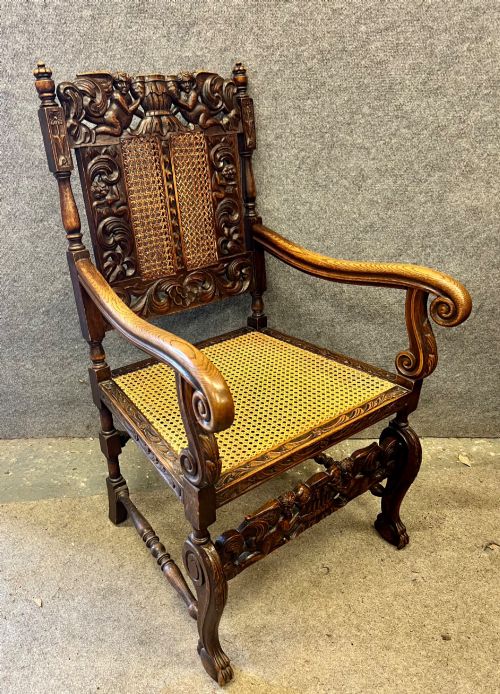
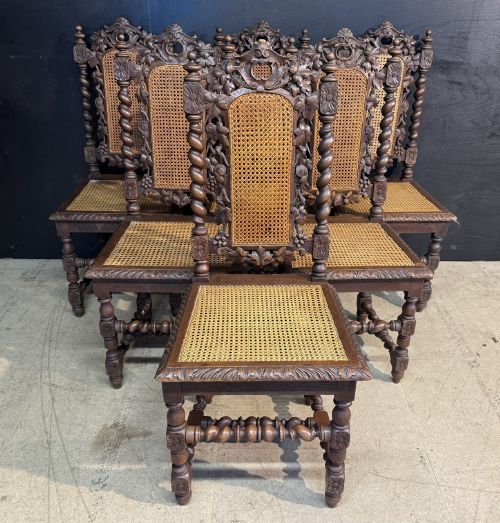
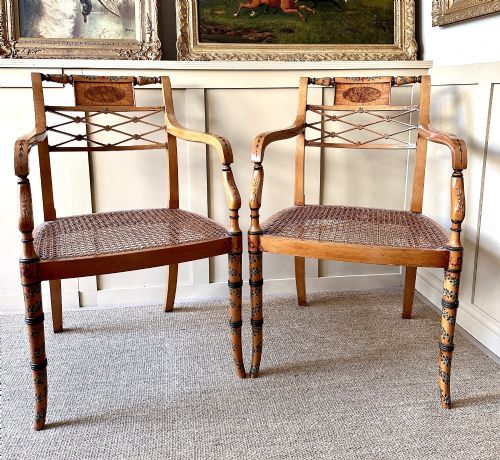
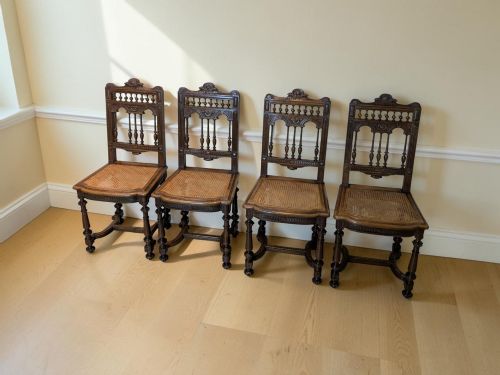
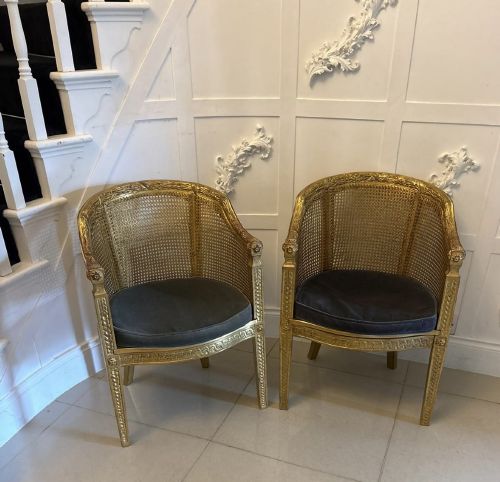
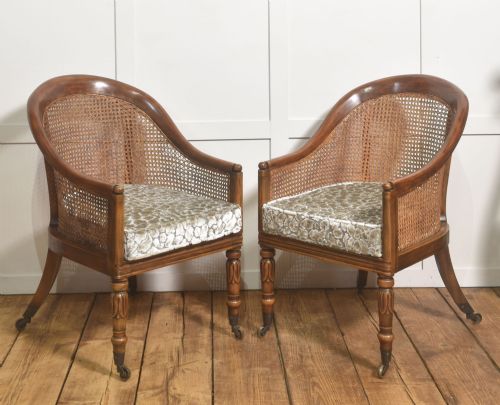
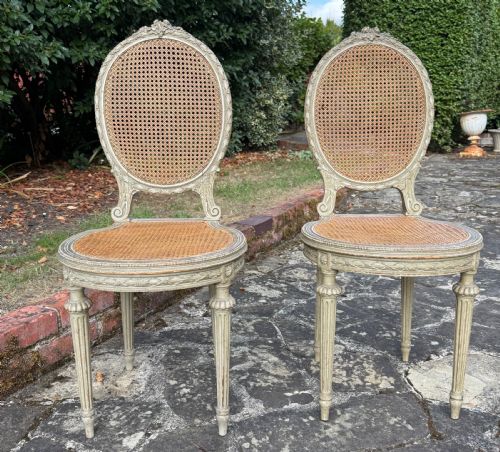
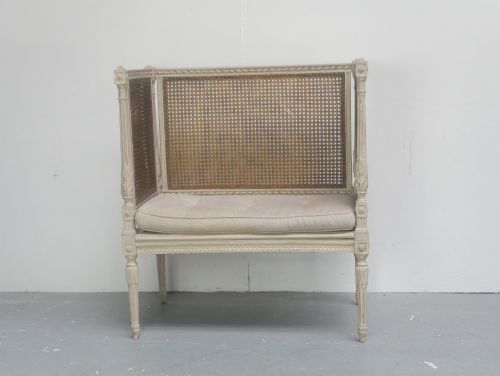
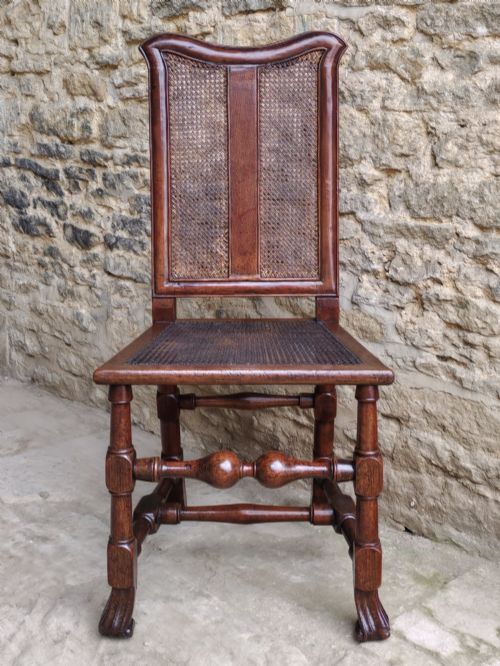
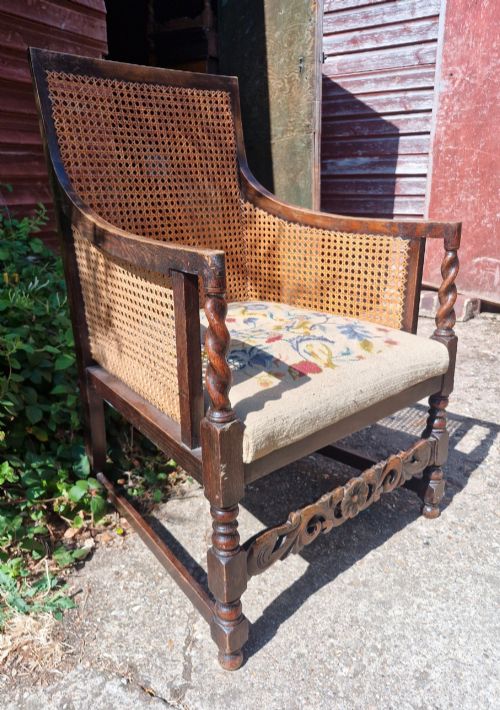
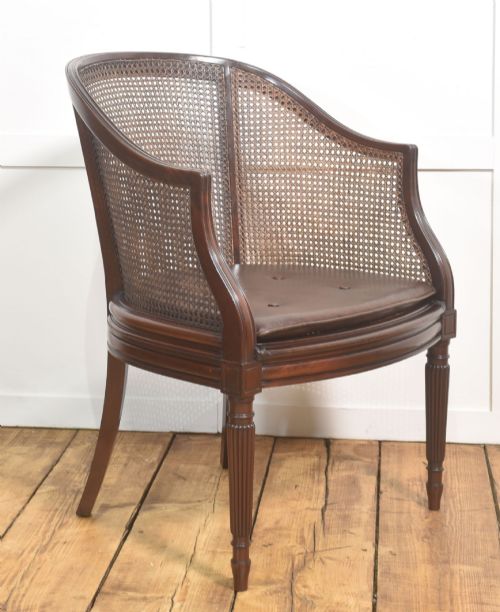
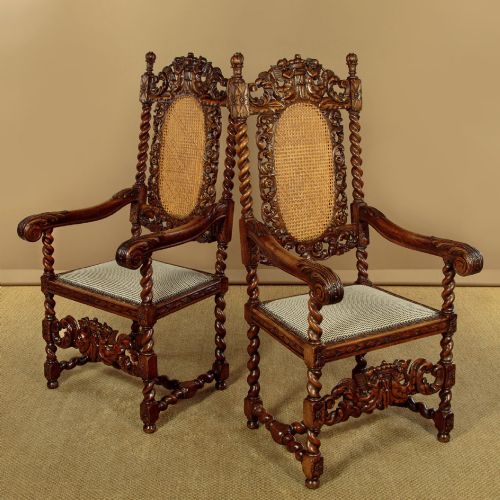
When you search for an antique caned back chair, you encounter a wide span of seating forms ranging from single library armchairs and side chairs to large dining sets. The pieces listed on this page cross periods from the seventeenth century through to the early twentieth century, taking in Regency, Victorian, Edwardian, and earlier revival designs.
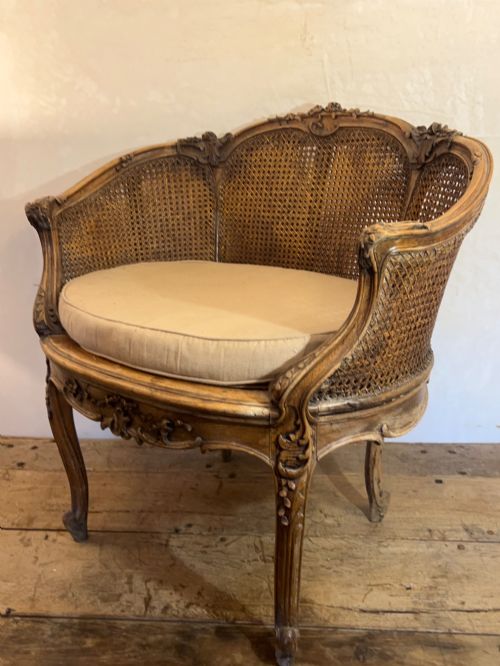
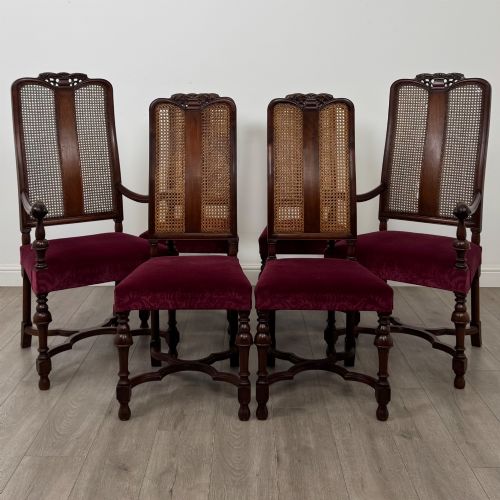
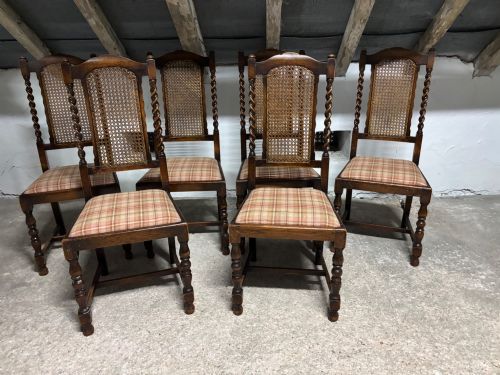
Armchairs, dining chairs, and bergere suites appear frequently in the selection alongside rocking chairs and hall chairs. Walnut, mahogany, and oak form the structural timber base of these pieces, paired with woven cane panels set into the backrests and seats.
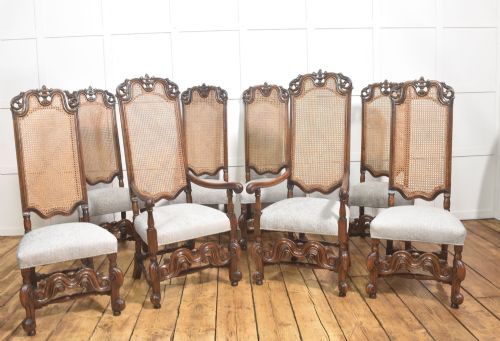
Revival styles such as Carolean, Jacobean, and Louis XV dominate many of the later interpretations, sitting alongside genuine period examples from the eighteenth and nineteenth centuries. Buyers regularly find single reading chairs alongside sets intended for formal dining rooms.
Materials and construction methods
Cabinetmakers constructed the frames of these chairs using durable hardwoods including mahogany, walnut, and oak, often shaping the timber with turned spindles, carved details, or parcel gilding. Selected examples utilise satinwood, beech, or painted finishes to achieve distinct regional and period aesthetics.
The characteristic caned panels rely on handwoven plant fibres threaded through pre-drilled holes in the wooden frame to create a resilient, flexible support. Artisans complemented this woven work with brass hardware, leather upholstery pads, or velvet trims where additional comfort was required.
The listings on this page span eight distinct periods, from the 17th century through to the 1920s, utilising mahogany, walnut, oak, and cane.
Distinctions in construction and finish
The refinement of the timber carving and the tightness of the woven cane distinguish standard utility seating from exceptional studio work. Crisp execution of turned woodwork, well-proportioned frames, and the integration of secondary woods indicate higher workshop standards.
Original surface patination and the survival of early or period-appropriate cane work elevate a piece above later replacements or heavy restorations. The harmony between the structural hardwood frame and the woven panel determines the overall integrity of the chair.
James Shoolbred·Dryad of Leicester
The Antique Caned Back Chair Glossary
- Bergere
- An enclosed upholstered armchair featuring cane or upholstered sides and back. This French form offers a deep seat often paired with a loose cushion.
- Caning
- The craft of weaving split rattan or reed through frame holes to form a porous panel. It provides flexible support for backs and seats.
- Carolean
- A seventeenth-century style marked by rich carving, scrolling foliage, and turned components. Revival versions appeared in force during the late Victorian and Edwardian eras.
- Parcel Gilt
- A decoration technique where selected areas of a wooden frame receive a thin layer of gold leaf while the underlying timber remains visible.
- Cabriole Leg
- A furniture leg that curves outward at the knee and tapers inward toward the foot. This shape draws inspiration from animal limbs and appears on eighteenth-century revival pieces.
Antique Caned Back Chair: Frequently Asked Questions
How do I care for cane work?
Woven cane panels benefit from occasional wiping with a damp sponge to maintain moisture in the plant fibres. Avoid placing these chairs near direct heat sources which can cause the cane to dry out and snap.
Regular dusting keeps debris from lodging in the weave intersections. Weight distribution matters too, as cane flexes best when sat upon gently without concentrated pressure.
Where should I place a bergere chair?
Library armchairs and bergere seats suit quiet corners, studies, or drawing rooms where their detailed wooden frames and woven panels remain visible. Their enclosed proportions make them comfortable reading spots.
Pairing a single armchair with a small side table creates an inviting focal point. Keeping them out of harsh direct sunlight protects both the polished timber and the natural cane from fading.
Are these chairs suitable for daily dining?
Dining sets with caned backs provide sturdy seating for meals when constructed from robust hardwoods like oak or mahogany. Checking the tension of the seat cane ensures it supports regular use without sagging.
Many period and revival dining chairs were built specifically for heavy household deployment. Adding slim squab cushions can also reduce direct wear on the woven surfaces during long dinner parties.
How do I distinguish a revival piece from an original?
Makers of nineteenth and twentieth-century revival furniture replicated earlier seventeenth and eighteenth-century styles closely, utilising contemporary tool marks and machine-cut framing elements. Examining the timber shrinkage and the uniformity of the cane helps indicate the true production era.
Design cues such as turnings, wood species, and secondary framing methods offer further clues. Comparing construction details against authenticated pieces from specific reigns clarifies the exact period of manufacture.