
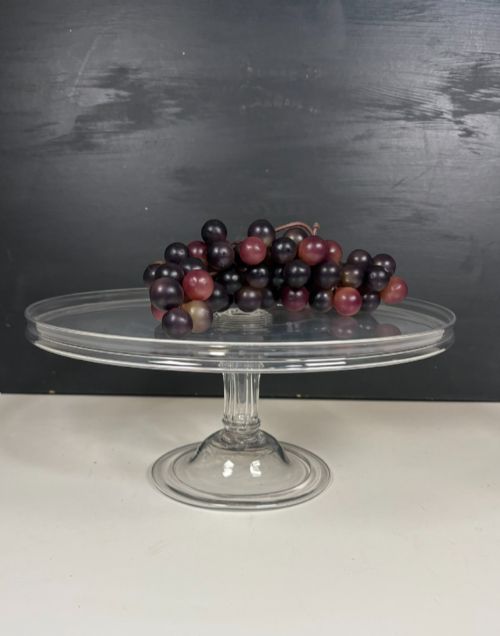
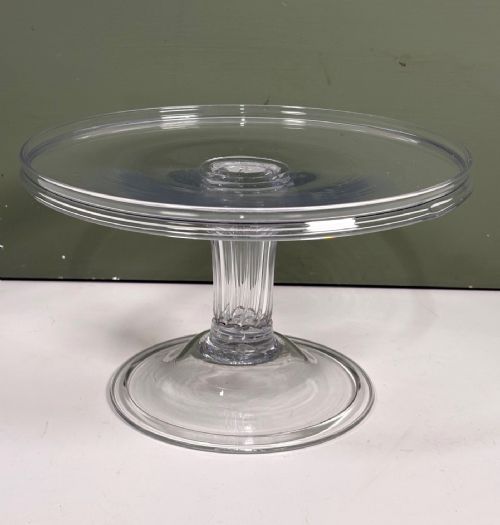


Antique Cake Platter
These antique cake platter pieces bring period charm to the table, offering raised surfaces for serving baked goods.
Antique Cake Platter
An antique cake platter search uncovers raised platforms and flat servers designed to present cakes, pastries, and tea fancies at the table. These items take the form of tazzas, footed stands, and circular boards intended for hospitality and display.
The selections available here span several centuries and styles, stretching from Georgian and Regency eras through Victorian, Edwardian, and Art Deco periods. Buyers encounter lead glass, cut glass, porcelain, bone china, mahogany, walnut, brass, and silver plate.
Glass tazzas and wooden stands dominate the offerings, often appearing alongside porcelain sandwich plates and pedestal table risers. Each object reflects the dining habits and interior aesthetics of its specific decade of manufacture.
How they were made
Glass items rely on lead glass and heavy lead crystal formulations shaped into footed tazzas, frequently featuring deep hand-cut patterns to catch the light. Ceramic examples utilise porcelain and bone china, sometimes paired with delicate gilding or transfer printing.
Wooden platters employ dense timbers like mahogany and walnut, turned on lathes to form circular platforms and sturdy pedestals. Metal components incorporate brass casting, silver plating over a base metal, and detailed beadwork inserts.
Listings feature items spanning the eighteenth, nineteenth, and twentieth centuries, utilising glass, mahogany, walnut, porcelain, and silver plate.
What varies in quality
Quality rests in the crispness of the glass cutting, the weight of the lead crystal, and the clarity of the material free from excessive inclusions. In ceramic pieces, the fineness of the porcelain paste and the precision of the decorating determine the standing of the work.
For wooden examples, the selection of the timber grain and the stability of the turned pedestal separate standard utility pieces from finer parlour furnishings. Metal elements depend on the durability of the plating and the solidity of the brass casting.
Hicks Meigh and Johnson·Mappin and Webb·Royal Doulton
The Antique Cake Platter Glossary
- Tazza
- A shallow bowl or flat dish raised on a pedestal foot, used for serving food. This form appears frequently in glass and ceramic pieces across various centuries.
- Lead Crystal
- A heavy glass variety containing metallic oxide to increase brilliance and weight. It permits deeper, sharper cutting than standard soda-lime glass.
- Bone China
- A type of porcelain incorporating bone ash for added strength and a characteristic milky translucency. It allows for thinner vessel walls while retaining durability.
- Pedestal Table Riser
- A raised platform supported by a central column or feet to elevate dishes above the table surface. Regency examples in brass utilise this configuration.
- Sandwich Plate
- A flat serving plate sized for holding small cakes, bread, or sandwiches during afternoon tea service. These often occur in matched sets.
Antique Cake Platter: Frequently Asked Questions
What is a tazza?
A tazza is a footed dish or shallow bowl designed specifically to elevate food above the table surface for easy selection.
In antique contexts, these pieces function as centrepieces for serving cakes, fruit, and small confections during formal dining or tea.
How were glass platters made?
Glass platters and tazzas were shaped using lead glass or heavy lead crystal, often blown into moulds or formed by hand.
Artisans then applied wheel-cutting techniques to create decorative facets and patterns across the surface of the glass.
Can wooden stands hold cheese?
Yes, circular mahogany and walnut stands from the Victorian period frequently served a dual purpose for both cake and cheese.
These turned wooden boards provided a stable, flat surface designed to sit directly on the dining table or sideboard.
What materials are common?
The available pieces incorporate a wide range of materials including cut glass, lead crystal, porcelain, bone china, mahogany, walnut, brass, and silver plate.
Different eras favoured distinct mediums, shifting from heavy Georgian glass to Victorian turned timbers and Edwardian ceramics.
How do I date a piece?
Dating relies on observing the combination of materials, manufacturing methods, and stylistic cues present in the object.
Characteristics such as Georgian glass weight, Victorian timber turning styles, or Edwardian cut glass patterns help place the item within a specific period.