


Antique Bureau Abattant
An antique bureau abattant is a tall drop-front writing cabinet designed to conceal correspondence and paperwork behind a vertical fall.
Antique Bureau Abattant
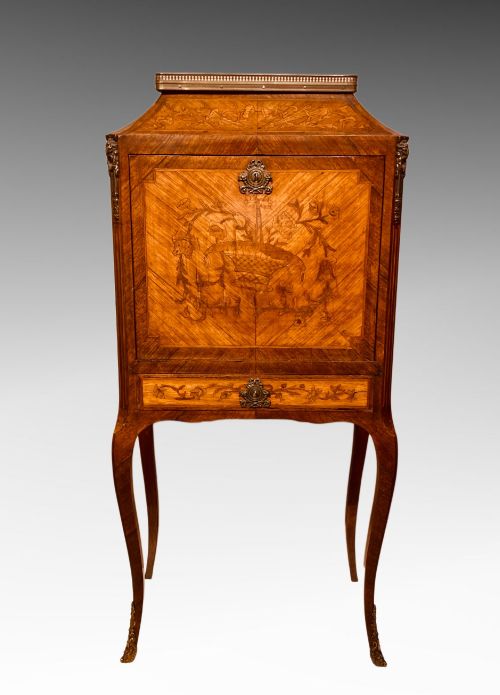
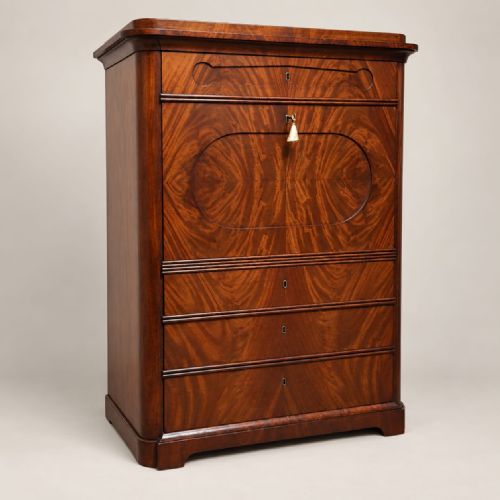
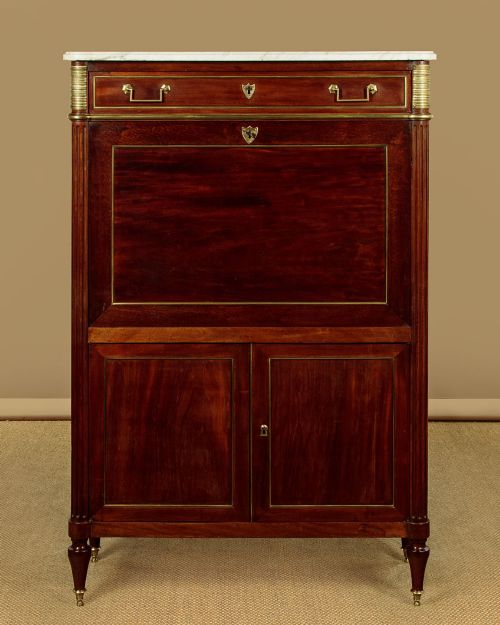
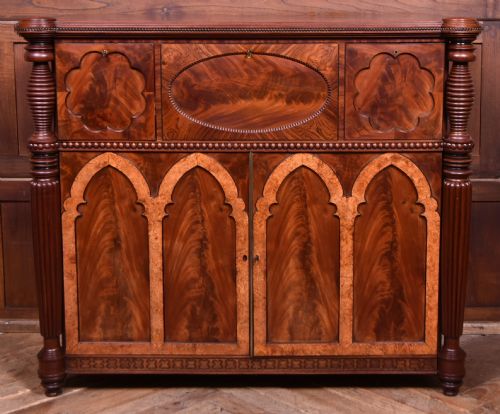
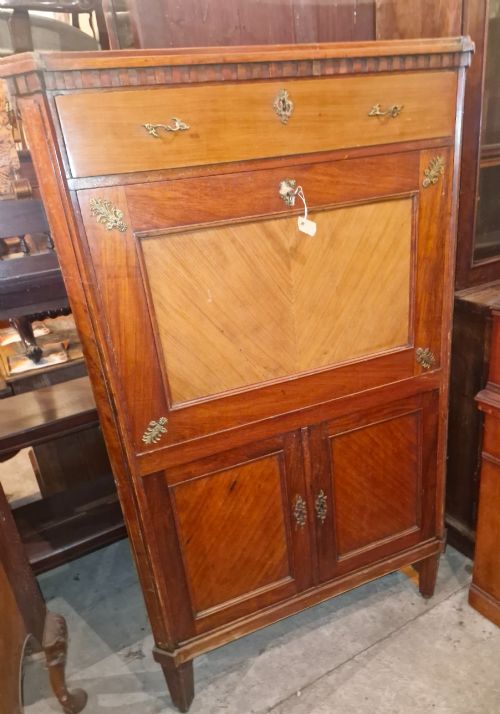
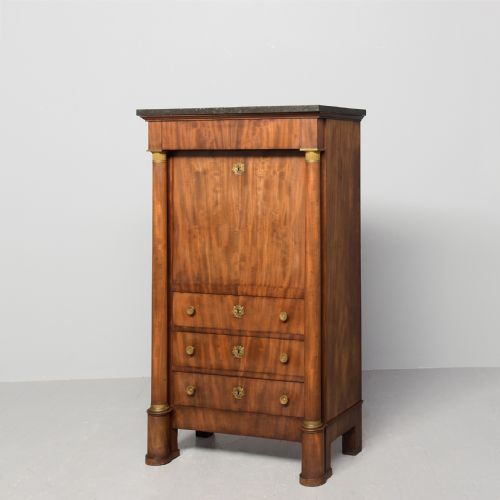
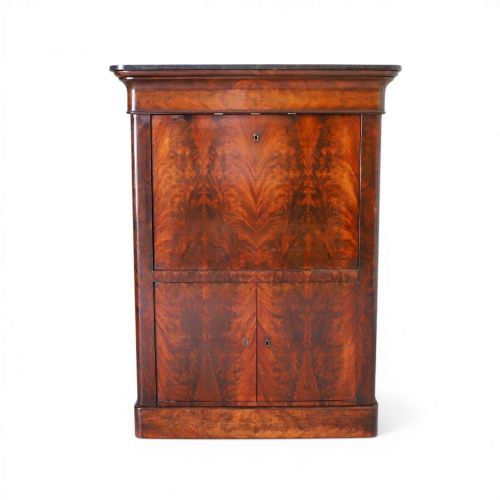
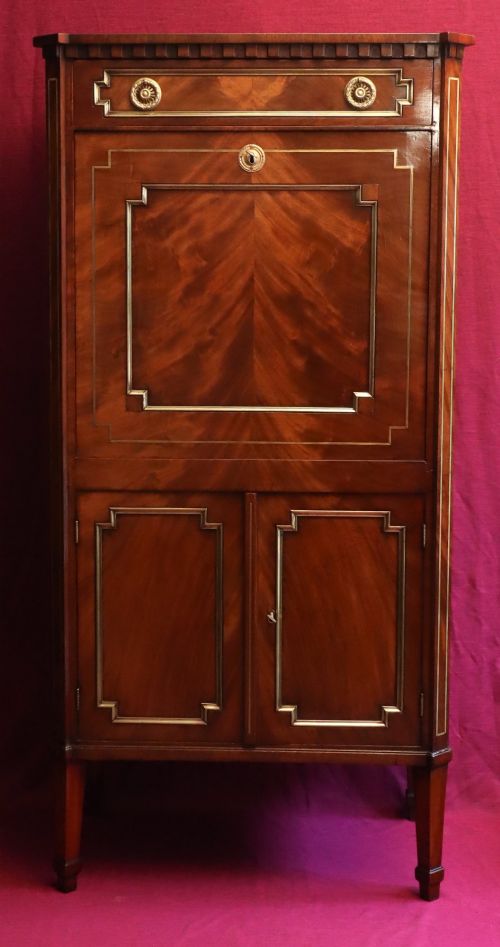
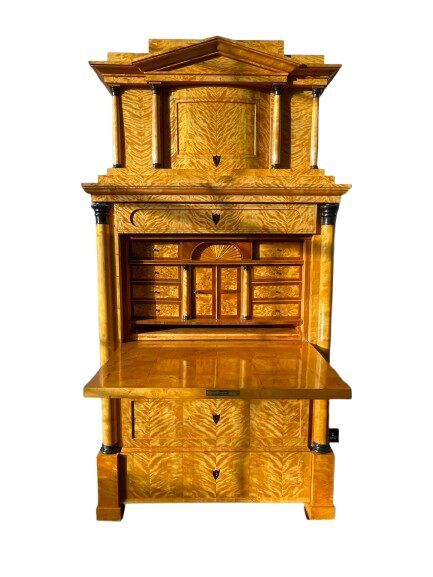
The antique bureau abattant appears predominantly as a nineteenth-century French or Biedermeier cabinet, housing a writing surface behind a hinged fall front. These pieces combine the utility of a desk with the vertical storage capacity of a slim chest of drawers.
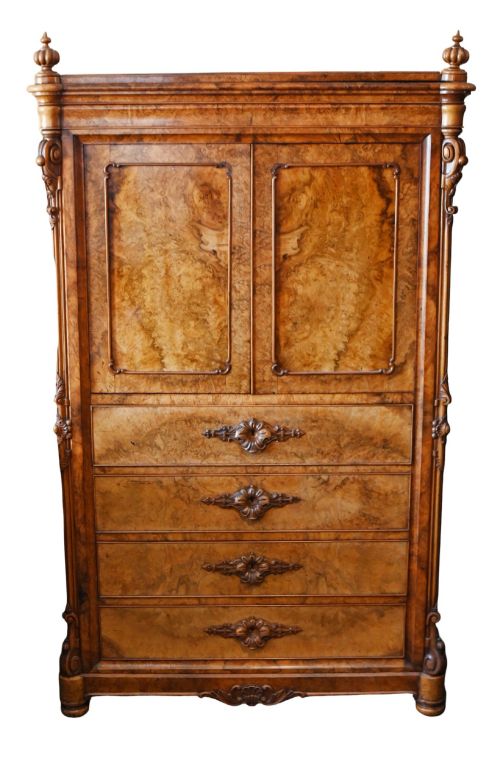
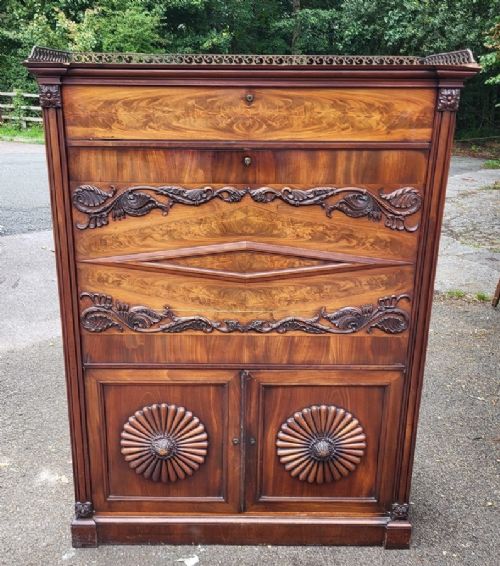
Continental workshops produced these writing cabinets in various regional interpretations, ranging from austere birch veneers to heavily gilded mahogany and walnut carcasses. The internal configuration typically reveals small pigeonholes and concealed compartments surrounding the central writing flap.
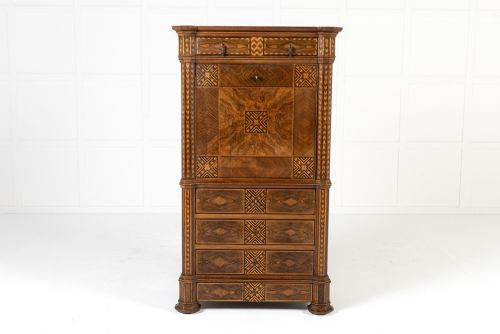
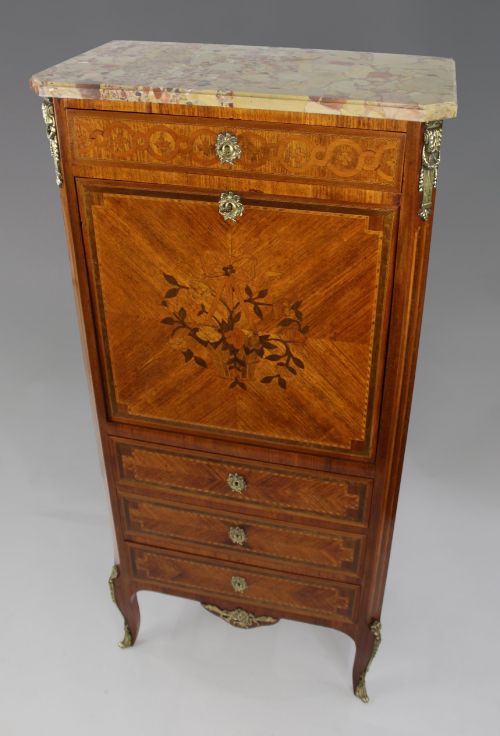
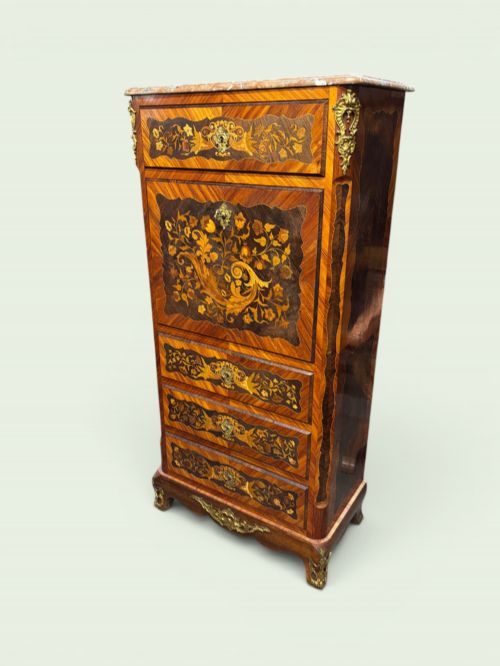
Buyers encounter numerous stylistic revivals, including Louis XV and Louis XVI interpretations alongside vernacular pine examples and sophisticated marquetry pieces. The overriding architectural constant remains the tall rectangular body intersected by the drop-front writing panel.
Distinguishing craftsmanship and material selection
The sophistication of the timber veneer matching and the precision of the marquetry cutting separate standard cabinetwork from exceptional execution. Superior examples display continuous grain patterns across multiple drawers and the drop-front panel.
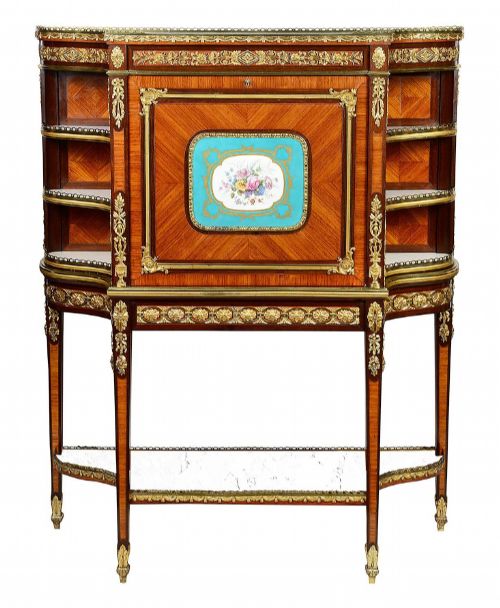
The integration of secondary decorative elements, such as fire-gilded ormolu mounts and heavy marble tops, dictates the hierarchical tier of the piece. Rigorous internal joinery, including secret compartments operating via concealed wooden mechanisms, marks the work of accomplished makers.
Antique Bureau Abattant Retail Price Guide 2026
Typical asking prices for bureau abattant among the pieces listed under this phrase on Sellingantiques today, from the lower quarter to the upper quarter. They describe what is for sale here now, not the wider market.
A surprising number of these dignified writing desks double as cocktail cabinets fitted with modern mirror glass.
Gillows·Blake·Adriano Brambilla
The Antique Bureau Abattant Glossary
- Abattant
- The drop-front panel of a cabinet that hinges downwards to serve as a writing desk. This vertical surface conceals inner pigeonholes and small drawers.
- Escritoire
- A writing desk or cabinet designed for correspondence and storage. The term frequently applies interchangeably with the bureau abattant in continental furniture.
- Ormolu
- Gilt bronze mounts applied to the exterior angles and friezes of nineteenth-century furniture. This decorative technique adds metallic contrast to dark polished veneers.
- Marquetry
- Inlaid patterns of various coloured woods applied to the structural carcass to form pictorial or geometric designs. Craftsmen carefully select veneers for natural tonal variation.
- Biedermeier
- A central European style of furniture spanning the early to mid-nineteenth century prioritising clean lines and polished veneers over overt ornamentation.
Antique Bureau Abattant: Frequently Asked Questions
What is a bureau abattant?
A bureau abattant is a vertical writing cabinet featuring a hinged drop-front flap that opens to reveal a desk surface and internal compartments.
Unlike traditional sloping desks, these pieces maintain a tall, upright profile that occupies minimal floor space while offering substantial concealed storage.
How were these cabinets used?
These pieces served primarily for private correspondence, record-keeping, and the storage of writing implements within domestic reception rooms or studies.
When closed, the drop-front kept confidential papers out of sight, presenting a clean architectural facade to guests.
How do I identify a marble top?
Many nineteenth-century continental examples feature fitted stone slabs resting directly upon the crown of the cabinet carcass.
These heavy additions provided a durable, decorative surface that complemented the gilt bronze mounts and polished timber veneers below.
Where do secret drawers appear?
Secret compartments are typically integrated within the internal tier of small pigeonholes, often disguised as architectural mouldings or false drawer dividers.
Owners accessed these hidden spaces by releasing spring-loaded catches or sliding structural panels within the writing interior.