

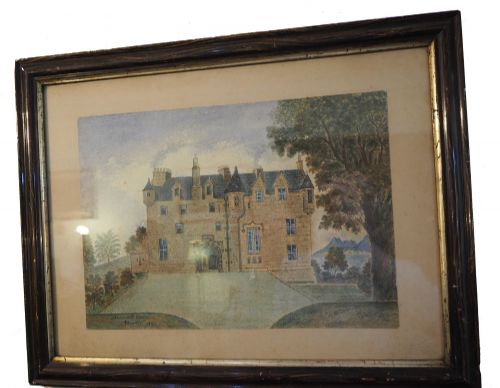


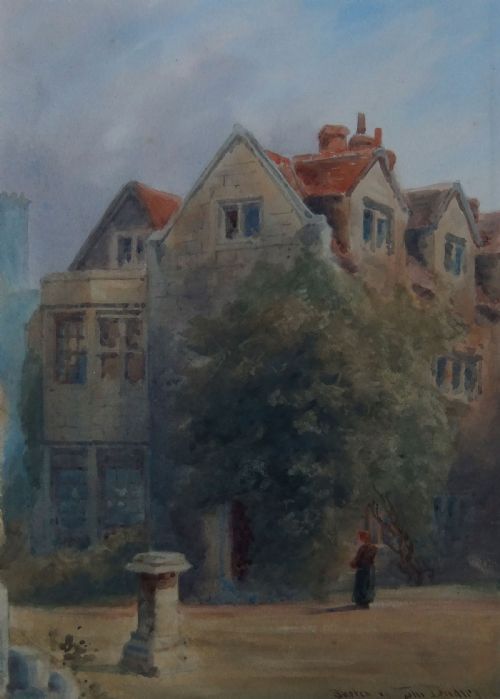


Antique Building Watercolour
These antique building watercolour works capture historic streetscapes and structures on paper, offering collectors a direct window into past architectural landscapes.
Antique Building Watercolour
An antique building watercolour brings historic structures, castles, inns and townscapes directly into an interior on paper support. When you search for antique building watercolour, you encounter architectural drawings and townscapes created across the nineteenth and twentieth centuries.
The selections range from detailed topographical studies of continental halls and English castles to looser impressions of mills and street corners. These works span Edwardian, Victorian, and mid-twentieth century fine art movements, showing how artists recorded urban and rural architecture over generations.
Most examples arrive framed behind glass in wood mouldings, preserving the delicate pigments and paper supports from environmental damage. You find both signed cabinet pieces by known British painters and anonymous architectural records of significant European landmarks.
How they were made
Artists built these compositions upon paper using watercolour pigment, often laying down an initial framework with pencil or ink lines. The interaction between fluid washes of pigment and crisp ink or pencil underdrawing defines the architectural precision of each building.
Makers utilised transparent and opaque watercolours to render masonry, slate roofs, and reflective waterways, capturing shifting daylight upon historic facades. The support paper varied from light sketching sheets to heavier weight stock capable of holding multiple washes without warping.
Antique Building Watercolour Retail Price Guide 2026
Typical asking prices for building watercolour among the pieces listed under this phrase on Sellingantiques today, from the lower quarter to the upper quarter. They describe what is for sale here now, not the wider market.
Several Victorian chickens once wandered undisturbed into the foreground of an anonymous farm building watercolour.
What varies in quality
Draftsmanship dictates the baseline of an architectural piece, separating precise topographical perspective from generalized scenery. The handling of line work under the pigment reveals whether an artist understood stone masonry and structural proportion.
Atmospheric control distinguishes superior sheets, where pigment washes convey weathering and light on historic surfaces rather than flat staining. Preservation of the original paper and pigments without heavy fading or moisture damage ultimately governs the standing of a work.
Percy Robertson·J W Hogley·Rowland Henry Hill·Percy Lancaster·Tom Dudley·Annie L Lee·Fred Lawson·Miles Edmund Cotman
The Antique Building Watercolour Glossary
- Topographical
- Depicting specific physical locations and buildings accurately. Victorian topographical works prioritized documentary precision over romantic invention.
- Wash
- A thin, fluid layer of diluted watercolour pigment spread across paper. Washes create expansive skies and uniform stone surfaces.
- Underdrawing
- Initial pencil or ink guidelines beneath the paint layer. This sketching ensures correct architectural perspective before pigment application.
- Watermark
- A recognizable design embedded in paper during manufacture. Watermarks help date antique sheets and identify the paper mill.
Antique Building Watercolour: Frequently Asked Questions
How should I hang an antique building watercolour?
Keep these works away from direct sunlight to prevent the watercolour pigments from fading on the paper. Ultraviolet filtering glass provides essential protection for antique pieces displayed in bright rooms.
Maintain stable indoor humidity levels to protect both the paper support and the wood frame. Avoid hanging them on damp exterior walls where moisture might seep behind the glass.
How do I identify the period of a watercolour?
Examine the framing materials, backing boards, and any visible paper watermarks for clues regarding age. Victorian and Edwardian works often utilise specific paper weights and distinct handwriting styles in signatures or inscriptions.
Compare the architectural styles and dress of any figures present with known historical periods. Costume details and building modifications provide reliable chronological anchors for undated sheets.
Are these works always painted on paper?
Paper serves as the primary support for virtually all historic watercolour paintings and architectural drawings. Artists selected various weights and textures depending on whether they required a smooth surface for fine lines or a rough texture for washes.
Some pieces incorporate pencil and ink alongside watercolour pigment upon the same paper sheet. The fragile nature of paper means these works require protective glass and framing.
What is the difference between an architectural drawing and a townscape?
Architectural drawings focus specifically on the structural details and precise elevations of a single building. They often resemble technical plans rendered with artistic sensitivity and fine pen work.
Townscapes capture broader street scenes, incorporating surrounding buildings, figures, and atmospheric weather conditions. These broader views prioritize the overall street atmosphere rather than precise structural measurements.