

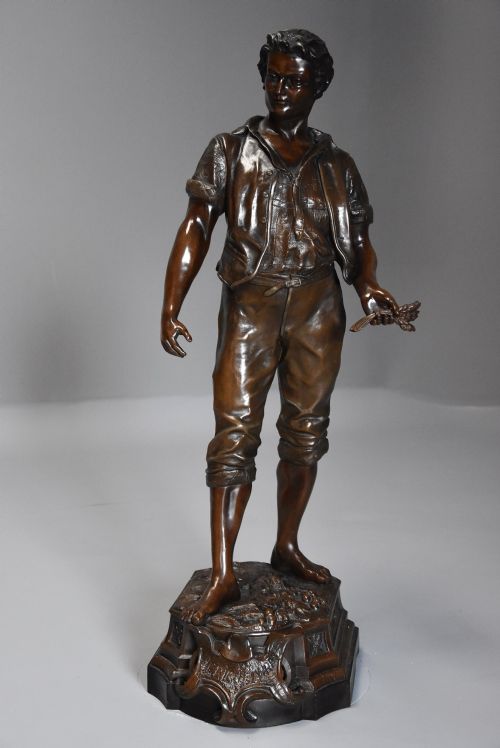


Antique Bronze Finish Figures
These antique bronze finish figures bring character and historic styling into a room through decorative metalwork and terracotta.
Antique Bronze Finish Figures
Buyers seeking antique bronze finish figures encounter decorative sculptures, portrait busts, candlesticks, and figurines dating from the nineteenth and early twentieth centuries. These objects span stylistic movements including Art Nouveau, Art Deco, Neoclassical, and Gothic Revival, reflecting distinct period tastes in home ornamentation.
The most common form on this page is the spelter figure or statue treated with a bronzed, patinated, or painted surface to mimic solid bronze. These pieces frequently originate from French workshops or British Grand Tour souvenir traditions, portraying historical characters, mythological figures, farm labourers, and soldiers.
Makers and sculptors occasionally signed their work, such as pieces by Frederic Goldscheider and Jennings Brothers, adding specific provenance to portrait busts and figural studies. Materials vary from metal alloys to terracotta and marble bases, offering diverse tactile qualities for interior display.
How they were made
Many of these figures utilise spelter, a zinc-based alloy that served as an economical alternative to traditional bronze casting during the nineteenth and twentieth centuries. Foundries applied metallic paints, patinas, and verdigris finishes to these base metals to simulate age and noble material.
Terracotta served as another primary medium, shaped in moulds and fired before receiving painted or patinated surfaces, as seen in portrait busts and figural sculptures. Marble bases frequently provided sturdy foundations for metal figures, particularly within Art Nouveau and classical designs.
Antique Bronze Finish Figures Retail Price Guide 2026
Typical asking prices for bronze finish figures among the pieces listed under this phrase on Sellingantiques today, from the lower quarter to the upper quarter. They describe what is for sale here now, not the wider market.
One standout pair depicts medieval characters balancing on stilts, proving that nineteenth-century sculptors appreciated a touch of theatrical amusement.
What varies in quality
The integrity of the underlying material and the weight of the object distinguish superior castings from simpler commercial items. Original mounted bases of Verdi green marble or matching pairs maintain greater consistency and historical completeness.
F. Milliot·Jennings Brothers·Frederic Goldscheider
The Antique Bronze Finish Figures Glossary
- Spelter
- A zinc alloy commonly utilised for nineteenth-century decorative sculptures and figurines. It provides a lighter and softer alternative to bronze.
- Patinated Metal
- Metal treated with chemical solutions or paints to create an aged surface coloration. This finish mimics the natural oxidation found on older bronzes.
- Terracotta
- Fired clay used for sculptural busts and figures. It often receives painted or patinated treatments to resemble metal or stone.
- Grand Tour
- Souvenirs and miniature models acquired by travellers in Europe during the nineteenth century. These objects typically depicted classical sculptures or historical monuments.
- Verdigris Patina
- A green or bluish surface film resulting from the corrosion of copper alloys. Makers applied this coloration artificially to simulate ancient weathering.
Antique Bronze Finish Figures: Frequently Asked Questions
What are spelter figures?
Spelter is a zinc-based alloy that makers used to cast decorative figures and statues as a cost-effective alternative to bronze. These pieces were then finished with metallic paint or patination to replicate the appearance of solid metal.
Because spelter is softer than bronze, these figures require careful handling to prevent surface wear or bending. They offer a decorative period aesthetic typical of nineteenth and early twentieth-century interiors.
How do I clean patinated metal?
Dust patinated metal figures gently with a dry, soft cloth to remove everyday particle buildup. Avoid liquid cleaners, abrasives, or polishes, which can strip away the original bronze finish or painted surface.
Keeping these pieces out of direct sunlight and away from damp environments protects the delicate patinas and painted details. Proper placement ensures the surface finish remains stable over time.
Are terracotta busts fragile?
Terracotta is a form of fired earthenware that possesses a porous and brittle structure. While sturdy enough for display on stable surfaces, these busts can chip or crack if dropped or subjected to impact.
When positioning terracotta sculptures, place them away from heavy foot traffic and high edges. Supporting the base securely prevents accidental tipping.
What is a Grand Tour model?
Grand Tour models are decorative replicas of classical sculptures, monuments, or historical figures purchased by travellers touring Europe during the nineteenth century. These pieces allowed collectors to bring classical art back to their homes.
They often reflect subjects from ancient history or famous works of sculpture translated into smaller metal or terracotta formats. Their presence indicates a specific nineteenth-century tradition of educated travel and collecting.