






Antique Bronze Desk Piece
An antique bronze desk piece brings the weight and detail of past centuries straight onto your blotter.
Antique Bronze Desk Piece
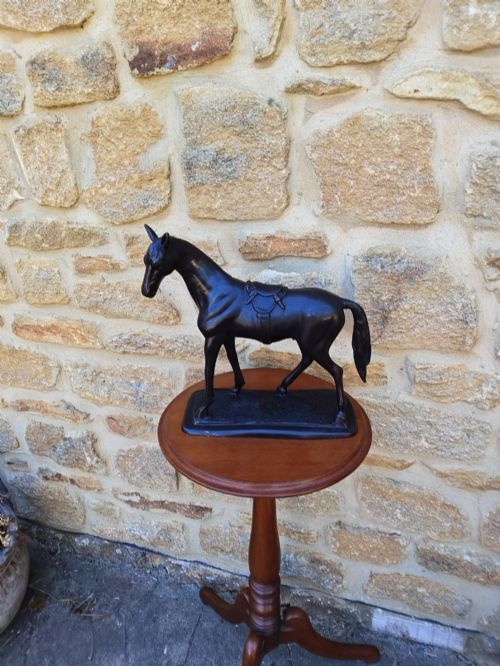
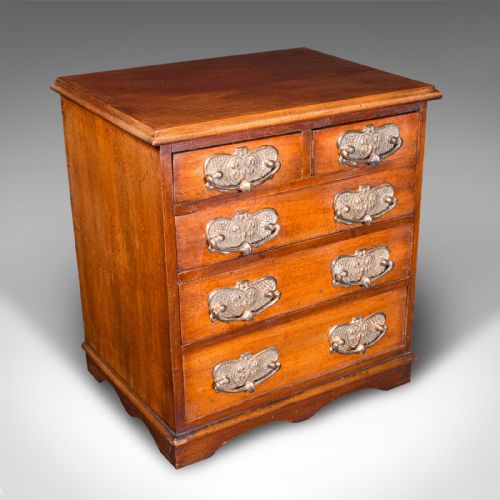
The objects stem largely from French and English workshops, spanning periods from the late seventeen-hundreds through the early twentieth century. Common forms include animalier studies, miniature chests, and heavy gilt garnitures designed to anchor a study or library table.
Materials and construction methods
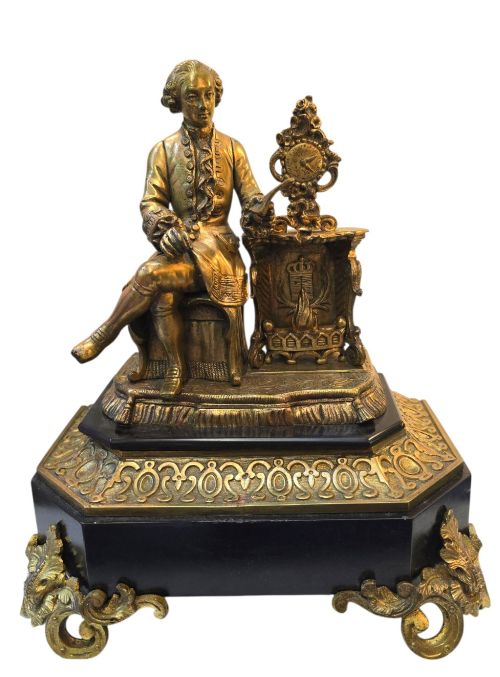
Pieces in this category rely primarily on cast bronze, often enhanced with fire-gilded ormolu, brass fittings, and heavy marble bases in white or rouge varieties. Artisans employed traditional foundry techniques to shape intricate figures, cannons, and clock mounts.
Surface finish is achieved through patination or applied enamel, while mixed-media works combine iron, spelter, and timber cabinetry to create substantial desktop accessories.
Antique Bronze Desk Piece Retail Price Guide 2026
Typical asking prices for bronze desk piece among the pieces listed under this phrase on Sellingantiques today, from the lower quarter to the upper quarter. They describe what is for sale here now, not the wider market.
Listings feature items spanning the eighteenth century through the 1920s, utilising bronze, brass, ormolu, marble, and enamel.
Factors determining quality
The integration of materials also dictates overall merit, particularly where bronze meets high-grade marble or finely gilt ormolu mounts. The presence of named makers or documented French and English foundry origins elevates the standing of a piece within its period.
Pierre-Augustin Caron de Beaumarchais·Isadore Bonheur·Ferdinand Berthoud·Japy Freres
The Antique Bronze Desk Piece Glossary
- Ormolu
- Gilded bronze, where a layer of gold amalgam is applied to the metal base and heated to drive off the mercury. This technique creates a rich, durable golden finish popular in French decorative arts.
- Animalier
- A nineteenth-century artistic style focusing on realistic depictions of animals, particularly charging bulls and horses. Sculptors in this genre captured subjects in dynamic motion with careful attention to anatomy.
- Clock garniture
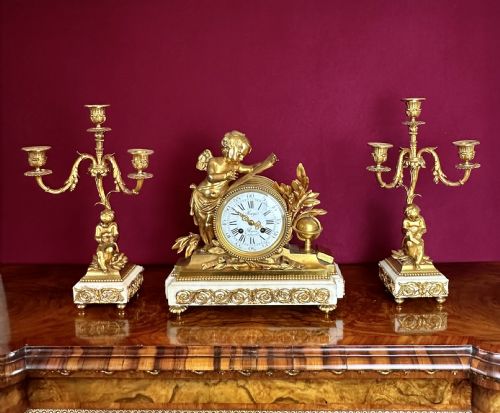
- A set comprising a central mantel clock accompanied by matching side ornaments such as candelabras or vases. These decorative ensembles were manufactured to sit together on a mantelpiece or large desk.
- Spelter
- An alloy of zinc and lead used as a cheaper alternative to bronze. It was frequently painted or bronzed to imitate heavier metals in decorative table lamps and figures.
- Gribeauval field gun
- A scaled artillery model following the standardised cannon system developed by French military engineer Jean Baptiste Vaquette de Gribeauval. These pieces combine iron and bronze components to replicate historical weaponry.
Antique Bronze Desk Piece: Frequently Asked Questions
What is a bronze clock garniture?
A clock garniture is a matched set featuring a central timepiece flanked by decorative ornaments like candelabras or side urns. These sets were built to occupy a commanding position on a large desk or mantel.
They combine heavy bronze or ormolu mounts with marble bases, reflecting the formal interior styles of the nineteenth century.
How do I care for antique bronze?
Maintenance requires only a soft, dry cloth to remove dust from crevices and chased surfaces. Avoid commercial metal cleaners or polishes that strip away the original historic patina.
Keeping the piece away from direct sunlight and excessive moisture preserves both the metal finish and any integrated marble or enamel elements.
Are these items strictly French?
While a significant portion of the selection originates from French foundries and clockmakers working in styles from Louis XVI to Art Nouveau, English pieces also appear. Examples range from miniature wooden specimen chests to military models.
The common thread is their utility or display purpose on a refined desk or table setting.
What does animalier mean on a listing?
Animalier refers to nineteenth-century sculptures that depict animals with strict anatomical accuracy and naturalistic movement. Artists in this tradition often modeled horses and charging bulls in energetic poses.
These bronze figures were cast to serve as decorative desktop studies or ornaments.