
Antique Bronze and Crystal
These antique bronze and crystal pieces bring heavy cast metal and refractive glass together into grand chandeliers, wall lights, and centrepieces.
Antique Bronze and Crystal
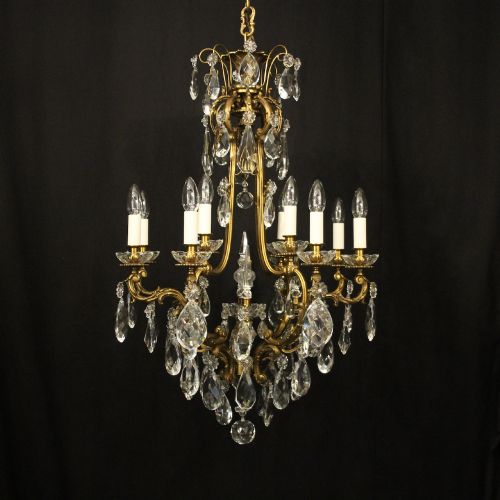
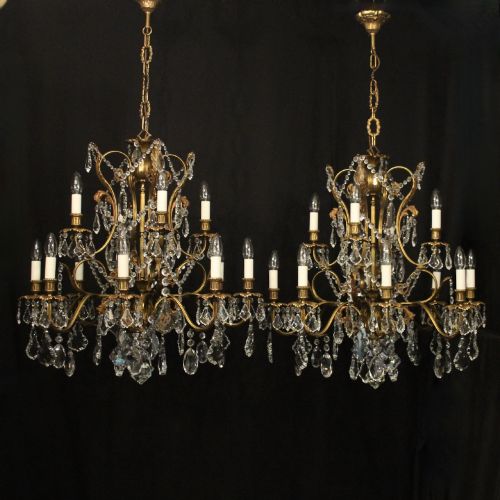
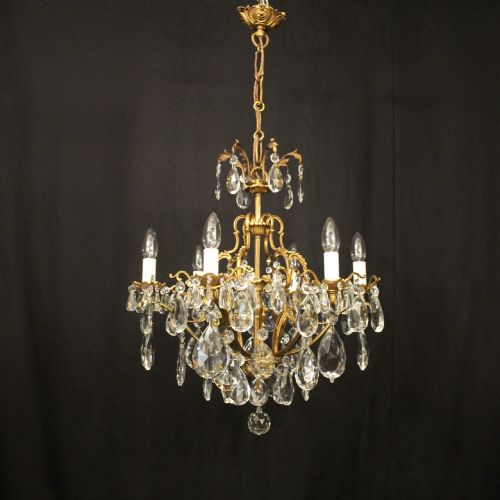
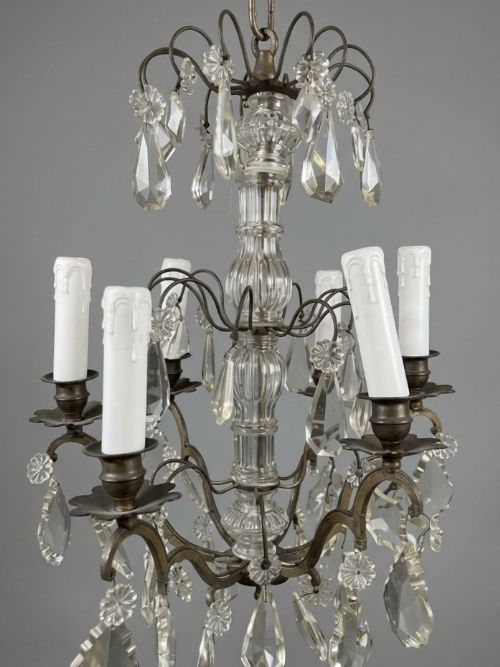
When you search for antique bronze and crystal, you encounter lighting and decorative objects that combine heavy cast metal frames with refractive glass elements. The selection centres heavily on French designs from the nineteenth and early twentieth centuries, spanning periods from Victorian and Edwardian decades up to nineteen-thirty. Chandeliers dominate the forms, accompanied by wall lights, centrepieces, table lamps, and mantel clocks.
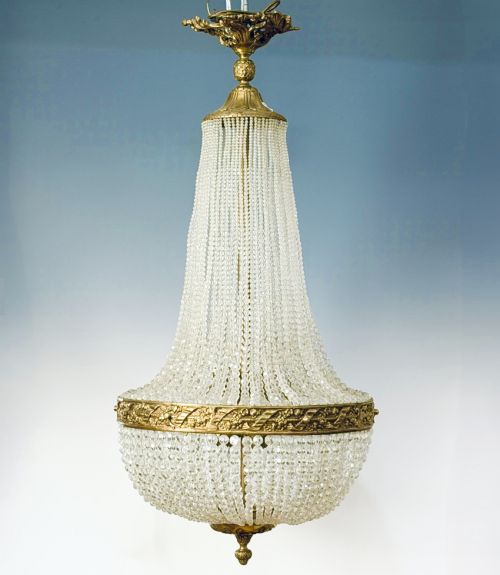
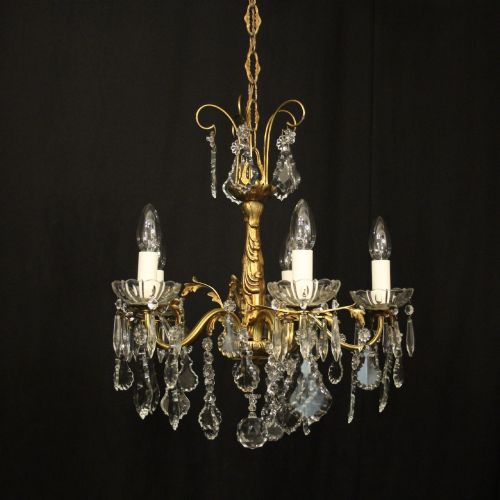
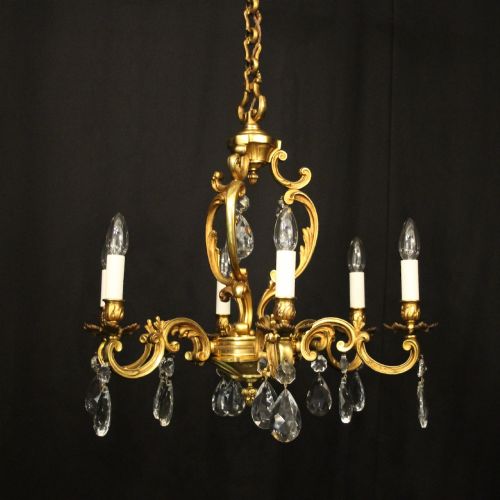
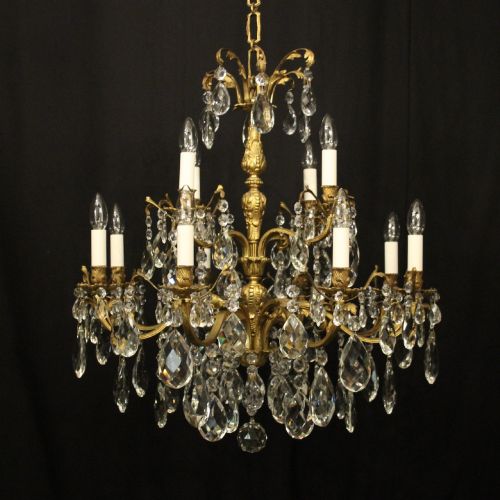
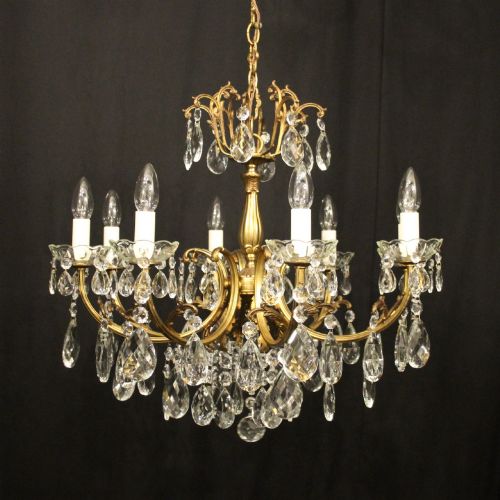
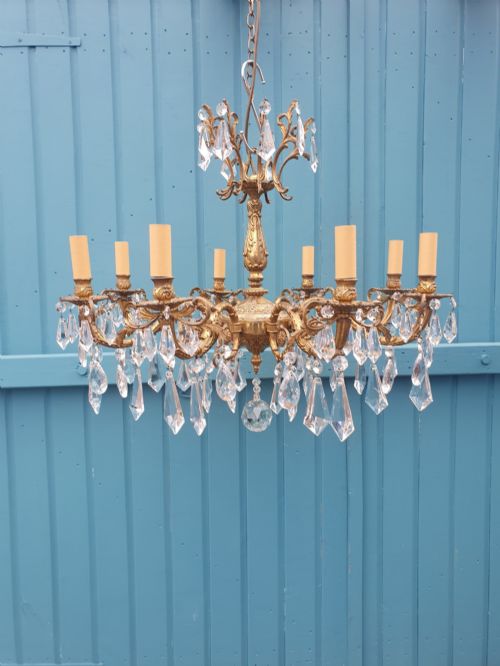
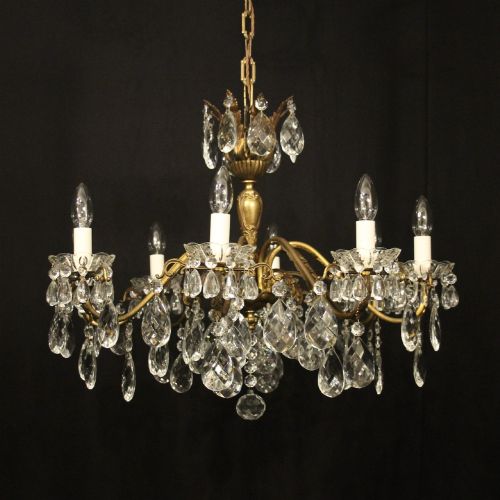
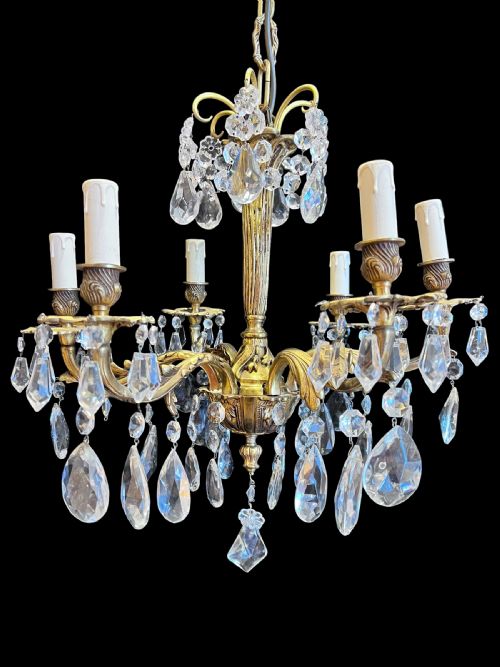
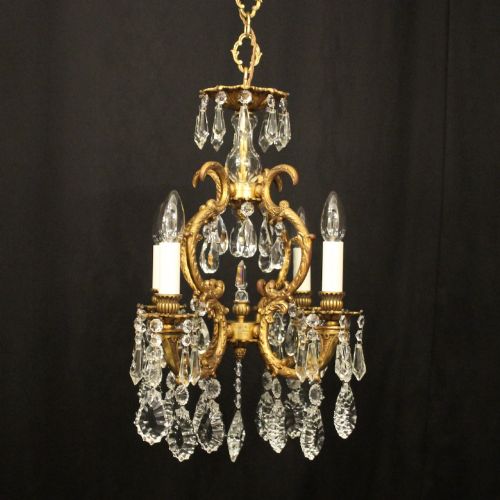
The most frequent version you meet on this page is the multi-light chandelier featuring a gilt bronze or brass frame hung with cut glass drops. These pieces often draw on French Rococo, Empire, or Louis Revival styles, displaying elaborate cast ornamentation alongside tiered crystal arrangements. Smaller items such as table lamps and tantalus sets appear alongside these large overhead light fittings.
Materials and Construction Methods
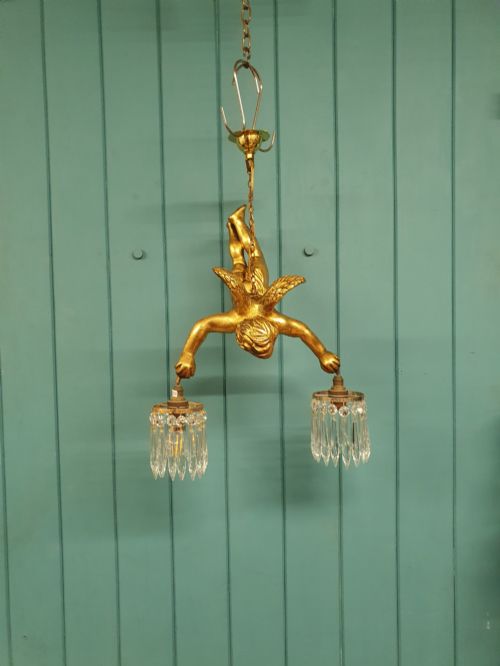
The metal components rely on bronze, brass, or spelter, frequently finished with fire gilding, ormolu, or silver gilt. Artisans cast these metal frames in sections, chasing the surface details by hand to produce crisp foliate scrolls, cherubs, and architectural mounts. The structural arms support both the weight of the metal and the suspended glass elements.
The glass and crystal components undergo hand-cutting and polishing to maximise their light-refracting properties. Cut crystal prisms, beads, and pendants attach to the metal frames using small wire loops, forming tent and waterfall structures that direct illumination across a room.
Materials documented across the inventory include cut crystal, gilt bronze, ormolu, and spelter.
Distinctions in Quality
The grade of the crystal separates standard production from exceptional works. High-end pieces utilise heavy, high-lead cut glass with precise facets that scatter light cleanly, whereas lesser examples use pressed glass with softer edges. The complexity of the assembly, such as multi-tiered tent and waterfall configurations with numerous individual drops, marks the upper tier of craftsmanship.
The Antique Bronze and Crystal Glossary
- Ormolu
- A technique of applying finely ground high-carat gold to a bronze object using a mercury amalgamation process. This finish provides a warm, durable golden lustre distinct from modern electroplating.
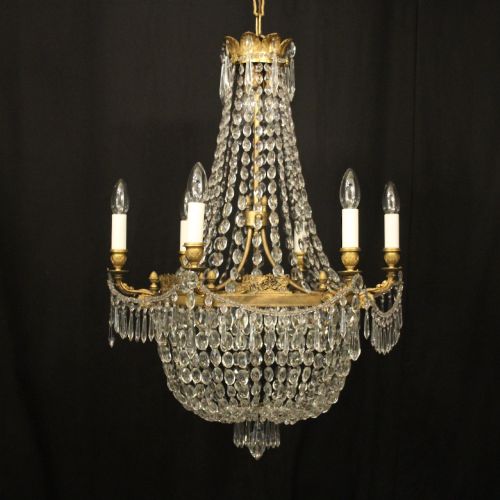
- Tent and waterfall
- A chandelier configuration where strings of crystal beads form an upper conical tent shape above a wider cascading tier of drops. This arrangement diffuses the light source across multiple refractive surfaces.
- Spelter
- An alloy primarily composed of zinc, utilised as a less costly alternative to bronze for cast figures and decorative mounts. It is frequently painted or electroplated to imitate bronze or gilt finishes.
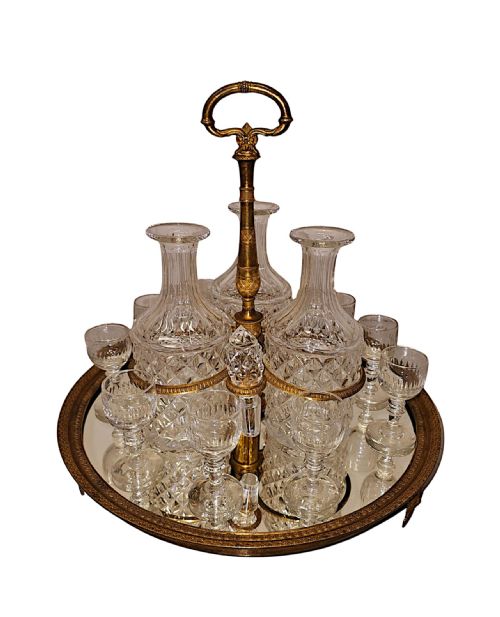
- Cave à liqueur
- A fitted portable cabinet or tantalus set containing decanters and matching glasses, often mounted in ormolu and housing cut glass vessels. These luxury sets date frequently to the nineteenth century.
- Regulator clock
- A precision pendulum clock housed within a glass and bronze case, designed for high accuracy. Nineteenth-century examples often combine heavy cast bronze pillars with visible glass panels.
Antique Bronze and Crystal: Frequently Asked Questions
How do I clean an antique crystal chandelier?
Maintenance requires gentle hand-cleaning of each glass drop in situ using a mild solution of warm water and methylated spirits. Technicians avoid harsh chemical agents that can strip the gilt finish from the underlying bronze frame.
Securing the crystal drops back onto their wire loops after cleaning ensures the original arrangement remains intact. Dusting the metal armature regularly with a soft brush prevents grime accumulation in the chased recesses of the bronze.
What rooms suit a large bronze and crystal chandelier?
These prominent light fittings require high ceilings and substantial floor space to support their visual weight and physical dimensions. Rooms designed for entertaining, such as formal dining rooms and entrance halls, accommodate the scale and light output of multi-arm fixtures.
Ceiling height must allow adequate clearance beneath the lowest pendant crystals. Wall lights and smaller table lamps provide alternative options for lower domestic spaces.
How do I identify a French Empire style piece?
Empire style items display neoclassical motifs influenced by ancient Roman and Greek design, incorporating symmetrical lines, laurel wreaths, and classical figural mounts. Gilt bronze frames often feature strict geometric balance rather than the asymmetrical curves typical of Rococo pieces.
Tent and waterfall crystal configurations frequently accompany these architectural bronze mounts in nineteenth-century chandeliers.
Can these chandeliers be rewired for modern electricity?
Most antique light fittings undergo rewiring to comply with contemporary electrical standards before installation. Professional restorers thread modern insulated flex through the original central bronze channels to preserve the exterior appearance.
Checking the internal lamp holders ensures they accommodate standard modern bulbs safely while maintaining the original candle-tube or socket aesthetics.