

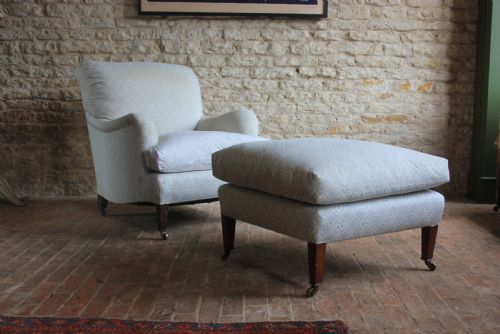


Antique Bridgewater Chair
An antique bridgewater chair is a deeply comfortable upholstered seat offering low arms and generous proportions for country house living.
Antique Bridgewater Chair
The antique bridgewater chair is a low-slung, deeply cushioned seat designed for relaxation, typically featuring characteristic recessed arms that sit lower than the backrest. These pieces appear across Victorian, Edwardian, and later 1930s periods in English country house styles.
Buyers will encounter both period originals and later chairs built in the classic bridgewater style, often upholstered in heavy cotton fabrics, hessian, and patterned textiles. Formats range from single armchairs to deep-seated sets including matching sofas and footstools.
Materials and construction
Frames rely on sturdy timbers such as beech and mahogany, providing the structural foundation for deep upholstery and heavy use. Brass details occasionally appear on castors or feet, whilst ball and claw feet support grander iterations from the Edwardian era.
Traditional stuffing employs hessian and layers of upholstery fabric, finished with outer coverings in plain cotton, kilim, or iconic printed textiles like William Morris designs. Joinery and stuffing methods ensure the characteristic deep-seated comfort associated with the form.
Antique Bridgewater Chair Retail Price Guide 2026
Typical asking prices for bridgewater chair among the pieces listed under this phrase on Sellingantiques today, from the lower quarter to the upper quarter. They describe what is for sale here now, not the wider market.
Listings feature pieces spanning the Victorian, Edwardian, and 1930s periods, constructed from beech and mahogany with fabric upholstery.
Judging quality and character
Quality rests upon the integrity of the original frame and the retention of period upholstery, where Maker attribution significantly elevates a piece. Chairs bearing maker stamps from workshops like Howard and Sons command particular attention for their superior internal padding and robust beech frameworks.
The choice of covering also defines the tier of the piece, moving from utilitarian ticking and simple cotton to elaborate kilim rugs or archival William Morris prints. Proportions matter greatly, distinguishing between standard armchair sizes and large, deep-seated special commissions designed for country house drawing rooms.
Howard and Sons
The Antique Bridgewater Chair Glossary
- Bridgewater armchair
- A deeply upholstered low-armed chair designed for comfort, originating in the nineteenth century. It forms the central focus of this guide.
- Kilim
- A flatwoven textile originating from the Middle East or Central Europe, occasionally utilised as heavy-duty upholstery for period seating.
- Hessian
- A coarse woven fabric made from jute fibres, traditionally employed as an internal scrim and foundation material beneath top covers.
- Castor
- A small wheel attached to the base of furniture legs to aid movement, often rendered in brass alongside wooden supports.
Antique Bridgewater Chair: Frequently Asked Questions
What defines a bridgewater armchair?
An antique bridgewater chair is distinguished by its low, gently rolled arms, deep seat, and substantial upholstered frame designed for lounging.
Originating in the nineteenth century, these pieces prioritised relaxation over formal posture, making them staples of the English country house interior.
How do I style an antique chair?
These seats suit traditional drawing rooms and libraries, pairing naturally with wooden tables, heavy floor rugs, and reading lamps.
Allow sufficient space around the piece to showcase its low profile and generous proportions without crowding the surrounding furniture.
Can I use kilim upholstery daily?
Kilim covers offer robust durability thanks to their tight flatweave construction, making them suitable for regular seating.
Such textiles bring distinct geometric pattern and rich colour to the room, contrasting pleasantly against plain walls and wooden floors.
How do I spot an Edwardian piece?
Edwardian examples frequently display finer woodwork, such as mahogany frames and detailed brass fittings or ball and claw feet.
Maker stamps on the castors or webbing often confirm this provenance, linking the seating to prominent nineteenth and early twentieth-century London workshops.