
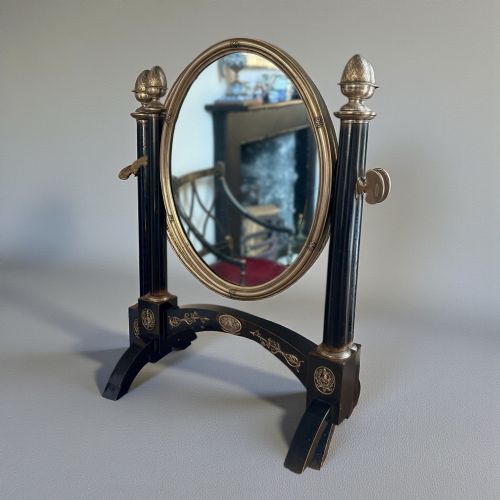
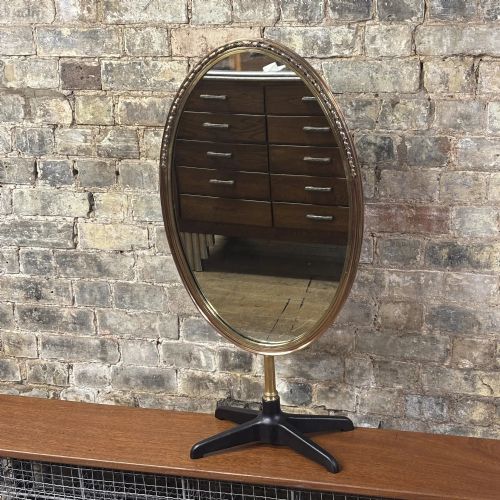
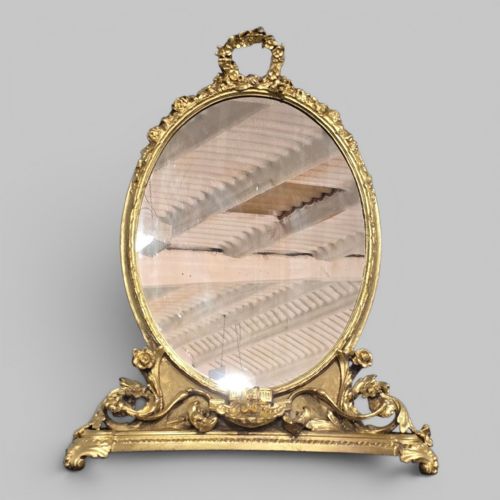


Antique Brass Swivel Mirror
An antique brass swivel mirror brings a focused reflection and bright metallic warmth to a dressing table or chest.
Antique Brass Swivel Mirror
An antique brass swivel mirror is a portable or floor-standing glass panel designed to pivot within a frame, allowing the user to adjust the angle of reflection. When you search for an antique brass swivel mirror, you encounter pieces intended for personal grooming on dressing tables, chests of drawers, or floor-standing cheval formats. The examples appearing here span from the early nineteenth century through to the art deco period of the 1930s, reflecting changing domestic habits.
Stylistic influences across these pieces draw upon the French Empire, Victorian, Rococo Revival, William IV, and Art Deco periods. Certain iterations incorporate decorative accents such as gilt bronze, ormolu, Limoges enamel, and green onyx, while others feature functional additions like articulated candle holders. This mix demonstrates that brass swivel mirrors served as both utilitarian dressing accessories and decorative centrepieces in period interiors.
Materials and construction
Makers constructed these mirrors using structural frames of brass, gilt metal, or ormolu, frequently paired with cabinet timbers such as mahogany, satinbirch, and burr walnut for the stands and supports. The pivoting mechanism relies on side screws or trunnions inset into upright arms, allowing the glass plate to tilt smoothly without slipping. Gilt bronze and cast brass components provide both the necessary weight for stability and a decorative surface finish.
The glass panels themselves are housed within metal or wooden surrounds, occasionally backed by secondary timber panels or supported by cast iron frames in heavier floor-standing models. Decorative details range from cast floral motifs in the Rococo revival style to clean geometric lines of the 1920s and 1930s. Secondary materials such as green onyx, polished oak, and Limoges enamel are integrated into the bases and surrounds to enhance the visual richness of the piece.
Selected mirrors include articulated candle holders, designed to illuminate the user's face long before the invention of electric lighting.
Distinguishing quality in the range
Quality in these mirrors rests primarily upon the solidity of the casting work and the integration of the swivel mechanism. Superior examples feature crisp detailing in the brass or ormolu mounts and a robust pivot action that holds the glass firmly at any chosen angle without dropping. Lesser pieces often rely on thinner stamped metal frames that lack the structural rigidity required to support heavy mirror glass over decades of adjustment.
The choice of secondary materials and the presence of maker attribution also separate the standard production from the exceptional. Pieces incorporating fine cabinet woods like burr walnut, specialised optical lenses, or signed metalwork by makers such as Thomas Rubergall or F. Bienvue demonstrate a higher tier of craftsmanship. Furthermore, the preservation of original mirror glass and fire-gilt surfaces elevates the status of a mirror within the broader range.
Thomas Rubergall·F Bienvue
The Antique Brass Swivel Mirror Glossary
- Cheval mirror
- A large floor-standing mirror mounted in a frame that allows it to swing entirely on vertical pivots. These tall pieces were traditionally used for full-length clothing checks in bedrooms and dressing rooms.
- Ormolu
- Gilded bronze applied to furniture and decorative objects through a mercury amalgamation process. This technique produces a rich, durable golden surface finish characteristic of high-status nineteenth-century metalwork.
- Toilet mirror
- A smaller tabletop glass designed specifically for grooming tasks, typically resting on a set of small drawers or a dedicated stand. They gained widespread popularity during the Georgian and Victorian eras.
- Trunnion
- A cylindrical projection that acts as a pivot point for the mirror plate within its vertical supports. It allows the glass to tilt smoothly back and forth.
- Sabot
- A metal sleeve or shoe fitted to the foot of a furniture leg to protect the timber from wear. On nineteenth-century stands, these are frequently cast in brass to match the mirror frame.
Antique Brass Swivel Mirror: Frequently Asked Questions
How do I adjust the swivel mechanism?
Most antique swivel mirrors rely on threaded screw caps or friction nuts positioned where the frame attaches to the vertical uprights. Tightening or loosening these side fixings allows you to control the tension so the mirror holds your preferred angle.
Over time, old metal threads can accumulate dust or dry out, so a gentle clean of the pivot area ensures smooth movement without forcing the brass components.
Where should I place a dressing mirror?
These mirrors suit placement on top of sturdy antique chests of drawers, dedicated dressing tables, or low sideboards where the height allows comfortable seated use. Floor-standing cheval formats work best placed against bedroom walls with adequate clearance for the swinging frame.
Ensure the supporting surface is level so the weight of the glass distributes evenly across the base and does not strain the pivot arms.
How do I identify the period of a mirror?
Dating relies on observing the combination of stylistic motifs, wood types, and construction methods present in the frame and stand. For instance, heavy mahogany frames with sabots point toward the earlier nineteenth century, while geometric onyx bases align with the 1920s.
Examining the backboards, screw types, and the method of silvering on the glass plate also provides clear physical evidence of the era of manufacture.
Can the original mirror glass be replaced?
While original glass often displays charming foxing and distortion that collectors value, modern replacement glass can be fitted into antique frames if transparency is required for daily use. A restorer removes the backing and secures the new glass using traditional glazing points or wooden slips.
It is advisable to retain the original glass panel if possible, as it preserves the physical integrity and historical character of the piece.