



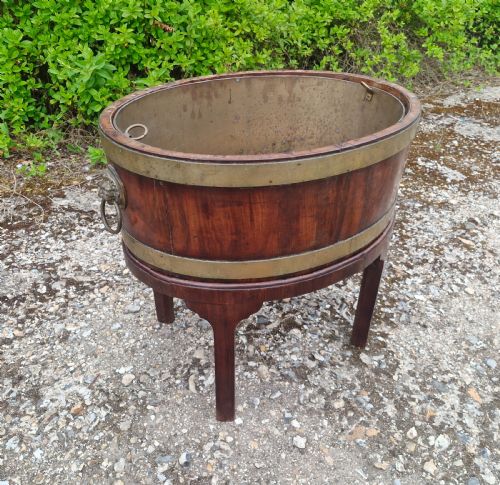


Antique Brass Plant Tub
An antique brass plant tub brings warmth and genuine utility to a room, holding green foliage in a vessel shaped by decades of handling.
Antique Brass Plant Tub
When you search for an antique brass plant tub, you are looking at heavy metal vessels and timber buckets bound in brass, designed originally for plants, wine cooling or general domestic storage. These pieces bridge the gap between interior decoration and practical utility, turning a simple potted fern into a focal point for a room.
The versions you are most likely to meet on this page span the eighteenth, nineteenth and early twentieth centuries, taking the form of round mahogany buckets with brass bands, hammered copper and brass jardinieres, and Edwardian coopered planters on stands. They draw upon Georgian, Victorian, Edwardian, Arts and Crafts and Art Nouveau styles.
Makers and workshops utilised sturdy materials like oak, mahogany, zinc and tin alongside brass and copper to build these heavy-duty items. Whether you encounter an elliptical mahogany bucket from the early nineteenth century or a large Victorian planter bearing a front crest, each piece shows the domestic habits of past centuries.
Materials and construction
The construction of these planters relies on traditional woodworking and metalworking techniques, frequently combining turned or coopered timber bodies with heavy sheet brass and copper. Coopers built wooden buckets from staves of mahogany or oak, securing them tightly with hand-formed brass bands and hoops to hold weight and moisture.
Metal vessels often feature hammered surfaces or riveted seams executed by hand, displaying the distinct marks of the artisan's hammer and anvil. Liners of zinc, tin or separate metal inserts were frequently added to protect the underlying wood or surrounding floor from damp soil and water.
Antique Brass Plant Tub Retail Price Guide 2026
Typical asking prices for brass plant tub among the pieces listed under this phrase on Sellingantiques today, from the lower quarter to the upper quarter. They describe what is for sale here now, not the wider market.
Some heavy metal vessels listed here started life chilling wine at grand dining tables before retiring to a quiet life holding ferns.
Assessing quality and character
Quality in these pieces rests upon the crispness of the brass work, the calibre of the timber used for the staves or body, and the retention of original fittings such as carrying handles and liners. A superior vessel shows substantial weight in the metal and tight, precise joints in the woodwork rather than loose bindings or thin, modern replacements.
The depth of the natural patina on both the brass and the wood separates a genuinely old, well-kept container from a purely decorative reproduction. Pieces that retain their original stands, crests or distinct maker identity carry greater historical interest for the collector.
Lister and Co
The Antique Brass Plant Tub Glossary
- Coopered
- Made by a cooper using wooden staves joined together side by side and bound with metal hoops. This technique is typical of traditional buckets and wine coolers.
- Jardiniere
- An ornamental pot or stand for holding plants or flowers, usually placed on the floor or a tabletop. These often appear in brass, copper or ceramic.
- Wine Cooler
- A vessel traditionally lined with lead or metal to hold ice and bottles, frequently repurposed over time as a large plant tub or jardiniere.
- Patina
- The deep surface sheen and colour developed over years of handling, polishing and ageing. It serves as a key indicator of genuine age.
- Elliptical
- Oval in shape with regular curved boundaries. Many early mahogany plant buckets take this specific form rather than a simple circle.
Antique Brass Plant Tub: Frequently Asked Questions
What were antique brass plant tubs originally used for?
Many of these metal and wood vessels served multiple domestic purposes before finding a permanent role holding greenery. Early examples often functioned as wine coolers or cellarettes in dining rooms before being adapted for plants.
Others worked simply as heavy-duty household bins or decorative cachepots for indoor palms during the Victorian and Edwardian eras.
How can I tell a Georgian planter from a Victorian one?
Georgian pieces tend to feature rich mahogany with clean, classical lines and subtle brass banding, often taking the form of wine coolers on stands. They reflect a more restrained, architectural aesthetic.
Victorian and Edwardian versions frequently showcase heavier ornamentation, such as hammered copper surfaces, crests, or distinct Arts and Crafts and Art Nouveau motifs.
Should I polish the brass on an antique tub?
Polishing is largely a matter of personal taste, but many collectors prefer to leave a mellow, aged patina intact rather than scouring the metal to a bright shine. Gentle dusting and occasional cleaning with a soft cloth will maintain the surface without erasing its history.
Avoid harsh chemical cleaners that can strip away the authentic character built up over centuries.