



Antique Brass Handle Lid
These antique brass handle lid items comprise lidded vessels, cressets, and storage boxes crafted across several centuries.
Antique Brass Handle Lid
When you search for an antique brass handle lid, you encounter functional lidded vessels, coal containers, and decorative burners spanning the Georgian, Regency, and Victorian eras. These objects combine durable metal hardware with timber, copper, or bronze bodies designed for domestic utility and display.
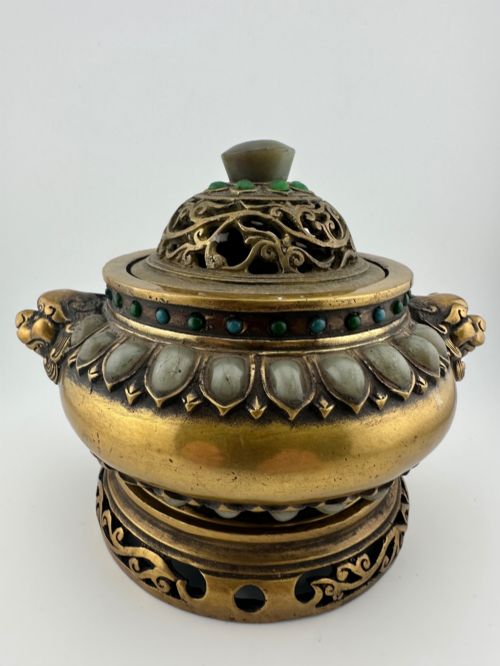
The most common forms on this page include lidded incense burners, coal buckets, and presentation cases. They range from Chinese bronze censers inlaid with hardstone to English coopered hardwood butter barrels and brass-mounted wine cellarets.
Origins stretch from English country houses to Qing Dynasty workshops and continental European metalwork studios. Each piece relies on its secure lid and sturdy handle for everyday practicality, whether holding fuel for a fireside or aromatics in a parlour.
How they were made
Maker workshops utilised heavy sheet brass, cast bronze, and beaten copper to form the structural bodies and secure lids of these vessels. Metal components were joined using traditional rivets, soldering, or hand-beating techniques suited to high-wear domestic environments.
Wooden elements such as mahogany, pine, and coopered hardwood staves were shaped by hand and bound with tight brass bands. Surface finishes combined polished metalwork with inlaid hardstone, painted metal, and decorative penwork.
Handles and fittings were robustly cast or forged to bear the weight of heavy contents like coal, wine bottles, or grain. Lids were engineered to fit snugly over openings, often featuring integrated brass rings or finials for lifting.
Antique Brass Handle Lid Retail Price Guide 2026
Typical asking prices for brass handle lid among the pieces listed under this phrase on Sellingantiques today, from the lower quarter to the upper quarter. They describe what is for sale here now, not the wider market.
Listings feature items spanning the eighteenth, nineteenth, and early twentieth centuries, incorporating brass, copper, mahogany, and jade.
What varies in quality
The grade of an antique brass handle lid depends on the precision of its metal casting and the integrity of its joinery. Superior examples display crisp chasing on the brass work, tight coopered staves, and well-fitted lids that sit flush upon their bodies.
Material selection marks the distinction between standard utilitarian items and finer decorative pieces. The inclusion of hardstone inlay, fine hardwoods, or specialised surface decoration elevates an object from a simple container to a piece of craftsmanship.
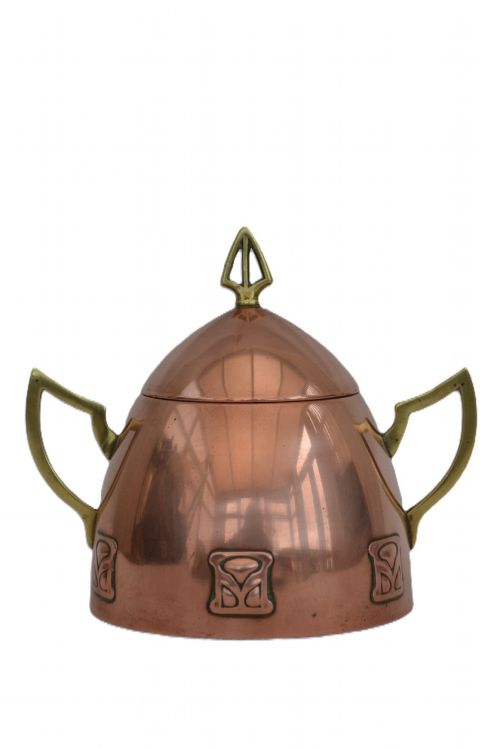
WMF
The Antique Brass Handle Lid Glossary
- Cellaret
- A lockable container used for storing wine bottles near the dining table. They frequently feature timber construction with secure metal handles and fitted lids.
- Coopered
- A method of construction where curved wooden staves are bound together with metal bands. This technique provides the strength required for holding butter, coal, or liquids.
- Censer
- A vessel designed for burning incense, often featuring a pierced lid to allow smoke to escape. Many examples incorporate bronze or brass components alongside decorative inlay.
- Penwork
- A surface decoration technique using ink drawn on wood to simulate more expensive inlay or marquetry. This meticulous work appears on decorative boxes and tea caddies from the Regency period.
- Secession
- A stylistic movement associated with early twentieth-century design that favoured clean lines and geometric forms. WMF produced notable metalware in this aesthetic.
Antique Brass Handle Lid: Frequently Asked Questions
What were brass handled lidded buckets used for?
These containers served practical domestic roles beside the hearth, carrying coal, logs, or peat for household fires. Their sturdy brass handles allowed heavy loads to be transported safely.
Over time, many transitioned from purely utilitarian coal bins to decorative fireside accessories within formal Victorian and Edwardian rooms.
How do I care for antique brass and copper?
Dust surfaces regularly with a soft, dry cloth to prevent the accumulation of grime in crevices and around handles. Avoid aggressive chemical polishes that strip the historic patina accumulated over centuries.
If cleaning is necessary, use a mild, non-abrasive metal cleaner specifically formulated for antique brass or copper.
Are these lidded vessels suitable for daily use?
Many of these pieces remain structurally sound and can be utilised for storage or display in a modern home. Items like wooden boxes, coal buckets, and tea caddies retain their original functionality.
Care should be taken with delicate items such as inlaid censers or penwork caddies, which benefit from gentle handling away from direct sunlight.
How do I distinguish Regency pieces from Victorian ones?
Regency items typically display classical restraint, clean architectural lines, and fine timber veneers like mahogany. They often date from the early nineteenth century and reflect classical design influences.
Victorian pieces frequently embrace bolder decorative treatments, heavier cast brass fittings, and utilitarian robustness suited to expanding industrial households.